
Wandering Eyes
-
Posts
142,262 -
Joined
-
Last visited
-
Days Won
2
Content Type
Profiles
Forums
Articles
Videos of the Month
Major Race Contenders
Blogs
Store
Gallery
Everything posted by Wandering Eyes
-
 The recent reveal of racing past performances with information about treatments a horse received from a veterinarian has created quite a lot of kerfuffle (to put it mildly) in the industry. While many questions remain (including mine of whether anyone has truly confirmed this info as accurate or just an elaborately AI created document) unanswered, there is one that has repeatedly come up. Why aren't all vet records on racehorses available for anyone to view in a public database?? The answer to this question is kind of multifaceted, but making one small change would alleviate any legal hurdles. What most people don't know is that there really is no HIPPA equivalent in the veterinary care world. Problem solved right? If there is no HIPPA, then show me the records! Not so fast. Each state does have a Veterinary Practice Act that dictates how veterinary records are handled. Through specific regulations and rules governing ethical conduct of veterinarians, veterinary records cannot be released to anyone without the owner's consent. The only exception to these rules is usually when an animal cruelty investigation is conducted or if the State Board is investigating a specific complaint against the vet. This creates multiple issues in making records public. An owner would have to ensure they would be following the rules of each state Vet Board that the horse was racing in. In the case of partnerships, how does one handle it if one partner does not want the records released, but others do? What if an owner only wants certain information released? Finally, it is also important to remember that vet records are only as accurate as a vet makes them. We must be able to trust that the treatment the veterinarian puts on the record is the one that was actually given. Another thing to consider is what database stores it and who would be paying for it? We are talking about massive amounts of data that would have to be stored. Also, how long would the records be required to be stored for. Most Veterinary Practice Acts require records on an animal to be held for three to five years and then they can be disposed of. Would the industry want the data held for decades if, say, breeders also wanted access to the info to make mating decisions? When watching the Royal Ascot meeting last week on the GB1 feed, I was pleasantly surprised how many times I heard the commentator say a particular horse seemed to do much better after “getting an air/wind surgery.” This most likely implies the correction of an entrapped epiglottis, tie back, or soft palate surgery to allow the horse to breathe easier when racing. Why is it so hard for that information to be given about horses in the U.S.? Why is announcing a horse was gelded considered crucial information to be reported, but not a surgery that improves airflow? This brings me to the easy solution. All that would be needed is minor change to all state racing commission owner license applications to state something to the effect, “by applying for and being granted this license as an owner, I hereby approve and or allow any veterinary records on any horse I own to be released for public inspection when requested.” I know the immediate push back on something like this would include, “no one will understand what these medications are or what they do or why we did a surgery or not. They will just use it as something to further their agenda of claiming we are doping up all our horses.” I understand that concern, but it can be alleviated by having a simple education program with it that explains what these medications do and why they are used when they are. I fail to understand why there is such resistance to this, and am genuinely curious to hear back from owners, trainers, vets, or anyone else who opposes the idea of the release of vet records as to why they would oppose it? Could a compromise be reached where only certain aspects of the records, such as major surgeries, are available for public knowledge? This issue is not going to go away. Proper transparency of vet records (with the education for the public behind them) is needed to help bring back the integrity of the sport that everyone is clamoring for. The post Letter to the Editor: We Can Handle the Truth (When it Comes to Racehorse Veterinary Records)! appeared first on TDN | Thoroughbred Daily News | Horse Racing News, Results and Video | Thoroughbred Breeding and Auctions. View the full article
-
There are times when it seems as though nothing succeeds quite like failure. By then, of course, it's too late. But as night follows day, you know just what to expect whenever a Kentucky stud admits defeat on a stallion and sells him abroad. The latest example is Connect, whose export to Turkey was announced barely three weeks ago. Sure enough, last Saturday he responded by sending out two Classic-placed sons to run 1-2 in the GIII Ohio Derby. By this stage, to be fair, it seems clear that the 13-year-old was never going to change the world. He has sired eight graded stakes scorers, and Chip Honcho and Ocelli demonstrate an efficacy that makes their sire a perfectly eligible sire of runners at just $10,000. But Connect's 2025 yearlings, conceived at $25,000, retailed at a median of $21,000 (12 sold of 15 offered) and it's hard to find a way back from that. Not that the son of Curlin should necessarily be considered simply another victim of the dismally familiar model that nowadays requires a stallion to pay for himself more or less in one go. The standard, cynical procedure is for fees, averages and books to slide together as soon as a stallion has exhausted his value to the commercial breeders who process a debut crop. Connect, in contrast, achieved enough as a freshman in 2021 to propose himself among the minority that might build a viable Bluegrass career. Only Gun Runner and Practical Joke finished above him, and while he only had two black-type winners to their six, he did not mess about. Rattle N Roll won the GI Breeders' Futurity and Hidden Connection won the GIII Pocahontas Stakes. (Both, incidentally, the work of a program that punches way above weight, St. Simon Place.) Rattle N Roll, moreover, remains on the worktab at seven, with 11 wins in 33 starts and $3.95 million in the bank. That auspicious start earned Connect a moderate fee hike in 2022, from $15,000 to $25,000, when his book soared from 93 mares to 173–oversubscription, unequivocally, at a farm as commendably restrained as Lane's End. Connect | Lane's End The resulting foals are now sophomores, including Saturday's protagonists. The point is that Connect's own template virtually guaranteed that his stock would thrive with maturity, a classic Curlin trait, after all. He only broke his maiden at three, beat Gun Runner himself in the GII Pennsylvania Derby in September; added his Grade I in the Cigar Mile and looked set for new heights on what sadly proved to be his final start in the GIII Westchester. In other words, nobody could reach any conclusions about his renewed momentum until–well, right around now. Yet his very next book, in 2023, collapsed to 45 mares. On the racetrack that year, with their third crop in play, Connect again finished third to Gun Runner and Practical Joke, matching the latter with nine stakes winners (from 179 starters, against 269). Yet he has since jogged along with 52 mares in 2024; and 36 last year. So the vogue had already cooled by the time the graduates of his big 2022 book went to market, averaging $47,355 as yearlings (median just $22,000). Chip Honcho, admittedly, brought $210,000, but Ocelli realized no more than $12,000. Yet while the latter famously remains a maiden, he ran third in the GI Kentucky Derby, while Chip Honcho filled the same spot in the GI Preakness Stakes. This has proved an intake with no depth. It is topped by a phenomenon, followed by a prolific commercial sire who has made his volume count. But now Keen Ice is the only other still clinging to a berth in Kentucky. The bottom line, overall, is that Connect has had limited success from limited numbers. Nonetheless we should give him credit for Chip Honcho, whose page is really quite compressed to fourth dam in Winter Treasure (Vigors), twice a Grade I runner-up (Santa Margarita Invitational/La Canada). In fact, the brightest talent in between is Chip Honcho's own dam Miss My Rose, who in winning her only two starts (including a stakes via disqualification) serves as one of few mitigations against the failure of her sire Magician (Ire). Both were dirt sprints, so perhaps his turf orientation had been overcome. On the other hand, Miss My Rose's half-sister Whiskey and Rye (Maclean's Music), by a much better stallion who largely trades in dirt speed, is a stakes winner on grass. This family traces to an interesting seventh dam. Tennis Slipper (Aus) was a rarity in 1958, as an Australian yearling imported to the United States. Apparently she was in a cargo of five, sent to the pioneer tennis professional Jack Kramer: an example, no doubt, of the payment he sometimes received, in horseflesh, in an era when currency transfers were complicated and heavily controlled. And, speaking of dismantling international boundaries…. Praise Justified at Ascot Lauding a stallion in print can sometimes reverse the effect described above, where a stallion responds indignantly to being written off. But Justify certainly overcame the burden of our headline last week, to the effect that he can meet any and every agenda. For while he duly horrified American breeders with a top-class son who can carry his dirt speed fully 20 furlongs on grass, he set up Scandinavia's G1 Gold Cup success when his only other runners at Royal Ascot finished 1-2 in the Chesham Stakes for juveniles over seven. The winner Nola Soul is yet another Glennwood Farm masterpiece, Justify's breeders having combined him with a granddaughter of foundation mare Marozia (Storm Bird). Her dynasty began with GI Travers winner Stay Thirsty (Bernardini) and extended through her daughter Without You Babe (Lemon Drop Kid), dam of GI Dirt Mile winner Tamarkuz (Speightstown) and G1 St James's Palace Stakes winner Without Parole (GB) (Frankel {GB}). Nola Soul's granddam Smart Change (Smart Strike) has proved a somewhat less productive daughter of Marozia, showing little on the track and hitherto producing only a stakes-placed stayer in Britain. Smart Change's daughter by Muhaarar (GB), Sing Me Home (GB), appeared only mediocre in a light career and was discarded at the 2025 Keeneland November Sale, in foal to Yaupon, for just $25,000. Craig Bernick, who had bought the weanling Nola Soul (her second foal) in the same ring the previous year for $220,000, evidently perceived his promise early enough to arrange a private purchase of both the mare and her Yaupon filly. If culling Sing Me Home proves that even the most influential farm of its size can occasionally do things it may regret, its role in both sides of his pedigree gives Nola Soul the chance to expand yet further Glennwood's outsized footprint on the modern breed. Incidentally, the Chesham runner-up was actually making his debut, rattling home after showing his inexperience at the start. A $100,000 pinhook by C.F. Bloodstock at Keeneland last September, On Just Terms elevated his value to 220,000gns at the Tattersalls Craven Breeze-Up only a few weeks ago. His dam Elitiste (Ire) (Danehill Dancer {Ire}) was recruited by St. Elias Stable after delivering her first five foals in Europe, as a half-sister among others to two G1 Coronation Stakes winners. Her granddam is East Of The Moon (Private Account), champion daughter of the immortal Miesque (Nureyev). On Just Terms is bred to be any kind. Mischief Clawing Back the Deficit The principal domestic prize of the week, the GII Chicago Stakes, was won by Eclatant (Into Mischief). We explored her antecedents after her recent Grade I success, though it's worth reiterating how Justify's sire Scat Daddy continues to expand his distaff legacy. Ocelli is also out of a Scat Daddy mare, as are recent elite scorers Classic Q (Classic Empire) and Napoleon Solo (Liam's Map). Eclatant's latest earnings take the champion within six figures of Not This Time in the general sires' table. The young pretender, who stole a march with Magnitude in the spring, now defends $16,812,167 from Into Mischief's $15,905,256. Eclatant | Kurtis Coady Into Mischief continues to deploy an unrivalled cavalry, having just sent out his 300th starter of the year, compared with 236 for Not This Time. It is to his rival's credit, then, that both should be precisely in step with 16 stakes winners this year, with 10 apiece at graded level. Into Mischief launched an exciting new talent in his latest TDN 'Rising Star presented by Hagyard': Hughes, a six-length debut scorer in :57.22 at Los Alamitos. His dam K P Dreamin (Union Rags), twice Grade I-placed at two, is out of a sister to Go Between (Point Given). It's nice to see that forgotten horse, whose great heart gave out after a workout in 2009, dusted off in a pedigree. With his trademark late run, he was a downright kleptomaniac when it came to collecting track records, notably in the GI Pacific Classic. The post Breeding Digest: Not Quite a Failed Connection appeared first on TDN | Thoroughbred Daily News | Horse Racing News, Results and Video | Thoroughbred Breeding and Auctions. View the full article
-
Joseph O'Brien says he is confident that James J Braddock (Zarak) will give Epsom conqueror Christmas Day (Camelot) more than something to think about as the pair face off again in the Dubai Duty Free Irish Derby at the Curragh on Sunday. The Leopardstown Derby Trial winner threatened to boil over pre-race on the Surrey Downs but performed admirably to finish third, beaten five and a quarter lengths by Christmas Day, who provided Aidan O'Brien with his 12th win in the Epsom Classic. Fresh from saddling five winners at Royal Ascot last week, the Ballydoyle handler's son Joseph will this weekend bid for a fourth Irish Derby success, having won the race twice as a jockey for his father aboard Camelot (2012) and Australia (2014) before claiming his first Classic win as a trainer with Latrobe in 2018. Speaking at a press morning at his yard on Tuesday, O'Brien said, “We've been very happy with his prep since Epsom and to be honest we think he'll probably be better suited by the Curragh. Hopefully he will be more focused on his job and hopefully that translates to a better performance.” He added, “I'd like to think we can get closer (to Christmas Day) anyway. Epsom Derby winners have a pretty good record coming back to the Curragh, but at the same time it looks like there'll be a fairly significant difference in the conditions, more than what you would normally get, so maybe that just opens the door a little bit for people taking him on.” While O'Brien expects James J Braddock to be more amenable at the Curragh than he was at Epsom, he admits his fiery nature is part of his make-up and he would be more concerned if he was quiet before the race. O'Brien said, “He got fired up, but I've seen plenty of horses do that before in all different places and for some of them it affects their performance and for some of them it doesn't. I remember State Of Rest used to get fired up and the one time he didn't it was the worst run of his life. “Every horse is different, he (James J Braddock) has that in his arsenal and it's not his first time getting a bit revved up, so it wasn't a complete red flag for us. “You'd like to think the Curragh would suit him, he's versatile when it comes to ground and I think the test of the Curragh is more to his liking than Epsom.” Meanwhile, O'Brien revealed that a decision on brilliant Oaks winner Thundering On's participation in Saturday's G1 Pretty Polly Stakes will be made closer to the weekend. The daughter of Frankel was a brilliant winner of the Oaks at Epsom and, if she takes her chance at the Curragh this week, she would be bidding to emulate her dam, Thundering Nights (Night Of Thunder), who won the race in 2021. He said, “There is a good chance that she might turn up there, but we'll just see how she is during the week. Obviously when you're backing up so soon you kind of have to leave the final decision as late as possible, but we're very happy with how she's been since Epsom.” O'Brien added, “We won the Pretty Polly with her dam (Thundering Nights) and if she did turn up you'd imagine she'd be a short-priced favourite. The Irish Oaks is the race we're very keen on, we want to have her at fever pitch for that, but I quite like the look of the Pretty Polly on the way there in terms of timing, I think 10 furlongs is a lovely trip for her and I think the Curragh will be a good track for her.” The post Joseph O’Brien Outlines Confidence In James J Braddock Ahead Of Irish Derby appeared first on TDN | Thoroughbred Daily News | Horse Racing News, Results and Video | Thoroughbred Breeding and Auctions. View the full article
-
The board of France Galop has voted to allow geldings to run in the Prix de l'Arc de Triomphe, according to a report by Jour de Galop. Such a move, which would require the reframing of the entry conditions, will need to be ratified by the European Pattern Committee. Run for a total of €5 million, the Arc is the most valuable contest in European racing and is one of the few Group 1 contests outside the Classics which is restricted to colts, fillies and mares. With some high-profile geldings currently in training in Europe – notably the Francis Graffard-trained duo of Calandagan, the top-rated horse in the world in 2025, and Goliath – France Galop has come under increasing pressure to open up its world-renowned weight-for-age contest. With entries having already been taken for this year's Arc, the rule change will likely be in place from 2027. In a debate in TDN back in February, some major names in the bloodstock industry weighed in with their thoughts on whether or not Group 1 races should be open to geldings. This followed a year in which the geldings Calandagan, Ka Ying Rising, Romantic Warrior, Goliath, Cicero's Gift, Lazzat, American Affair, Half Yours, Caballo De Mar, Candelari, Ethical Diamond, Never So Brave, Rebel's Romance and Trawlerman were among those who won at least one Group or Grade 1 race around the world. “We have got to look after the sport and the sport requires the best to meet the best,” said bloodstock agent and racing manager Patrick Cooper at the time. “And anything that diminishes that takes away from the spectacle of horse racing. It's that simple.” Breeder and stallion owner Kirsten Rausing took a different view. She said, “We are in definite need of more stallions at stud – and thus more stallion candidates winning good races.” Apart from the Arc, the Commonwealth Cup is the only European Group 1 beyond the three-year-old Classic races which is closed to geldings. In its 12-year history, the Commonwealth Cup has been won by four fillies, including this year's winner Venetian Sun. Females also have a good record in the Arc, with ten runnings having fallen to a filly or mare since the turn of this century. At Royal Ascot last week, the five-year-old Ten Bob Tony and three-year-old Mission Central became the latest to add their names to the list of Group 1-winning geldings when landing the Queen Anne Stakes and King Charles III Stakes respectively. This story is being updated. The post France Galop to Open Prix de l’Arc de Triomphe to Geldings appeared first on TDN | Thoroughbred Daily News | Horse Racing News, Results and Video | Thoroughbred Breeding and Auctions. View the full article
-
Dollars & Sense offers an out-of-the-box idea: Make on-track wagering pools for win, place, show, exacta, and daily doubles separate pools than what's offered for off-track players.View the full article
-
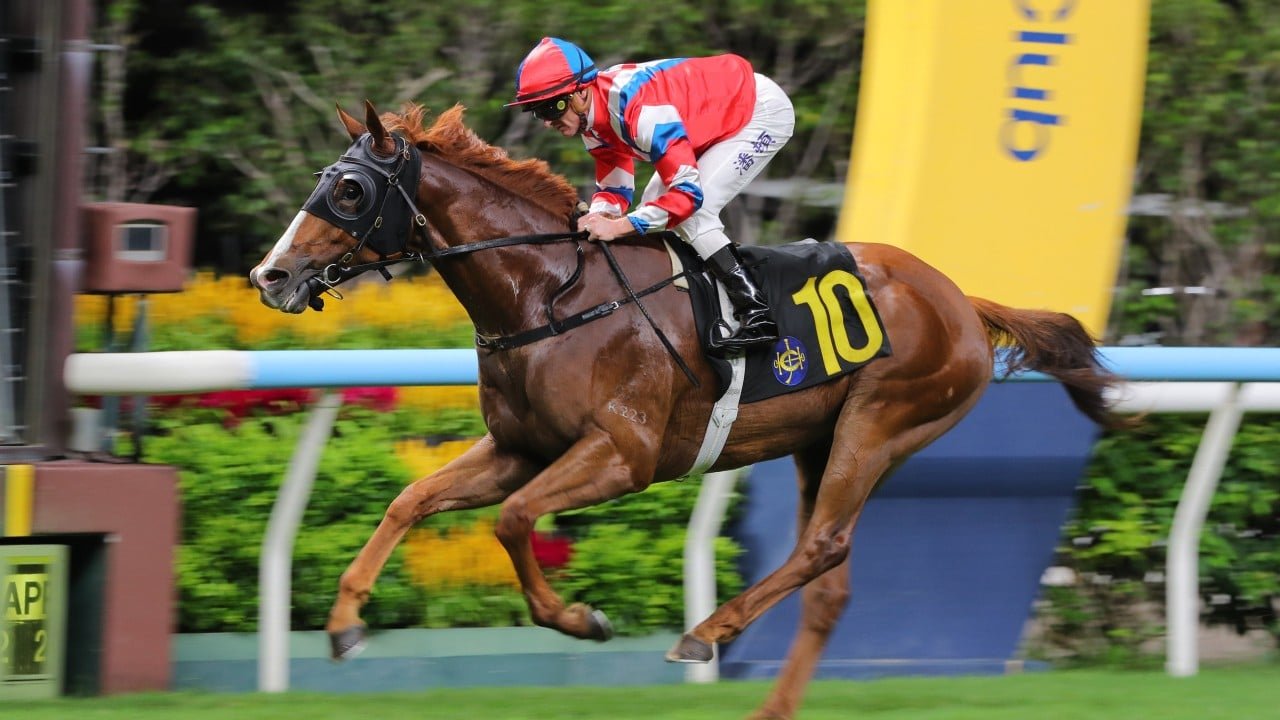
David Eustace is hoping Vivacious Win can go back-to-back at Happy Valley with Zac Purton aboard once again in the first section of the Class Four Morrison Hill Road Handicap (1,650m). The Autumn Sun galloper broke through with a superb performance last start after being sent off as $1.90 favourite to win at the course and distance by five lengths over Glorious Journey. Wednesday sees the four-year-old jump from an inside draw of barrier two, which Purton can take advantage of to settle near the...View the full article

-
As the cash reserves run out, who would bet on NZ’s racing industry? Sir Peter Vela has warned racing carries a structural deficit of more than $50 million a year; the next few years will be critical for the survival of the industry and the jobs of those who rely on it by Mary Watson-Burton19/06/2026 It’s becoming harder to sustain major race courses like Trentham and Alexandra Park, never mind much-loved community races like the annual Kurow Jockey Club meet. Photo: KJC/Facebook Comment: Racing has hit a hurdle. Like many Kiwi kids, I grew up picking up discarded “winning” tickets off the ground at the Kurow races, chasing my father through stables, listening to Reon Murtha as my grandmother hoped for number 8 to win. Horse racing in New Zealand was then a national pastime – almost everyone loved a punt.https://bitofayarn.com Right now, even a casual punter might not bet on the future of New Zealand’s racing industry. In December 2025, Newsroom’s Fox Meyer laid out the architecture of how New Zealand’s wagering future landed in the hands of a UK-listed gambling company. The piece asked pointed questions about who benefits from the deal.https://bitofayarn.com Six months later, the problem is clearer. As one trainer put it to me recently, if you keep doing what you’re doing, you keep getting what you’re getting and for New Zealand racing it seems to be the trifecta of declining breeding, declining stakes, and declining ownership. So, can New Zealand racing now overcome some bleak odds, and achieve sustained benefits for the industry and communities? New Zealand racing has grappled with structural challenges for years: declining participation, rising costs, and an economic model increasingly dependent on wagering.https://bitofayarn.com In 2024, Entain launched the TAB Racing Club through its management of TAB, and 18,000 New Zealanders jumped into a low-cost entry point into ownership, attending race days, enjoying trainer updates, and accessing racing behind-the-scenes. Modelled on their Ladbrokes Racing Club in Australia, it was one of the few genuine attempts to broaden participation and rebuild a connection with the public. Then came the legislative shift. When Parliament passed the Racing Industry Amendment Act in June 2025, it triggered a $100 million payment from Entain to TAB NZ, with minimum annual distributions guaranteed through 2027/28, and closed the market to offshore competitors. On paper, the industry was better funded than it had been in years and the industry had room to breathe. By October 2025, Entain had shut down the TAB Racing Club. The annual operating cost was $2.5 million, and the chief executive’s explanation was direct, it was time to get back to basics and sell bets. Now, however the breathing room is shrinking by the year.https://bitofayarn.com A reaked draft report from a TAB NZ advisory committee chaired by Sir Peter Vela warned that racing still carries a structural deficit of more than $50 million per year and would exhaust its cash reserves by the end of the 2027/28 season — precisely when Entain’s guaranteed minimums expire. And when the Entain minimums do expire, what is delivered next depends entirely on Entain’s performance. The same advisory committee set out a rescue package. They include tax concessions for breeders, consolidation of governance boards, and expanding TAB NZ’s licence to include online casinos. There are genuine opportunities to streamline governance and reduce costs, but if the answer to racing’s funding problem is always more gambling, who exactly is being served? An additional dynamic is delivered by a consultancy report known as Project Stamina. The NZ Herald reports it could recommend closing two of New Zealand’s most iconic venues, Trentham in Wellington, and Alexandra Park in Auckland.https://bitofayarn.com If stake money, racing tracks, and the breeding pool all remain in decline, where is the lifeline for the people who make this industry run? The industry sustains around 13,500 jobs and contributes close to $1.9 billion to the economy. Racing is also, at its core an entertainment business, and it can’t be overlooked that 18,000 people didn’t stop wanting to be involved in racing when the TAB Racing Club closed its gates. Growing participation however, now belongs to the industry, if that is what it wants. The TAB Racing club literally proved the participation desire is there. Faced with similar challenges Ireland responded to the challenge facing its racing industry by deliberate, long‑term system design. It built a syndicate culture that made participation accessible at every price point: ownership pathways, digital engagement, a race-day experience worth travelling for. It treated racing as a cultural and economic export. In 2025, Irish racecourse attendances grew 6 percent, bloodstock sales climbed 14 percent to €225 million, and owner retention reached its highest level in years.https://bitofayarn.com Acknowledging that Ireland has a mobile Europe just a couple of hours flight away, there are still lessons New Zealand racing can take. Ireland’s model required deliberate longterm system design, and right now New Zealand’s industry bodies can’t agree on who holds the pen The global racing industry is enormous, and the appetite for premium bloodstock, international partnerships, and distinctive race-day experiences is real. New Zealand deserves a slice of that. As others have implied, and some have written directly, the next few years will be crucial for New Zealand racing. Crucial for the communities supported by racing clubs, for trainers and strappers, for owners and breeders, and the wider communities. The top racing minds in this country have a rare chance to re-envision the future of breeding, racing, and entertainment. Giddy up.
-
Trainer Tom Charlton has Group One winner Maison Louis (NZ) (Super Seth) heading to the feature race at Rosehill this Saturday, but it is a stablemate engaged in a support race could prove the stable’s best staying prospect. King Pedro (NZ) (Eminent), who finished sixth in the 2025 Gr.1 New Zealand Derby, will get out to 2400 metres for the first time this campaign in the $160,000 Stayer’s Cup (2400m). The New Zealand-bred son of Eminent hasn’t had the best of luck in three runs this campaign, including a narrow second placing over 2000m at Rosehill on June 13, and Charlton is hoping for a change of luck. “He probably hasn’t had a lot of luck for his past four runs, to be fair,” Charlton said. “You could make a case that he’s been unlucky in all of them, but he’s building into the preparation very well.” King Pedro ran second at Gosford over 2100m two starts ago, when nabbed late by Monopolistic after taking off early, which followed a first-up seventh over 1600m at Randwick on Anzac Day when he encountered a chequered passage in the straight but was beaten only a length. The Stayer’s Cup will be his first start at 2400m since a another narrow second placing in benchmark 78 grade at Randwick on December 20. King Pedro’s recent misfortune means he has only two wins from 14 starts and has a rating of 77, which is why he has just 54.5kg on Saturday, and Charlton said he could be entitled to a crack at Stakes grade if he performs well this weekend. “We toyed with going to the Caloundra Cup (next week), but if he was to run well in the Stayer’s Cup he could go to the Grafton Cup two-and-a-half weeks later,” Charlton said. “He’s clearly got a good future, probably at a grade better than this, and he should stay well.” King Pedro will be joined at Rosehill by Maison Louis, last year’s Queensland Derby winner, who will be out to bounce back after a poor run in the Listed Winter Cup (2400m) back to 2000m in the $200,000 Listed McKell Cup. “His runs prior to last weekend have all been with plenty of merit, just with barriers draws and things not working out, so I would be confident he can run well at Listed grade.” View the full article
-
Hallmark Stud will head to Karaka this week with a 10-strong draft for New Zealand Bloodstock’s National Weanling Sale, which is set to kick off at their world-renowned sales complex at 11am on Thursday. “We have a very good draft that we are looking forward to presenting in the next couple of days,” Hallmark Stud principal Mark Baker said. “Right across the board there are opportunities for end use as a racehorse or horses they can trade at any stage, be that as a yearling, breeze-up stage or further down the track through the tried horse market. “There are also several fillies with residual broodmare value, including two fillies that are half sisters to stakes winners and are by exciting young stallions.” The first of those fillies is lot 17, the Hello Youmzain half-sister to Group One winner Bonny Lass, and Baker said she is a similar type to her well-performed sibling, who won the Gr.1 BCD Group Sprint (1400m) and placed at elite-level on four other occasions. “She is a 25th of November foal,” Baker said. “She is plain like Bonny Lass was but is a great mover, has a great attitude and is very athletic. “She uses herself really well, she is dead correct, and she is by Hello Youmzain, who is a sire on the rise. “She presents as an opportunity for someone to buy a lovely filly that they can either trade or race and have broodmare residual, her mother Posh Bec has got an amazing record.” Baker said another filly that offers plenty of residual broodmare value is lot 30, a half-sister to Group Three performer and Listed Queensland Cup (2200m) winner Nikau Spur. “She is by an exciting young stallion in Sword Of State and she is out of a stakes winner in Sarsarun,” Baker said. “She is a lovely medium-sized filly that is correct and uses herself well.” Baker is a big fan of Cambridge Stud sire Sword Of State and he has several colts by the sire in his draft that he thinks will be well-received, including lot 39, the colt out of Sorellina, a full-sister to Guineas heroine Katie Lee, and lot 136, the colt out of stakes performer Madame Giselle. “The Sorellina colt has got great size and scope,” Baker said. “As with all the Sword Of States, he has got an amazing brain, they are total professionals. He is a lovely horse and there is plenty of upside with him. “The Madame Giselle is another good Sword Of State colt. She was stakes placed and he’s her first foal. He is a very good colt.” Baker is also upbeat about the prospects of lot 71, the Zousain colt out of Group Three winner Ammirata, and lot 81, the Wrote colt out of Camarosa. “We have a particularly good colt by Zousain out of Ammirata, she was a stakes winner, and Zousain has gone to another level,” Baker said. “Alongside him there is an excellent Wrote colt out of Camarosa. He is a lovely, scopey horse with a great mind and he will have particular appeal to people who trade to Hong Kong because his (Wrote) record up there is great, I think he is 11 from 14 now, they love him up there. He will be a perfect horse for someone to trade somewhere along the road. He is a lovely horse.” View the full article
-
Even with goat companion Brownie delaying his trip to Churchill Downs, White Abarrio enters the $2 million Stephen Foster Stakes (G1) as a "man in his prime," according to trainer Saffie Joseph Jr.View the full article
-
There will be a public memorial service to honor the 17 horses that perished in the devastating barn fire June 28 at 10:45 a.m. in the harness track winner's circle at Saratoga Casino Hotel. View the full article
-
On the June 22 episode of BloodHorse Monday: Trainer Saffie Joseph Jr. discusses White Abarrio ahead of the Stephen Foster Stakes (G1), BloodHorse editorial director Frank Angst advocates for separate pari-mutuel pools for on- and off-track patrons.View the full article
-
Pegasus World Cup (G1) winner Skippylongstocking will target a 13th graded stakes victory in the $350,000 Monmouth Cup (G3) during the July 18 Haskell card at Monmouth Park, trainer Saffie Joseph Jr. said on the June 22 episode of BloodHorse Monday.View the full article
-
Applications for the Fall 2026 session of the Amplify Horse Racing Mentorship program close on Tuesday, June 23. This three-month initiative offers a structured gateway for youth and young adults interested in getting involved in the Thoroughbred industry. Below, three former Amplify mentors share their firsthand experiences and explain why other industry members should consider stepping up to guide the next generation. PETER FORNATALE: Founder, In the Money Media Network Why did you decide to be an Amplify mentor? I loved the concept of Amplify from when I first heard about it and was really impressed by the members of the team. Horse racing is a sport that can be stuck in its ways, to put it politely, and I wanted to support an idea designed to bring in new blood and fresh perspectives. What was your experience like as a mentor? The process of applying to the program was very straightforward and the Amplify team and processes made onboarding really easy. Communication with my mentee was smooth throughout and while there is a time commitment involved, I easily exceeded it because I enjoyed the back and forth with my mentee, and my company was getting great value out of that interaction as well. Why would you recommend other industry professionals apply to become a mentor? Being part of Amplify as a mentor was doubly rewarding. On one hand, it felt great to pay forward some of the guidance and advice that I received early in my career that helped me on my way to learning all types of professional skills. My company also benefited because my mentee made terrific contributions and going through the process was very educational for me. I look forward to working with my mentee more in the future. A company is only as good as the people who contribute to it. Amplify helps companies find new, talented people with an interest in racing. Racing is so specialized that this has outsized value. LEAH ALESSANDRONI: Head of Farm Operations and Bloodstock, Tropical Racing Why did you decide to be an Amplify mentor? I didn't grow up in the industry and when I moved to Kentucky, I really had virtually no connections. There were a lot of people along the way who mentored me and provided pathway opportunities and guidance that I would not necessarily have received had they not been willing to do that. So it's always been about paying it forward for me, whether it be with Amplify or just young people in the industry in general. What was your experience like as a mentor? One of the things that has impressed me so much about Amplify is the amount of time and attention to detail that they put into structuring the mentorship program. Everything from the thoroughness of the application process, to the way that they support you as a mentor with materials, guidance and resources. From a time standpoint, I found it really is dependent. Each individual year or semester is a little bit different depending on your mentee, but it's very manageable for me. I really enjoy it. I feel like I learn something each time I have a new mentee, so I see it as a mutually beneficial partnership. I'm obviously helping them, but it's always good to have young perspective and ideas. I really find it to be a two-way street and something I really enjoy. Why would you recommend other industry professionals apply to become a mentor? At the end of the day, I think this is an industry where everyone really does rely on other people, and I don't think I've met a single person who can't point to somebody else in their career who was instrumental in teaching them or getting them from point A to point B. If we want to keep growing and surviving as an industry, it requires a pipeline for talent and enthusiastic people. I think that alone should be enough for other people to want to jump to the opportunity to mentor. The Amplify program itself, and the opportunities it provides for us, is serving us in a huge capacity as an industry. I think it's a great way to help give back and should be something that everybody is interested in. JEN ROYTZ: Former Executive Director of the Retired Racehorse Project and Co-Owner/Operator of Brownstead Farm Why did you decide to be an Amplify mentor? I wasn't born into the horse industry. I fell in love with racing at a young age in Cleveland, Ohio and so many people, both there and later in Kentucky, took me under their wing to make sure I connected with the right people who could give me a solid foundation of hands-on and networking experiences. I'm honored to pay it forward and give others that same type of support! What was your experience like as a mentor? Being a mentor with Amplify has allowed me to see today's Thoroughbred industry through new eyes, as it is in a very different place than it was when I was coming up, and that has been a tremendous help in both being a mentor and also being more informed and reflective on where we are today. Amplify is such a tremendous resource for kids and young adults to gain experiences that allow them to fall in love with the Thoroughbred the way I did as a teenager, but then they go a step further by providing them with the knowledge and contacts to pursue this as a career focus if they choose to do so. The team at Amplify does an outstanding job of preparing mentors with what the expectations and time commitments are, and coaching the mentees on how to get the most out of the opportunities being provided, which will not only serve them well during their Amplify experience, but throughout their formative years. Why would you recommend other industry professionals apply to become a mentor? None of us have gotten to where we are in this business by ourselves. It's not only our responsibility, but a privilege to do that for the next generation. Individuals interesting in serving as a mentor may apply on a year-round basis. Those wishing to participate in the Fall 2026 session must apply by June 23. To learn more or apply to become a mentor, click here. The post Why Mentors Recommend the Amplify Mentorship Program appeared first on TDN | Thoroughbred Daily News | Horse Racing News, Results and Video | Thoroughbred Breeding and Auctions. View the full article
-
Edited Press Release Officials at the Thoroughbred Retirement Foundation (TRF) have announced that Board Member Michelle Keating has established a $25,000 matching gift challenge to support the organization's Annual Appeal. After decades of leadership and service as President and CEO of Alder Foods Inc. and as Chairwoman of Fisher House Boston, Keating was searching for a cause that aligned with her passion for creating meaningful change. She found that opportunity through the Thoroughbred Retirement Foundation's mission of caring for retired racehorses and transforming lives through its Second Chances Program. Her introduction to the organization came during the TRF's annual BBQ fundraiser in Saratoga Springs, where she heard firsthand from a graduate of the TRF's Second Chances Program a vocational training initiative that pairs incarcerated individuals with retired Thoroughbred racehorses. Inspired by what she heard, Keating traveled to Ocala, Florida, to visit the TRF's Second Chances Program at Lowell Correctional Facility. Seeing the program in action solidified her commitment. “I knew I had so much more to give, and this path chose me,” said Keating. As a longtime horse owner, Keating was already familiar with the responsibility of caring for Thoroughbreds after their racing careers end. What she discovered through the TRF was a mission that extends beyond equine welfare. “The TRF demonstrates what is possible when compassion meets opportunity,” she said. “These horses receive the dignified care they deserve, while the people who care for them gain confidence, skills, and a renewed sense of purpose.” To encourage additional support for the organization's mission, Keating has pledged a $25,000 matching gift challenge. Beginning June 22, every dollar donated to the TRF Annual Appeal will be matched dollar-for-dollar until the full $25,000 challenge is met. “Michelle's passion for our mission was immediate and inspiring,” said Maggie Sweet, Executive Director of the Thoroughbred Retirement Foundation. “She understands that our work is about both horses and people. Her leadership, vision, and generosity will help us continue providing lifetime care for retired Thoroughbreds while creating opportunities for transformation through our Second Chances Program.” For more information or to make a donation, visit www.trfinc.org. The post TRF Board Member Keating Establishes Matching Gift Challenge appeared first on TDN | Thoroughbred Daily News | Horse Racing News, Results and Video | Thoroughbred Breeding and Auctions. View the full article
-
AmWager is offering bettors in 30 states the opportunity to bet all races on the June 27 Woodbine card with a 0% takeout for all pools, except show betting.View the full article
-
The longtime Laurel Park and Pimlico assistant starter Derrick Edwards, who handled both Triple Crown winners in the GI Preakness Stakes during their historic bids, passed away June 20. Including the aforementioned American Pharoah (Pioneerof the Nile) in 2015 and Justify (Scat Daddy) in 2018, Edwards had also been assigned to handle two-time Horse of the Year California Chrome (Lucky Pulpit) in his 2014 victory in the middle jewel. He'd most recently handled GI Kentucky Derby hero Golden Tempo (Curlin) this past May at Churchill Downs. Edwards had also been a frequent face at Saratoga for many years and at Charles Town, having started over 100 races at the latter. He missed the New York marquee meeting this year due to being injured while handling a horse in the gate at Laurel Park. The post Longtime Assistant Starter Derrick Edwards Passes Away appeared first on TDN | Thoroughbred Daily News | Horse Racing News, Results and Video | Thoroughbred Breeding and Auctions. View the full article
-
The 2026 racing season at Colonial Downs in New Kent, Virginia, kicks off Thursday, June 25, with no fewer than 22 turf races scheduled across the weekend on the Secretariat Turf Course. Featured on opening weekend are a pair of Virginia-restricted turf stakes on Saturday: the Brookmeade Stakes for older fillies and mares and the Edward P. Evans Stakes for males three year old and up, each contested over a mile and a sixteenth. An all-steeplechase program is set for Monday, June 29, beginning at 10:45 a.m. ET and includes the NSA-G2 Theodora A. Randolph Stakes over 2 1/4 miles. The contest serves as the first leg of the National Steeplechase Association's Triple Tiara, all of which are to be staged at Colonial. A deep jockey colony returns to Colonial Downs for the summer. Leading rider Paco Lopez, who captured last year's riding title, is back along with Mychel Sanchez, Jorge Ruiz, Sheldon Russell, Jevian Toledo and Daniel Centeno. Riders expected to have significant opportunities during opening week include Jareth Loveberry, Rajiv Maragh, Nik Juarez, Sonny Leon, Carlos Montalvo and Samuel Marin. The trainer ranks are equally strong. Defending leading trainer Mike Trombetta returns alongside Brittany Russell, Mark Casse, Kenny McPeek, Mike Stidham, Robert Bailes, Saffie Joseph, Jr. and Whit Beckman. Among the newcomers expected to maintain a substantial presence this summer are Jose D'Angelo and Joe Orseno. Horseplayers will again find an attractive wagering menu highlighted by low-takeout multi-race bets. Both the early and late 50-cent Pick 5 wagers feature a 12% takeout, while the 50-cent Old Dominion 6 carries a 15% takeout rate. Colonial Downs also offers rolling $1 Daily Doubles and $1 Pick 3s throughout the card, as well as early and late 50-cent Pick 4s. New for 2026 is a $3 Late Pick 3 with a 15% takeout that covers the final three races on every card. The wager is designed to provide bettors with a compelling late-race betting opportunity while delivering strong value through a player-friendly takeout rate. Racing will take place Thursday through Sunday, with a first post of 12:30 p.m. ET. The post Turf Showcase Highlights Opening Week at Colonial appeared first on TDN | Thoroughbred Daily News | Horse Racing News, Results and Video | Thoroughbred Breeding and Auctions. View the full article
-
Top-class Thoroughbred racing returns to Ellis Park July 2, when the Henderson, Ky., oval opens its 25-day summer season featuring many of the sport's leading trainers and jockeys, along with a full lineup of fan events.View the full article
-
As we heard on more than one occasion last week, breeding a winner at Royal Ascot is special. So when that winner has been five generations and half a century in the making, it naturally counts as extra special, particularly if you've also bred the runner-up. “I had my one-year-old daughter on my knee, and Sophie and I were screaming at the TV, but we were screaming even harder when we realised that the 150-1 second was a Havana Grey we bred as well,” says Ed Harper, whose Whitsbury Manor Stud bred Orthodox and El Floridita, both by resident stallion Havana Grey. “Nigel Tinkler's horse [El Floridita] is not a big colt, but he really toughed it out. You could see him really trying, and to have a one-two in something as competitive as the Norfolk [Stakes] is amazing.” Orthodox followed Whitsbury Manor Stud's tried-and-trusted route of the Tattersalls December Foal Sale, where he was sold for 175,000gns. It was at the Goffs Orby Sale that his trainer Clive Cox bought him for that same amount in euros, and though he may not have represented a successful pinhook, he is now unbeaten in his two starts for Jason Goddard. But every breeder gets left with a youngster or two, and Harper's own colours were seen in the winner's enclosure at Chantilly on Prix de Diane day aboard the Havana Grey filly Bleach, who served up some compensation after her sales option had faltered. “That filly was supposed to go and make a fortune at Arqana,” Harper says. “She's a full sister to Staya who was a bloody good filly last year, but then on-site x-rays, rather than the ones we did two weeks earlier, showed new changes in a knee. We went from thinking we had a big-money horse to thinking nobody's going to buy this horse.” Remaining in France after the sale to go into training with Tim Donworth, Bleach looked pretty smart on her winning debut which opened one of the biggest days of the French racing calendar. “She was a late foal and needed to go to a later yearling sale, so we were sort of thinking how clever we were picking a sale where there were only two Havana Greys. Then I just thought if she is going to have a knee problem, flat tracks on French soft ground would probably be kinder than going up and down the English tracks. So it's worked out nicely.” What has also worked pretty well, and over both equine and human generations at Whitsbury Manor, is the development of the family of Orthodox, which traces back five generations at the Hampshire stud. And it's not just through the mares involved, either, as not only is Orthodox himself by a home stallion in Havana Grey, but so are his first four dams, who are daughters respectively of Showcasing, Compton Place, Midyan and Electric. The latter, a winner of the Great Voltigeur by the Derby winner Blakeney, doesn't necessarily fit the traditional Whitsbury mould which focuses on speed, but, as Harper explains, it is one which has evolved with time and opportunity. He says of the breeding of Orthodox, “It goes all the way back to a mare Dad bought, in the late 70s, called Hollow Heart, who was by Wolver Hollow. And then out of Hollow Heart, we bred Take Heart, who was the first race filly I actually remember racing for Whitsbury. My first visit to a racecourse was Salisbury, midsummer in the heat, as a four-year-old, getting very upset and hot and wanting an ice cream. And Take Heart broke the mile track record at Salisbury, and that's the first racing experience I remember on track. “We've had to do it incrementally from a real budget stallion like Electric, but every generation we were able to improve the quality of stallion that we've been able to stand. Midyan won a Jersey Stakes and was a step up in commerciality from Electric, then Compton Place was a step up again after winning a July Cup. Showcasing arguably was again commercial, being by Oasis Dream, and with the Juddmonte pedigree behind him, and so every generation we've tried to improve things. But it has taken 50 years.” Harper continues, “It's fantastic for Havana Grey, but it's equally good for Showcasing as a broodmare sire. He's still relatively young in broodmare sire terms, as his first five crops were more cheaply produced, so his smarter-bred mares are still very young and are only just beginning to produce runners now.” Showcasing's dual Group 1-winning daughter Quiet Reflection featured as the dam of last year's 1,000 Guineas winner Lake Victoria (Frankel), while the runner-up in that race this year, Evolutionist (Night Of Thunder), is out of another of Showcasing's daughters, Model Guest. “On the same day as the Norfolk, he had Argentine Tango, who is out of a Showcasing mare, win a Listed race at Ayr, and El Caballo, who's obviously a stallion now, is by Havana Gold out of a Showcasing mare, so he looks very exciting as a broodmare sire,” Harper adds. “Orthodox also looks very exciting. The real five-furlong speedsters have been concentrated into the Norfolk away from the Windsor Castle so it was ultra-competitive. The Americans really targeted it with three rather scary-looking fillies, so it was fantastic for Havana Grey to get the first two home.” Orthodox's dam Heartwarming has a Too Darn Hot colt foal this year who is described by his breeder as “an absolute stunner”, and the mare, who was a five-furlong winner herself, is a half-sister to Heartache (Kyllachy), who was also trained by Clive Cox and gave the Harper family another memorable day at Royal Ascot back in 2017 when winning the G2 Queen Mary Stakes. Heartache, who was raced in partnership with Hot To Trot Racing, was later sold to Coolmore for 1.3 million gns and is now the dam of stakes winners Exactly (Frankel) and Salt Lake City (Galileo). Sam Hoskins and Ed Harper after Heartache's Queen Mary win | Emma Berry “Heartache seems like yesterday,” says Harper. “She really took it to the next level for us and in a funny sort of romantic way, Heartache led us to Havana Grey, because she beat Havana Grey in the Flying Childers by a neck. “Clive said to me the day before we took Heartache to the Flying Childers that he'd never seen a piece of work like it. I was worrying about whether the ground was going to be right for her, but he basically said that it didn't matter because we were winning it whatever. “Then for Havana Grey to be outside her just made me think that he was also exceptional, and I would say that was a real pointer for us to Havana Grey. It's funny what leads you to conclusions, isn't it?” For all stud masters, June represents something of a pause in which the racing can be enjoyed after a long covering and foaling season and before the yearling sales commence. Reflecting on the recent breeding season, Harper says, “It's quite clear that the British broodmare herd is shrinking. We're lucky that our stallions still maintain their popularity, but that can't be taken for granted, and it only takes one quiet year, and then you're really struggling, and there's just no fallback any more through weight of numbers of mares. “But for all the things we sometimes moan about, I don't think we truly realise, as British breeders, the access to top-quality stallions that we have in Britain. It is unmatched in my memory, and I'm going back to childhood, when I was going to sleep with stallion guides underneath my pillow, and I would say in 40 years we've never been so lucky. Obviously, Dubawi is right at the end of his career, but in the last three or four years I would say that the availability in Britain might, dare I say, outweigh the diminishing offerings of the broodmare herd in Britain. We need to take advantage of this while it's available, we can't take this for granted.” He continues, “We need to step up and say, hang on, we've got amazing access to five or six incredible world-class stallions here, and I'd like to put Havana Grey into that group. Rather than bemoan the other problems we may or may not have, we should be saying how lucky we are, because it has not always been the case. In the mid-90s, there was actually very few world-class stallions standing in Britain.” When it comes to rallying cries for breeding in Britain, there can be no more legitimate source than Chris, Nicky and Ed Harper, who, through careful cultivation of Orthodox's female family and judicious use of their own stallions, have produced one of the most exciting juveniles of the season to date. Harper adds, “That's why we try to encourage new breeders as best we can, because there's a big story to tell there, and they actually do have access to amazing stallions still in Britain, and now is a real opportunity for them to take advantage of it.” The post ‘In 40 Years We’ve Never Been So Lucky’: Harper Issues Rallying Cry to Breeders as Whitsbury Manor Celebrates Special Norfolk Win appeared first on TDN | Thoroughbred Daily News | Horse Racing News, Results and Video | Thoroughbred Breeding and Auctions. View the full article
-
Henry Beeby has said he is optimistic that the second running of the Goffs Classic Sale will provide the breeze-up fraternity with a positive end to what proved to be a difficult season for so many. The Goffs chief was speaking after Monday's breeze at Naas racecourse which attracted a good number of bloodstock agents and domestic handlers, something which Beeby said provided him with encouragement ahead of Saturday's sale. The unbeaten Extremely Zain (Hello Youmzain), who was purchased by Mark McStay from Katie Walsh's Greenhills Farm for €185,000 here last year, has done his bit to fly the flag for one of the youngest breeze-up sales on the circuit. Trained by William Haggas on behalf of Sheikh Juma Dalmook Al Maktoum, the 101-rated Extremely Zain holds Group 1 entries and is a good example of what can be found at the later sale, according to Beeby. He said, “Lot one from last year has turned out to be a proper horse, hasn't he? First horse in the ring and he's gone on to be a very good horse for William Haggas.” He added, “I think it's fair to say that there was a lot of doubt about us even holding this sale last year. I hope and believe that that thought has been put to bed because year one was significantly better than what people thought it would be. So, it fired, and it fired well.” After withdrawals, there are just 60 horses that are set to go under the hammer following racing at the Curragh on Saturday. Beeby admitted that Goffs could have easily accepted double the number of horses but, given the sale is held on the eve of the Irish Derby, it makes most sense to keep the offering select for logistical reasons. He explained, “The numbers are small because we want to keep it tight. Holding the sale in association with the Dubai Duty Free Irish Derby is a good idea. The vendors like the fact that they have this sale and this date. Some vendors have aimed for it specifically and plenty of others are here because, for small little reasons, they didn't make it to one of the earlier sales, be that at Doncaster or with one of our competitors. It worked in year one and I hope it will work again.” Beeby added, “For the future of this sale, it has definitely earned its place. Our issue is that, if we want to hold it on the eve of the Irish Derby, we have a limited time slot. That means that expanding the numbers for the sale could be difficult. We expanded the sale ever so slightly this year but we could have taken double the numbers. I think we will see how it goes this year. We normally view new sales by giving them a three-year period before sitting down to review them. In our mind, it definitely has a future and vendors appear to agree. Whether we change it or expand it, we'll see. There is a debate about the time between the breeze and the actual sale. Edmond Mahony specifically asked me not to stage the sale whilst the Derby Sale was taking place and, out of respect to Edmond, and the fact that we do try to work together, we agreed.” The turnout for Monday's breeze would suggest that the Classic Sale has earned its place in the calendar. Furthermore, the catalogue for this year's edition would suggest that plenty of vendors have confidence in the sale and its format. Beeby said, “To give credit where credit is due, the Tattersalls Ireland Breeze-Up Sale was very good. Genuinely, I was delighted to see that because it gave people great confidence. I think there is an element of buyers wanting to buy in euro because of dear old Brexit, and that does hurt our British sale as well as others. That helped us here last year and it appeared to help the sale at Fairyhouse as well. We'd hope to feel the benefit of that on Saturday.” On his hopes for Saturday, he concluded, “I was pleased with the number of people who turned up to view the breeze on Monday. Compared to the numbers for the breeze last year, I think it can only be taken as a good sign. We'd be very hopeful but it is a very young sale so who knows. It has been a tough breeze-up season for a lot of the vendors so we'd love to end the year on a high for them.” The post Beeby: ‘We’d Love To End The Breeze-Up Season On A High At The Classic Sale’ appeared first on TDN | Thoroughbred Daily News | Horse Racing News, Results and Video | Thoroughbred Breeding and Auctions. View the full article
-
5) PHANTOM BLUE, BAQ, 6/18-1st, 1 mile (VIDEO) Beyer Speed Figure- 82 (2nd) (f, 3, by Ghostzapper-Seeking the Blue, by Arch) O-Resolute Racing. B-Payson Stud (Ky). T-Will Walden. J- Dylan Davis. John Stewart's $1.2 million 2-year-old purchase is still looking for his first victory, but with Beyers of 81, 83 and 82 against quality rivals in his three starts, success is surely around the corner. He was favored at 4/5 here and cleared to the rail after early contract but couldn't finish with Long Term Market (below). His dam wasn't much of a runner but is a half-sister to graded-placed Janis Joplin and stakes-placed Vino Rouge. 4) TWIRLING LAD, BAQ, 6/21-4th, 1 1-16 miles (turf) (VIDEO) Beyer Speed Figure- 82 (c, 3, by Twirling Candy-Kerry Girl, by Pioneerof the Nile) O-The Three Colleens Stable. B-David and Christine Stack (NY). T-Horacio De Paz. J-Edgard Zayas. Allowed to control the pace in a leisurely :49.41 opening half-mile, he dashed home with a final quarter of :23.25 to romp against New York-breds with a career-high Beyer. The underrated Twirling Candy has sired quality performers on all surfaces, but his top five career earners (Ag Bullet, Fionn, Walkathon, Gear Jockey and Concrete Rose) are/were all confirmed turf runners. 3) ROYAL GUARD, CD, 6/17-6th, 1 1-2 miles (turf) (VIDEO) Beyer Speed Figure- 85 (c, 3, by Essential Quality-Cobb Hill (FR), by Arch) O-FMQ Stables. B-Fred Hertrich III and John Fielding (Ky). T-Brad Cox. J-Irad Ortiz Jr. When a 12-furlong turf maiden appeared in Churchill's condition book, Royal Guard was a logical participant. His sire won the Belmont Stakes, his French dam ran 1 3/8 miles (slowly) in her final two races, and his two grass starts were decent and left the impression more distance might be helpful. After he stormed away by 4 3/4 lengths, the logical followup question is: can he find a 1 1/2-mile non-winners of two? Kentucky Downs maybe? 2) LONG TERM MARKET, BAQ, 6/18-1st, 1 mile (VIDEO) Beyer Speed Figure- 85 (f, 3, by McKinzie-Minetta, by Khozan) O-Klaravich Stables. B-MKW Racing and Breeding (Ky). T-Chad Brown. J-Flavien Prat. The Brown second-time-starter angle strikes again. Over five years, he is winning at 29% (including a slight flat-bet profit) with second-out maidens. Long Term Market–2nd in her debut to the promising Brad Cox-trained filly Highgrove–was placed by Prat on the outside hip of pacesetting favorite Phantom Blue (above) then edged away in the final quarter. Through last Sunday, owner Seth Klarman had won with 6 of his last 12 starters. 1) MARKET TIMING, MTH, 6/21-8th, 1 1-16 miles (turf) (VIDEO) Beyer Speed Figure- 88 (g, 4, by Laoban-House Rules, by Distorted Humor) O-Klaravich Stables. B-WinStar Farm (Ky). T-Chad Brown. J-Samuel Marin. Exiled from Brown's first string since a disappointing debut 14 months ago, he trained at Fair Hill and Monmouth and was gelded in the interim. But after being hammered to 1-to-2 odds in his second start, he obliterated a weak field by 10 1/4 lengths. Klarman takes the top two spots in week's rankings and has options with this one. His pedigree leans toward dirt (his dam was a quality dirt runner for Allen and then Jimmy Jerkens a decade ago), but his maternal granddam was a top turf mare in Argentina who could go both ways. The post Five Fastest Maidens for June 15-21 appeared first on TDN | Thoroughbred Daily News | Horse Racing News, Results and Video | Thoroughbred Breeding and Auctions. View the full article
-
With a view to pulling the veil back on the whys and wherefores of their operations, a representative of either the Horseracing Integrity and Safety Act (HISA) Authority or the Horseracing Integrity and Welfare Unit (HIWU) will every week answer a question of industry importance posed by the TDN. If you have any questions you'd like to ask HISA or HIWU, please feel free to send them over to us at the following email address: danross@thetdn.com The following was submitted by trainer Michael Lerman. Q: My question involves your methodology for selecting horses for Out of Competition testing. I have a mare named Denver's Alley who raced at Gulfstream Park this past Sunday (June 7th). She was in the 8th race, Post Time 4:52pm. She finished fourth, and as a result, wasn't post-race tested. The following morning (before 7:00am on Monday), however, a regulatory veterinarian appeared at my Palm Meadows barn to draw Denver's Alley's blood at HIWU's behest. Why would you choose to Out of Competition test a horse that had competed less than 14 hours before? Additionally, HIWU has requested a half dozen or so blood tests on horses of mine over the last year which have had recently published workouts. I question this because at the time, none of the tested horses had as yet ever raced. Can you justify the need to expend resources to Out of Competition Test a horse that has NEVER been IN Competition? A: From Kate Mittelstadt, HIWU Chief of Operations. One of the benefits of HISA's Anti-Doping and Medication Control (ADMC) Program is that it allows for a national, unified strategy in selecting horses for testing under the oversight of HIWU. Horses are selected for testing as part of HIWU's formal Test Distribution Plan, or TDP. As part of a national TDP, HIWU's decision to put resources toward testing a specific horse at a specific time for a specific reason is not made randomly and is informed by what we call a Risk Assessment. In other words, what facts about that horse may suggest that there is a greater chance of Prohibited Substances being present at the time it is tested? Examples of factors that may be considered in a Risk Assessment for any given horse include: The horse's past performances The horse's prior test history The horse's affiliation with trainers or owners who have previously committed or been suspected of committing rule violations Information received or acquired by HIWU's Investigations Unit about the horse The Risk Assessment is considered for all testing that HIWU conducts, whether it's Post-Race, TCO2, or Out-of-Competition. We are also now using computer models to analyze these Risk Assessment factors and convert them into actionable recommendations for strategic test selections. When it comes to Out-of-Competition Testing's role in the national TDP, the unpredictability and lack of notice for this kind of testing is what makes it especially valuable in catching and deterring Rule violations. Once a horse becomes covered under HISA, HIWU may select it for testing at any time. There is no time as a Covered Horse during which HIWU considers the horse to be at zero risk of violating the ADMC Program Rules and therefore exempt from being tested. As Mr. Lerman has experienced, this could mean testing horses the morning after a race or before the horse has ever raced. It should be noted that there are certain substances that are most effective in affecting performance or post-race recovery when administered during certain periods before or after a race, so the timing of sample collection for Out-of-Competition Testing is intentional and targeted to find these kinds of substances. HIWU does not publicly discuss the test history of a specific horse or a trainer's stable of horses, but a trainer may contact the HIWU Support Line at (816) 285-1425 with specific questions about their test history. HIWU has been in touch with Mr. Lerman directly. For all the attention that testing gets, the industry should be aware that the ADMC Program is more than the number of samples collected each year. While HIWU is confident in the range of testing we conduct to detect and deter prohibited activities, the work of our investigators and collaboration with our laboratories are just as important in running an effective Program. Our multi-pronged approach protects safety, welfare, and integrity for the benefit of all participants. The post Ask HIWU: Out of Competition Testing appeared first on TDN | Thoroughbred Daily News | Horse Racing News, Results and Video | Thoroughbred Breeding and Auctions. View the full article
-
FanDuel TV will team up with Churchill Downs and NBCSN to bring full coverage of the GI Stephen Foster Stakes across the country Saturday, June 27, the group announced via press release. Produced by FanDuel TV, coverage of the entire card will be available on NBCSN, Peacock, and FanDuel TV with a first post of 12:45p.m. EDT. The Foster is part of the Breeders' Cup Challenge Series, and the winner will earn an automatic berth in the GI Breeders' Cup Classic. The 12-strong card will also showcase the GII Fleur de Lis Stakes, a 'WAYI' for the GI Breeders' Cup Distaff. “This is one of the most anticipated races of the summer, a key race in the Breeders' Cup Challenge series that will have major implications for the Classic division, and we look forward to working with our friends at Churchill Downs and NBC Sports to bring it to racing fans,” said Rebecca Somerville, senior director of production at FanDuel TV. The Breeders' Cup will be held Oct. 30-31 at Keeneland and FanDuel TV will have on-site live coverage throughout the event. In addition to the Breeders' Cup, FanDuel TV will offer in-depth live coverage from Del Mar and Keeneland this year as well. The post FanDuel TV Partners with NBCSN, Peacock to Bring Stephen Foster Coverage appeared first on TDN | Thoroughbred Daily News | Horse Racing News, Results and Video | Thoroughbred Breeding and Auctions. View the full article
-
This is the third and final piece examining the structural condition of American horse racing. Part 1 examined the collapse of race days. Part 2 examined the fragility of wagering economics. When I came into this industry 20 years ago, Thoroughbred ownership was sold as an investment. That is still how we lead our marketing: big purses and the dream of a stallion prospect selling for tens of millions. We frame the racehorse as an asset with a return. So let's assess this investment. North American purse distribution in 2025 was $1.38 billion, the total paid out across all races. Of that, roughly 30% goes to the cost of racing before the owner sees a dollar: trainer's percentage, jockey fees, entry fees, nomination fees. That leaves about $966 million distributed among the owners of 42,674 starters. Now the expense side. At a conservative $40,000 per horse a year, covering day rate, vet care, farrier, and incidentals, keeping those 42,674 horses in training costs about $1.71 billion. That is a gap of roughly $740 million that owners put in every year and never get back in purses. And that does not include the price of the horse itself. North American auction sales in 2025 generated well over a billion dollars. All in, owners put between $1.5 and $2 billion into this sport every year that they will never see again. Compare that to the $438 million from casino subsidies, or the net wagering revenue that barely covers purses. The owners are not part of the economic equation. They are the economic equation. The sport's benefactors. And it has always been this way. Look at individual horses, and 78% of those 42,674 starters in 2025 earned less than the $40,000 it cost to train them. Go back further: the average earnings per starter in 1916 was $1,023, which adjusts to about $31,200 in today's dollars. The 2025 average was $32,350. In real terms, the economics of owning a racehorse have not changed in over a century. It has never paid for the majority. So if the economics have never worked, and everybody in the industry knows it, how do you explain the yearling sales results in 2025? The 2025 Keeneland September Yearling Sale closed at $531.5 million, the highest figure ever achieved at a Thoroughbred auction anywhere in the world. The average price rose 17% to $172,833. The median rose 14% to $80,000. A record 56 yearlings brought seven figures. The Fasig-Tipton October sale broke its own records across every metric, with gross up 22% and median up 50% from the prior year. These are not the numbers of a dying marketplace. People want to own racehorses, and that desire has not faded. If anything, it has intensified. So if 78% of horses never earn back their training costs, and the buyers know it, what are they paying these record prices for? Before American Pharoah's Belmont, I asked Bob Baffert how he was feeling. His answer was, “I just want the chance to root for my horse.” That is exactly what we are selling. The birth of a dream when the hammer falls in your favor. The anticipation in the weeks before your horse starts. The 11 a.m. phone call from your trainer after that last work to tell you “we're ready.” The pounding heart as your horse loads in the gate, the percussive sound of hooves around the turn, the unbridled thrill of the stretch run and the chance to root for your horse. Cherie DeVaux after winning the Kentucky Derby | Coady Media That is the product. There is no better way to understand it than watching Cherie DeVaux root for Golden Tempo as he comes down the stretch in the Kentucky Derby. This is not a sentimental observation. It is the most important economic insight in this analysis. The people funding this industry are not doing it for the purse checks. They are doing it for the experience. The purse checks just keep the dream alive. And we are making that experience harder and harder to have. Owners have to navigate a patchwork of apps and paywalls just to watch their horses run. If the horse wins, finding a replay takes more friction still, and unless it's a stakes race on YouTube, sharing it is near impossible. FanDuel TV, formerly TVG, the one network that reliably brought live racing into homes for 25 years, going dark is not an alarm bell. It's a fog horn. We are taking the experience away from the very people who keep this sport alive. We spent decades building platforms for the CAW player and rebate structures for the high-volume account, and we neglected the person at the rail who writes the biggest check of all. The industry's answer to decline has been to raise purses. The logic sounds reasonable: bigger purses, better returns, more participants. But look at the results. Purses have risen to record levels, propped up by casino revenue, while the foal crop has fallen by more than half. More money in purses has not produced more horses. It has not produced more race days. Because we have been marketing the wrong thing. British owners face a worse financial equation than ours. They pay roughly £600 million a year in total costs against £190 million in prize money across flat and jump racing. Nobody ships a horse to Wolverhampton on a Tuesday expecting a profit. And yet attendance at British racecourses topped 5 million in 2025, the highest since 2019. British racing understands what it sells. The racecourse is the product. The day out is the product. The chance to watch your horse, in person, is the product. The prize money is almost beside the point. If the owners are the sport's most important economic force, and the data says they are, then their experience should be the highest priority. That means more races on the calendar, not fewer with bigger purses. Not more races scattered across isolated tracks, where thin fields only get thinner, but more races concentrated into connected corridors, where the horses we already have can fill them. More chances to see their horse run. Making it effortless to watch a race, find a replay, share the moment. It means legislation that makes fractional ownership simpler, so more people can enter at a lower price point. The sales market is telling us the demand is there. We just need to make it easier to say yes. We focus on the big days and the big races. But we cannot engineer a Derby winner the way Ferrari builds a championship car. Our best option is to breed the best to the best and hope for the best. Variability is built in. It takes nine average Into Mischiefs to get to the good one. We have to look at the population as a whole. And unlike standard population models, where lower density reduces competition and raises individual fitness, Thoroughbreds follow an ecological concept called the Allee effect, where low population density correlates with low individual fitness. Below a critical threshold, decline becomes self-reinforcing. Fewer horses mean thinner fields. Thinner fields mean less betting. Less betting means fewer race days, and the cycle repeats, faster each time. Whether we have crossed that threshold is not the lesson here, because the Allee effect teaches us one more thing. The critical threshold is not a constant. It depends on the structure of the habitat. Japan runs 21,000 races with 23,000 horses under a single authority and generates $25 billion in handle. We run 33,000 races with 42,000 horses across more than 30 jurisdictions and generate $11.8 billion. The difference is not the size of the population. It is the structure. My dream is to see horse racing break out the way Formula 1 did. The market conditions are not what is stopping us. Demand for owning a racehorse has never been higher. Demand for watching a horse run has hit record highs. Demand for wagering products grows every year. The solution to racing's problems lies not in the economics alone, but in the architecture and identity of the product we supply. The post State of the Industry: The Owner appeared first on TDN | Thoroughbred Daily News | Horse Racing News, Results and Video | Thoroughbred Breeding and Auctions. View the full article