-
Available Subscriptions
Politics
Forums
-
- 1.6k
- posts
-
-
-
Posts
-
By Wandering Eyes · Posted
A total of 1,220 horses have been catalogued for the upcoming OBS Spring Two-Year-Olds in Training Sale, which will be held over four days Apr. 14-17. The catalogue is available online at www.obssales.com. Sale sessions will begin at 10:30 a.m. ET. Hips 1 – 306 will sell Apr. 14 with Hips 307 – 610 going Apr. 15. Apr. 16 will offer Hips 611 – 916 with the sale concluding Apr. 17 with Hips 917 – 1220. The under-tack show will run from Apr. 6-11 starting at 8 a.m. ET each day. Hips 1 – 203 are slated for Apr. 6 followed by Hips 204 – 406 Apr. 7, Hips 407 – 610 Apr. 8, and Hips 611 – 813 Apr. 9. The final two days of the under-tack show will have Hips 814 – 1016 going on Apr. 10 followed by Hips 1017 – 1220 on Apr. 11. The under-tack show and sale will be streamed live via the OBS website as well as the TDN, DRF, BloodHorse, and Past The Wire websites. Among the graduates out of the 2025 OBS April Sale were Grade I winners Cy Fair (Not This Time), Intrepido (Maximus Mischief) and Iron Orchard (Authentic). Graduates of the sale also include Grade I winners Nysos, Cavalieri, Dark Saffron, Raging Torrent, Skippylongstocking, and Usha. Other notable recent graduates out of the OBS April Sale include multiple Grade I winner Chancer McPatrick, Grade I winners Carson's Run, Cogburn, Du Jour, Mixto, Power Squeeze and Tenma, Saudi Derby winner Golden Vekoma, and graded stakes winners May Day Ready, Mo Plex, and Vixen. OBS will again offer online bidding during the April Sale. For complete information on registration and online bidding please go to the OBS website: obs-internet-bidding. The post A Total of 1220 Catalogued for OBS Spring Two-year-olds in Training Sale appeared first on TDN | Thoroughbred Daily News | Horse Racing News, Results and Video | Thoroughbred Breeding and Auctions. View the full article -
By Wandering Eyes · Posted
Heading back to the rostrum from a break, Ryan Mahan was stopped by Wayne Lukas. “This filly coming up, three hips from now,” the great trainer said. “I'm going to put my pen in my pocket. As long as it stays there, keep me in.” “Wayne, please don't do this,” Mahan replied. “This kind of thing–if my glasses are on, if I take my hat off–it just never works.” But Lukas was insistent: that was what they were going to do. “So we get to $400,000,” Mahan recalls, decades later. “Pen's in the pocket? Yep. $450,000, pen's in the pocket. $500,000. Yep. Kid walks up to Wayne for an autograph. Leaves with the pen. Wayne! He won't look at me. Wayne, you're out! Kid comes back: sorry, your pen. Wayne puts it back in the pocket.” The hammer comes down at $1,100,000, the pen still in position. But Lukas starts walking away. “I jumped down: 'Wayne, where you going? You just bought that filly,'” Mahan resumes. “'What filly?' 'That filly, the pen in the pocket.' He said, 'What did she bring?' 'Million one.' Never misses a beat. 'Well,' he says. 'I got to get on the phone.' That was it. Didn't shake him up one bit. “I saw him three days later and said, 'Wayne, number were you wanting to go to?' '$600,000.' 'Everything okay?' He goes, 'Oh yeah, we're good. I put four different guys in.' Talk about a salesman.” Such are the precarious fortunes of an environment where the quest for a quick horse not only requires fast talk, and faster thinking, but where everything turns on trust. You say you're going to do something, you'd better be good for it. Next year Mahan will reach half a century of service in the Keeneland pavilion, initially as junior bid spotter and for the last 25 years as head auctioneer. That's not just a matter of longevity: each year, each auction, each transaction, represents an accretion of that trust. Professionalism and probity have not been reciprocated absolutely every time. There was a guy at OBS a few years ago–white suit, white cowboy hat, red bandana–signed for a $220,000 colt. Somehow the bidding hadn't felt right, and Mahan went down to find him. “What's your name?” “George Bush.” “Nice colt you bought there, George. Where you from?” “Washington. 1600 Pennsylvania Avenue.” “Now why don't we go to the office real quick?” The vendor went nuts, but Mahan managed to recall three guys who had made legitimate bids. He asked them to resume in a conference room, and eventually the underbidder came through at $210,000. And actually it turned out that the horse could run. Another time, back when he was a spotter, there was a fellow at Keeneland drinking with what looked very much like a hired companion. “He was just showing off, buys the horse for $100,000,” Mahan recalls. “So we go to the office and he winks. 'Come on, we're guys. You get it. Have you seen her?' He had no money at all. We had to resell.” However long you're in this business, then, it is going to surprise you. By now, Mahan obviously knows a whole community: breeders, vendors, consignors, pinhookers, buyers, agents. But when you have 4,000 yearlings catalogued across two weeks, you'll see unfamiliar faces, sometimes from countries you've barely heard of. Mahan marvels at the efficacy of the accounts department: how everyone gets found, everyone gets paid. “I always wonder how you go about collecting $400 million from 35 different countries,” he says, shaking his head. “In 30 days. Go to Wall Street and ask them to do that. The other thing that amazes me is that they do it all for five percent. I mean, just think: Sotheby's, basically one building, 22 percent. And Keeneland has 52 barns.” Mahan has sold many a champion but arguably peaked early, just an adolescent when holding the greatest of them all at the end of a halter. It was Derby week, and his stepfather Dr. Robert Copelan–his own father had been killed in an aviation accident–was treating the abscess that menaced the participation of Secretariat. “We would leave at 4:30 every morning, I'd ride up with him, and I would hold Secretariat,” he marvels. “Well, Eddie Sweat would hold the other side. They were going to have to scratch. You couldn't put a bit in his mouth. He couldn't treat him with anything, because it was so close to the race. So, hot compresses–30 minutes on, 30 minutes off–all day, all night. And all of a sudden, he rolled his lip up and it just fell out. Next day he ate up and became Secretariat.” That was something else, but it was the sheer immersion that captivated him: accompanying Doc Copelan to surgeries, to the backside: Arlington in summer, Hialeah at Christmas. On the wall at home, Mahan has mounted the racing plates in which Buckpasser broke the world record for a mile. Doc took him to the barn next morning as the horse was being reshod. “And Eddie Neloy threw them in the muck pit,” Mahan recalls. “So I wandered over, picked them out, put them in the trunk. And then when we get back to the car Bob says, 'What's this?' 'Buckpasser's shoes.' 'Well, you can't put them in here. They're dirty.' And he threw them back in the muck pile. I was crushed. Well, about two weeks later, there they were on a plaque.” Mahan initially thought he might follow in Copelan's footsteps but a first visit to Keeneland proved a revelation. He was only 16 but his path in life was set. “It was just magical to me,” he recalls. “Like going to your first big league baseball game. You walk in and suddenly the uniforms are bluer or redder than you ever saw, you've never seen grass so green. And I decided that this is what I've got to do.” So Copelan introduced him to the head auctioneer, George Swinebroad. “Bigger-than-life guy, booming voice,” Mahan recalls. “Just owned the room. He put me with a small auction company, and I would spend Saturdays selling fence posts, pots and pans, chickens and pigs.” Then Swinebroad started him on horses, out-of-town: Illinois, Woodbine, California, and a bid spotting debut at Keeneland in 1977. “Back then, you couldn't see through the smoke in the pavilion,” Mahan remembers. “And everybody dressed up. It was very different from now. It was a show.” His first gig was pretty accidental: he had a flair for mimicry, and was goaded into a turn or two at a staff party organized by Ted Bassett. Next day Tom Caldwell, Swinebroad's successor, beckoned him to the stand. Mahan thought he wanted a coffee. Instead he was told he was announcing the next horse. Contrary to assumptions, then, Mahan's familiar lilting rhythm has no foundation in tobacco auctions. “George Swinebroad did sell tobacco,” Mahan recalls. “I think he started that chant, that rhythm and speed: let's go, this is your chance, go now or miss out. Plus it's just more fun. I mean, we're selling something nobody needs. You always have to keep that in mind. “You almost feel like you're conducting an orchestra. You're not writing the music, not performing, but you're kind of driving it. That's why it's so important to know the buyers, make them comfortable. I don't care if you have a billion dollars, it's an intimidating place to be. I want them to feel like I know that guy, that guy knows me. Keeneland owns five percent of this horse. I want to give it every chance because I feel like I'm a partner.” Years ago at Barretts there was a giant advertisement on the street for Public Storage: dial 1-800-44-STORE. The company's founder, the late B. Wayne Hughes, was bidding for a filly but dropped out just short of her reserve. Mahan turned to his announcer, saying: “John, pick up that phone and dial 1-800-44-STORE. Tell them we need more money over here.” Hughes chuckled and resumed bidding. It's serious business, plainly, with high stakes. But first and foremost it remains about the horse: whether foals raised for friends on his own farm; or the yearlings that capture his imagination, on farm inspections; or sale thunderbolts, like Unbridled's Song at Barretts. (“This muck wagon, a great big truck, flipped over and made huge explosion,” Mahan recalls. “Must've been 10 horses got loose. Unbridled's Song never flinched.'”) Wade Cunningham, Ryan Mahan and Kurt Becker | Keeneland photo Those high stakes, of course, will bring out character-for better or worse. None better, in Mahan's view, than the late Robert B. Lewis, who knew and looked out for each groom. One of Mahan's first encounters with Lewis came when the latter discovered that somebody had run up one of his purchases. They breakfasted together. “He said, 'The horse business does not need a black eye,'” Mahan recalls. “'I can take the hit.' I never told this story until he passed away. What a gracious man. It cost him $200,000. And he told the guy, 'Look, I know what you did. Nobody's suing anybody, nobody's going to the media. But we will never do business again.' That person is now out of the horse business.” Of course, you also get the other type: huge egos that yell about everything you've done wrong and everything they've done right. To this institution within an institution, nothing is more fulfilling than helping the guys at the other end of the scale. He gets more of a kick out of getting $200,000 for a small player in Book 5 than $2 million for one of the factories in Book 1. “No question,” he says. “There was a little farm in Bourbon County, five or six mares, and the guy would always bring up the yearling himself and tap the stand: 'Baby needs a new pair of shoes.' One time he wanted $30,000 and got to $150,000, they just kept bidding, he's waiting to take the horse back to the barn and he's in tears. All that hard work, all those early mornings, foaling in 10 degrees. And it happens every year. “You see some tough breaks, too. But it's so gratifying when something like that happens. Because we're all engaged here, all working together. It's like I own that thing for a minute and a half. Book 1, we're averaging $500,000 every minute and a half. You look behind you, they're all in that back walking ring, and here they come. That's daunting. It's exciting, but it's daunting. It's very high risk, breeding these things, it's so tough. So our duty is to do everything we can to make it work.” The post Mahan The Main Man at The Stand appeared first on TDN | Thoroughbred Daily News | Horse Racing News, Results and Video | Thoroughbred Breeding and Auctions. View the full article -
By Wandering Eyes · Posted
Christopher Farrell has been appointed as Operations and Digital Communications Executive at Godolphin Flying Start, the two-year international management and leadership programme for the Thoroughbred industry. Farrell joins the team in a role that will support both the day-to-day operations of the programme and its digital communications. He will work across a range of areas, supporting trainees, promoting the programme's activities and contributing to its ongoing development. “I'm delighted to join Godolphin Flying Start as Operations and Digital Communications Executive,” said Farrell. “I was fortunate enough to complete this programme in 2018 and then work for some of the leading auction houses in the world. It's a full circle moment now to return in a new position, building on the foundation that shaped the early stages of my career. I'm looking forward to reconnecting with graduates and contributing to a programme that invests in future talent.” Godolphin Flying Start Executive Director, Clodagh Kavanagh, added, “I am delighted to welcome Christopher Farrell to the Godolphin Flying Start management team. As a graduate of the programme, he brings valuable insights, ideas and experience. His bloodstock knowledge and network are second to none. Christopher is an excellent communicator with an innovative approach and he brings a fresh and informed dynamic which will have positive impacts on many areas of our work.” For more information about the Godolphin Flying Start programme – which provides its trainees with the opportunity to gain experience across Ireland, the UK, the USA, Australia and Dubai – click here. The post Farrell Named Operations and Digital Communications Executive at Godolphin Flying Start appeared first on TDN | Thoroughbred Daily News | Horse Racing News, Results and Video | Thoroughbred Breeding and Auctions. View the full article -
By Wandering Eyes · Posted
The Turf Classic (G1T) is one of 16 stakes scheduled for the Churchill Downs Spring Meet (April 25-June 28) that received a purse increase.View the full article -
By Wandering Eyes · Posted
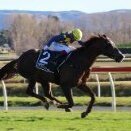
Chantilly's two newcomers' events on Monday featured some likely types and in the colts' version it was Yeguada Centurion's well-connected Mr Lope Cen who had the bragging rights. Fighting off another son of Lope De Vega in Vegamix, the 27-10 favourite who is entered in the Poule d'Essai des Poulains and Prix du Jockey Club got his career off to the perfect start for the Henri Devin stable. Aurelien Lemaitre had to be patient on the fence on the half-brother to Justify's Prix de la Foret heroine Ramatuelle, but when the time came his mount was alive to the opportunity and able to lead home the sprint and score by 1 1/4 lengths from the Wertheimer-Fabre project as the pair pulled clear. The post Ramatuelle’s Half Brother Mr Lope Cen Gets It Done On Debut appeared first on TDN | Thoroughbred Daily News | Horse Racing News, Results and Video | Thoroughbred Breeding and Auctions. View the full article
-
-
Topics