
-
Posts
486,623 -
Joined
-
Last visited
-
Days Won
718
Content Type
Profiles
Forums
Articles
Videos of the Month
Major Race Contenders
Blogs
Store
Gallery
Everything posted by Chief Stipe
-

Unload on MELONI? Blame the Gen Z hat throwing rabble
Chief Stipe replied to Thomass's topic in Galloping Chat
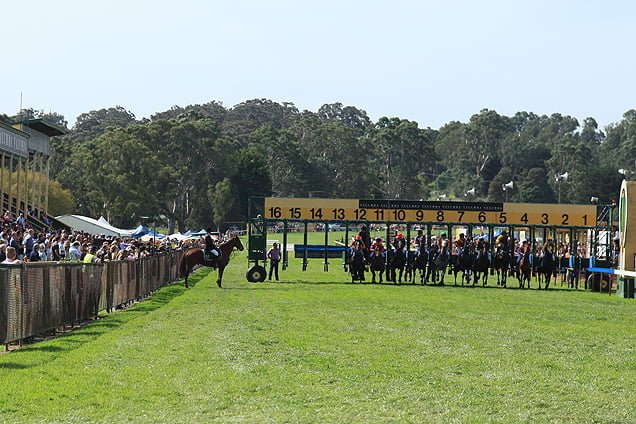
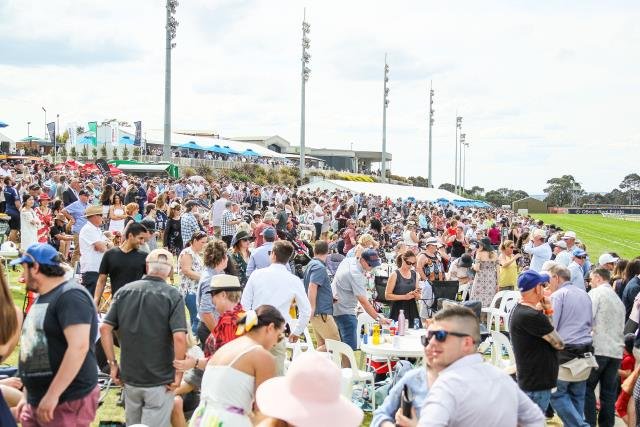
With Freedom comes individual responsibility. You have abused the first often enough that moderation is the only option. Most of us have seen the head-on and get the picture. Knowing Wellington quite well the hat could have blown some distance regardless of what physical barrier was in place. You'll be banning seagulls next. It's Spring. But even then you have complained in the past about inconsistent surfaces pushing the fields to the extreme outside. Perhaps they should have an outside rail they can move in as well. But that wouldn't stop a strong wind blowing a hat over the fence. As I pointed out above there many tracks not up to the standards that you only seem to promote when you have done your dough. -
Can the South Island Bulls, if they actually eventuate, survive without Christchurch ratepayer funding? I can't fathom why the Council is so heavily involved in one of the consortiums. In that regard it has a Moana Pasifika end result written all over it.
-
Menu Project Stamina will add to the cost of racing’s wastage by Brian de Lore Published 20th September 2026 When Project Stamina was belatedly released on July 28, it was mooted as a 20-year cross-code infrastructure strategy and national masterplan for NZ’s thoroughbred and harness racing venue network. If you read it, did your eyes glaze over? It runs for 137 pages, including five appendices. But it’s not the length of the document that’s the issue; it’s the fact that TAB NZ funded the $900,000 for RCP (Resource Co-Ordination Partnership) to write it and present it to the two remaining codes, only to see it pulled apart and reshaped in the name of ‘One Equine View.’ An insider confirmed the cost to The Optimist at $900,000. Project Stamina cost $900,000 In the Executive Summary of Project Stamina released by the two codes, it said: “Harness Racing New Zealand (HRNZ) and New Zealand Thoroughbred Racing (NZTR) have worked through the Project Stamina National Masterplan and arrived at a single, shared position, referred to as the “One Equine View”. This One Equine View sets out where the codes align with the Masterplan, where they differ, and the actions they consider most material now.” You may ask: “Why did TAB NZ spend $900,000 in commissioning RCP to produce Project Stamina only to see the two codes deconstruct it and alter the outcome with its own politically preconceived footprint – what a waste of money! The racecourses at Oamaru and Gore were both recommended in the RCP Masterplan alongside Riverton, Cromwell, Greymouth, Reefton, and Kumara as the most important community-supported venues to retain, but the One Equine View said both venues should be closed. Why close them? RCP’s comprehensive work is impressive, and if you visit P124 of Project Stamina, which examines ‘Race Day Scenarios,’ you will see that RCP rates Oamaru and Gore as more important as community venues than Taupo, Woodville, Waverley, Riverton, Tauherenikau, and Timaru. 62 written Gore questions for NZTR & HRNZ NZTR and HRNZ travelled to Oamaru and Gore on 27 and 28 August, respectively, to meet with all clubs that use the Oamaru and Gore racecourses, with the four clubs at Gore providing NZTR with 62 written questions before the meeting. Most questions would not be answered until 7 September, when NZTR General Manager for Strategy & Transformation Dan Smith emailed them. Here are some in summary: Q. 22. “Club Viability: Why, when both GRC and GHRC consistently boost their stakes and remain self-sufficient, profitable clubs, would you look at exiting them?” Answer: “Club financial performance was not a metric in the model.” The answers to four questions on loss of sponsorship, filling the sponsorship gap, Licensing Trust Funding, and the funding stream impact all came back with the same answer: “Acknowledged as real and material impacts.” Under the heading of Horse Welfare, Training Logistics & Travel Friction, Q.29 asked, “Could you explain the travel friction score?” The answer came back as one of the great gobbledegook responses of all time, and it more or less sums up many of the less-than-satisfactory answers the Gore Racing Club received. Q.29: Could you please explain the travel friction score? Answer to Q. 29: “Travel friction is the model’s core measure. The P-Median optimisation minimises total weighted travel time across all demand nodes nationally, so it optimises the aggregate rather than testing any single corridor or participant group. Those effects are real but sit outside what the model measures and belong in the codes’ regional transition planning.” That answer sums up what is wrong with NZTR. When Gore asked about further stakeholder attrition from the loss of owners, breeders, trainers, and volunteers, the predictable, repeated response was, “participant attrition wasn’t modelled, and we don’t dispute the risk.” If Oamaru and Gore close, it’s impossible to believe those racing jurisdictions and the surrounding areas wouldn’t suffer further losses of owners, trainers, breeders, and horse numbers, and lose wagering and future racing participation. NZTR don’t seem worried about that, because they haven’t done the metrics. Of course, Project Stamina could end up on an NZTR shelf to collect dust and never get done, like many of its forerunner reports. In a TAB NZ betting market, that would be the favourite outcome, paying $1.70. Two decades of wasting $ millions It would add a further $900,000 to racing’s multi-millionaire club of wastage, an ever-increasing pile of wasted cash since the start of the new millennium. Racing people with good memories will surely recall a succession of disastrous decisions by various boards and careless CEOs who arrived and left at regular intervals without accountability. Here’s a recap: 2005: NZTR sold its half share in its office building at 180 Taranaki St, Wellington, for $2.4m, producing a book profit of $1,122,123 after costs. It rented out half the space for $95,000 annually. NZTR went to the NZRB office at Petone rent-free for three years, but has paid rent ever since. The 180 Taranaki St building was resold in 2023 for $27.5m. At the time, the NZTR board said it wasn’t in the business of owning property – go figure? 2005: Wellington RC joined RACE in 2005 and signed over its assets, although the transfer process was still incomplete 12 years later, in 2017. By 2011, the WRC had contributed around $9.28 million in capital, while Rangitikei’s capital account was only $315,000 and Marton’s $681,000. Each member club had equal representation and voting rights – two representatives each. Why did the WRC agree to such a deal? RACE has repeatedly converted inherited racing land into cash to finance debt reduction, capital development and the operation of its business. Although reported net assets have risen, much of that increase reflects externally funded infrastructure and accounting gains on historically low-cost land. Twenty-three years after its formation, RACE remains heavily indebted, and its latest accounts again rely partly on future land sales to support the going-concern assumption. 2006: Directors’ fees of $175,000 were paid for the first time, following Chair Guy Sargent tabling in the 2004-05 Annual Report (AR) that “A review of New Zealand Thoroughbred Racing’s Board operations to ensure effective governance in accordance with the Institute of Directors’ guidelines.” It’s not the cost here that proved problematic, but the start of an ongoing invitation for non-racing people to join the board. 2006: The Free Tax campaign succeeded, and the tax rate was reduced to 2% – parity with gaming. It brought in $33m in the first year, 2006-07, but racing benefited only marginally. Instead, NZRB expanded its own infrastructure and between 2006-07 (Chair Michael Stiassny) and 2014-15 (Chair Glenda Hughes) the NZRB wage bill grew from $27m to $66m, employing 820 people, while the racing industry contracted. A 2011 government briefing recorded that the racing industry’s contribution to GDP and the number of jobs it sustained had declined. 2009: NZTR commissioned a consultancy firm called BoardWork to review the existing process of board member appointments. BoardWork said the existing ten-person representative board should be replaced by a seven-person independent board selected for ability, experience and governance competence. It nevertheless said a majority should understand and have credibility within thoroughbred racing. It did not recommend the Members’ Council as the director selection body. The principal argument for abolishing the old NZTR board was that it was too representative of their constituencies. So NZTR abolished a representative board, but then created a representative body to select an independent board – all they did was move it up one level. 2009: NZRB bought the Typhoon Betting System to replace Jetbet. The AR said the new technology would expand the range of betting products, improve reliability and reduce costs. In October, the industry was publicly told that Typhoon would be installed by December 2010 and that it was a $5m investment. Newly appointed CEO Andrew Brown described Typhoon as the outcome of a worldwide search for the most efficient and reliable system and said it had been selected as the best and most cost-effective option. But the 2011 AR said it was slower and more costly than expected, and couldn’t provide some of the functionality NZRB required. By 31 July 2011, Typhoon’s cost had risen to $ 14.12m. It was never turned on. 2009: Chair Stiassny appointed Andrew Brown as NZRB CEO after what NZRB described as an “extensive and rigorous” domestic and international search. Brown started inMay 2009. The industry reported his package at NZ$950,000. In January 2011, he suddenly resigned ‘for family reasons’ after 20 months, but the NBR reported it was ‘in the face of a major defamation action.’ The severance figure Brown received is unknown, but one employee received $580,000 – $590,000 in the year he left – likely to be Brown. 2011: RACE by July that year had assets of $35.788m, liabilities of $11.806m and net assets of $23.983m. But the member clubs had originally contributed capital accounts totalling $26.235m, meaning RACE had already accumulated a $2.252m deficit against that contributed capital. By July 2025 RACE reported net assets increased by approximately $11.1m between 2011 and 2025. But the increase is deceiving, as the Government provided $10.5m towards that synthetic track and RACE capitalised about $11.723m of synthetic-track expenditure. So, a substantial part of the increase in RACE’s physical asset base came from outside capital supplied by the taxpayer, rather than profits generated by RACE’s business. 2012: Chair Stiassny appointed Chris Bayliss as NZRB CEO to start in August 2012, despite his zero knowledge of racing and betting. That financial year, he was paid $960,000-$970,000 (8 months), and the Herald reported his package as more than $1m. In his first year, staff expenses increased by $7.1m. Even the neutral KPMG, in doing an audit, said “how much capability is optimal?” and advised NZRB to measure return on investment. KPMG also noted that “six of the seven members of the senior management leadership team were new to the racing industry” (a scenario with an air of recent familiarity). Bayliss was a disaster – KPMG refused Bayliss’s pie-in-the-sky budgets, describing them as ‘aspirational and very challenging.’ Bayliss spent $3.4m on restructuring in his first year and millions more relocating TAB broadcasting to Stanley St, Auckland. Bayliss suddenly left the job at short notice, after less than two years, amid intense industry speculation of behavioural issues. The Herald headlined it “Racing man’s mystery exit from $1m job” 2013: National Party President Glenda Hughes was appointed NZRB Chair on August 1st, devoid of racing and betting knowledge. It was an ill-conceived political appointment; Hughes developed an association with Paddy Power and OpenBet (against strong opposition from NZTR) to build a Fixed Odds Betting Platform, against Deloitte’s advice that the FOB “carried significant risk to the balance sheet.” Hughes projected an original cost of $25m. When launched five months late in January 2019, the cost was $42m plus another $7m in the first six months, plus annual contractual commitments to Paddy Power and OpenBet of $17.3m. Hughes held the Chair position for six years. 2014: The Bayliss-driven Trackside broadcasting relocation to Auckland cost $1.1m for the shift alone. That figure covered only the unbudgeted redundancy provision. NZRB also guaranteed $8.9 million of bank borrowing and $4.1m of lease obligations for NZ Live, the start-up company that became its sole broadcasting supplier, while committing a further $3.9m to broadcasting-equipment finance. The identifiable financial package therefore approached $18 million, although guarantees represent potential exposure rather than proven losses. More significantly, NZRB entered a ten-year services arrangement while its other non-cancellable operating commitments increased by $57.8 million in one year, predominantly in broadcasting technical services and telecommunications. The accounts do not disclose how much of that increase belonged specifically to NZ Live, so it would be unsafe to call $57.8 million the cost of the Auckland move. What can safely be said is that NZRB assumed tens of millions of dollars of long-term contractual risk, supported the debt and lease of a company it did not own, and carried much of the downside without receiving any disclosed ownership interest in the business. The eventual cost to racing has never been transparently demonstrated. What a dumb board agreeing to that. 2015: Hughes appoints MFat departee John Allen as NZRB CEO (no racing or betting background but, nevertheless, a brilliant knowledge of classical music) in a politically convenient move, on a salary of $620,000. Hughes and Allen announced the FOB project in December 2016. Allen’s ambitious projections failed miserably to deliver – forecast net profit of $185m in 2018/19 (actual was only $136.7m, minus $48.3m, -26%), and $200.6m in 2019/20 (actual was $166m or $36.8m below budget). NZRB never achieved the promised $200.6m. The FOB became the clearest example of NZRB investing heavily in a strategy that events soon rendered obsolete. John Allen’s 4½ years were a financially debilitating time for racing. By the time John Allen resigned and Entain retired the unsatisfactory FOB platform, the cost had exceeded $100m. 2020: In August, the NZTR approved replacing the NZTR Racing Management System with the Single National System (SNS), and the project commenced in September. For the next three years, NZTR continued with the SNS under CEO’s Bernard Saundry’s management and spent over $4m on a project that simply failed to work. Racing Australia also dropped $2.35m on the failed project. 2023: The year the Awapuni reconstruction commenced with a budget of $5m and a completion date of April 2024. By April 2025, after 19 months without grass racing, RACE and NZTR were highly confident they had succeeded. On April 8, after trials involving 88 horses, RACE announced the reconstruction was complete and said the track had been cleared to resume racing. GM Brad Taylor declared $5.7m had been well spent, but a slip on Anzac Day in the first race at the first meeting back obliterated that remark. Industry estimates have put the additional cost of rebuilding Awapuni at around $8 million over two more years, although NZTR has yet to publicly disclose the final project budget and says the remaining funding is still to be secured. More man-made waste that NZTR and RACE must share. 2020: The Racing Integrity Board (RIB) came into being following the Racing Act of 2020. The last year of the Racing Integrity Unit (RIU) in 2020/21, including the JCA, cost $7.99m. The operating funding for 2026/27 is $17.87m plus another $2.056m for its capital programme – total TAB funding $19.88m. This is difficult to reconcile when, in 2024/25, the RIB serviced 997 race meetings, of which 410 (41%) were Greyhounds. Losing more than two-fifths of its race meetings while reducing expenditure by just 0.05% owes the industry a detailed explanation of where the greyhound savings went and why its overall cost base remains virtually unchanged. 2026: When Entain arrived in 2003, it had to buy out the unpaid NZRB contractual arrangement with OpenBet, which was known to be in the vicinity of $20m. TAB NZ is now over three years into the Entain/TAB NZ partnership, and the jury is out on where it’s heading financially and whether it will last the contractual term of 25 years. In 2024/24, the betting deficit after distributions was $38.4m, and that’s the red warning light for racing. It was only able to do that because the arrangement includes guaranteed payments and because TAB NZ has been releasing cash received upfront from Entain. All the figures and quotes in the bullet points above come from the Annual Reports of NZTR, NZRB, RITA, TAB NZ, and the Government website. They are all available online for checking. The 16 bullet points above aren’t the full story of wastage, but they chronicle consistently poor decision-making over more than two decades. Many other, lesser instances have been left out for space reasons. Over two decades, a series of poor decisions by incompetent people has cost the NZ racing business hundreds of millions of dollars. The TAB Advisory Committee is now a retired body, but its work showed that the current NZRB has been living well beyond its means, increasing costs by 43% since 2003. If we don’t stop this reckless governance, then racing is unsustainable. Everything comes back to people. We deserve better governance. One strong leader with a few good generals might stem the bleeding and fix it. Congratulations if you have read this blog through to the end. That puts you approximately in the top 5% of online attention spans. Now try reading this: https://nztr.co.nz/projectstamina We must stay Optimistic.
-
When a brazen affair can lead to toxic terminal group think.
Chief Stipe replied to Chief Stipe's topic in Galloping Chat
How can any sane sensible intelligent person comment honestly on anything when NOTHING has been revealed other than the irrational gripes of one individual? What we have is: 1. A disgruntled owner. Always been plenty of those in racing. 2. A Forum Owner desperate for traffic and believes that controversy will help. 3. The absent mate(s) who is/are negative everything NZ racing. 4. The intellectual latecomer who loves a moral crusade. Add to that a demographic cohort of a couple of dozen online aged grey haired moaners and you have a recipe for Toxic Group Think and a narrative that is built on nothing. Then create a bully gang to censor and ridicule anyone who has the opposite opinion or experience based on fact to sustain your own narrative. Zuckerberg (Facebook) must of seen the opportunity to make zillions by looking at his parents and their friends. He gave them a platform on which to feel involved and to wail at the world. Now most of what is published is poorly constructed opinion based on fiction. Add AI and we can't even be sure the pictures we see or the prose that is written is actually posted by a person. A shame some forums don't practice what they preach i.e. Put Up Or Shut Up! Meanwhile the popcorn is getting staler. -
5 wins in total today. I didn't see the one at Echuca sneak through -Precambrian won a maiden worth NZD$39k.
-
When a brazen affair can lead to toxic terminal group think.
Chief Stipe replied to Chief Stipe's topic in Galloping Chat
Right but now you are a key protagonist in the toxic Anti-Te Akau campaign and either explicitly or tacitly fuel it. -
When a brazen affair can lead to toxic terminal group think.
Chief Stipe replied to Chief Stipe's topic in Galloping Chat
Precisely - at least a party has the objective of being fun. -
When a brazen affair can lead to toxic terminal group think.
Chief Stipe replied to Chief Stipe's topic in Galloping Chat
Really Brent? What I don't understand is what does any of this garbage have to do with you? Correct me if I'm wrong but you have never raced a horse with Te Akau as an owner. Neither Leigh Mckenzie or Barry Wallace have either. Is this another one of your ill conceived misplaced moral crusades? As for being patient at this pace I'm worried you won't last the distance. -
Unload on MELONI? Blame the Gen Z hat throwing rabble
Chief Stipe replied to Thomass's topic in Galloping Chat
The problem was an old chesnut of yours @Thomass - inconsistency of the track across its width. The Jockey's went to the outside looking for better going. -
Unload on MELONI? Blame the Gen Z hat throwing rabble
Chief Stipe replied to Thomass's topic in Galloping Chat
Oakbank.
-
Unload on MELONI? Blame the Gen Z hat throwing rabble
Chief Stipe replied to Thomass's topic in Galloping Chat
The Primary Running Rail is the inside rail NOT the outside. Perhaps you might want to direct as much angst towards the state of the "Champagne Turf". Regardless of nit picking over rules there are any number of tracks in NZ and OZ that have large crowds just as close to the track as Trentham. Cranbourne for example.
-
Unload on MELONI? Blame the Gen Z hat throwing rabble
Chief Stipe replied to Thomass's topic in Galloping Chat
Fill ya boots @Thomass it seems to be a day for weird commentary about a great days racing on borh sides of the Tasman. -
When a brazen affair can lead to toxic terminal group think.
Chief Stipe replied to Chief Stipe's topic in Galloping Chat
What a laugh! I see the @Comic Dog the south asian recycled glove magnate has reprimanded a positive Te Akau poster for straying off topic. LOL if anyone can work out what the Topic is about then that reprimand is the best clue out 1,500 largely pure Anti-Te Akau toxicity. Even the person who started the Topic in January by asking the simple question "Are we witnessing the end of the Te Akau dominance?" has not posted again in 1,500+ posts. Clearly the answer to the original question was NO given Te Akau once again won the NZ Trainers Premiership with ease. But of course it hasn't stopped Bob Scott ( @nomates ) the digruntled owner amd author of the fictional Novella - A Brazen Affaiir from hijacking the original Topic. Along with his merry men in forest green tights Leigh Mckenzie (Friar Tuck), Barry Wallace and late to the party Brent Gardiner. Meanwhile we wait for "the big reveal" of a scandal purported to be of wine box proportions...waiting...waitimg... -
Plus a couple of unlucky runs with the Ellerslie wide draw factor playing a part. The run of Tolaga Bay in the Caulfield Guineas Prelude was unlucky too. Posted wide early without cover and for most of the race. Not the best ride. Tough horse.
-
Unload on MELONI? Blame the Gen Z hat throwing rabble
Chief Stipe replied to Thomass's topic in Galloping Chat
Didn't worry Trigger.
-
The reason?
-
Turnover where? On the tote of fixed odds? You wouldn't run a business for long where you were increasing turnover but were having to borrow capital to do it.
-
Increased turnover doesn't automatically generate "help for the industry" i.e. increased revenue. If you and @Brodie are net profit makers and no other punter enters the market who loses more than you then the industry loses. Increased turnover on the tote will provide a net return but surely you are not restricted from filling your boots on that market.
-
I guess then you are making the point that some livestock/bloodstock don't become pets but serve other purposes that some people may object to.
-
Who says they are registered thoroughbreds? I suggest you and the @Comic Dog keep working on your big conspiracy "reveal all" - my pop corn is going stale it's taking so long.
-
You're a miserable old bastard. BTW I didn't start this topic however some of us enjoy watching success in racing. Obviously you don't enjoy much at all.
-
What's your point? Champions are rare and anyone can own and or train one.
-
So you recommend they buy donkeys? Does Marsh's $2.6m at Karaka deserve as much attention? Or are you just selective?
-
Better horses still to come.
-
More grist for the anti-racing public perception mill.
Chief Stipe replied to curious's topic in Galloping Chat
My advice. Don't go with the ticket clippers - ring up the place where you want to stay and negotiate a deal.