
-
Posts
484,427 -
Joined
-
Last visited
-
Days Won
661
Content Type
Profiles
Forums
Articles
Videos of the Month
Major Race Contenders
Blogs
Store
Gallery
Everything posted by Chief Stipe
-
 Everyone who posts regularly here knows who I am. BTW I didn't have to change my name to hide any previous misdemeanours such as you have had to. But let's not resort to ad hominem attacks which I gather is your favourite modus operandi. For the record I currently do not own any horses, I don't have an association with any stable and I'm certainly not paid or beholding to any current license holder. Unlike yourself of course who relies on a NZ Harness Owner to fed crap if not write your articles.
 -
Bring it on Archie. If you are indeed Archie. You write unsubstantiated crap that you appear to barely understand. I didn't say there was a PCR test for EPO however the research that you said in the Black Horse Newsletter some trainers were fearing tried to develop one to no avail. When they didn't need to as there were already tests available using other more accurate technology.
-
Great Moments in Racing. Can you remember some
Chief Stipe replied to Gammalite's topic in Galloping Chat
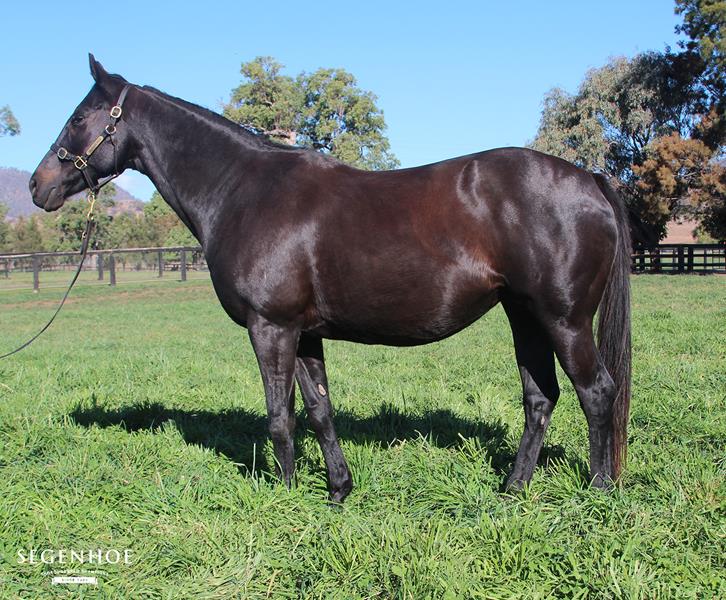
When someone asks this question my greatest moment comes to mind. Tried to find a picture of the moment from 2006 but couldn't but came across this picture - about the third time she has been sold. Rising 19 year old in this picture.
-
Great Moments in Racing. Can you remember some
Chief Stipe replied to Gammalite's topic in Galloping Chat
Not one of them won the race? -
The Black Horse Newsletter on the 4th of February 2022 published an article by Peter Profit aka Archie Butterfly in which he asserts that both NZ and Australian Harness Racing is corrupted by doping cheats using EPO. He directly points the finger at the NZ Chief Racing Vet, Dr Andrew Grierson, Woodlands Stud and the All Star Racing Stable. Butterfly (who would seriously change their name to Butterfly?) has also made these claims against the Robert Dunn stable and nearly every other stable domiciled at Woodend Beach just north of Christchurch. I contend that not only are his claims baseless but they are also libellous and harming to the racing industry only because the uninformed and those with an agenda are taking notice. I find his claims laughable and not surprising when such baseless claims are made by a journalist (I use that reservedly in Butterfly's case) that they in the course of their discourse(s) shoot themselves in the foot. Primarily because they have no understanding of the science of what they claim. In the Black Horse Newsletter Mr Butterfly aka Peter Profit not only shoots himself in the foot but blows his cranium off. In the interests of brevity I will address just one claim in this post. In another post I have written some detail on EPO as a PED (rHuEPO Use as a PED in Horses: Fact or Fiction?). He claims that - Racing authorities are noticeably quiet about the growing threat from blood doping. The truth is most of them are clueless about what is really going on, the easy option is to look the other way and just let the cheats get on with it, which is how it’s playing out in Ireland and the UK. Experts like Dr Mark Cheney of the Kentucky Equine Drug Research Council argue the use of blood dopers in US racing reached epidemic levels three years ago. Dr Mary Scollay, equine medical director of the Kentucky Horseracing Commission, highlighted risks presented by microdosing EPO: “The effect exerted by these substances far exceeds the window of detection of these substances which are typically present in the blood for less than 48 hours following administration.” She sought backing from the commission for a two year study that aimed to develop an affordable test to detect the drug quickly. The result of that study is due now and can't come soon enough, except for the cheats. The rest of the racing world watches and waits. Well Archie the racing world didn't have to wait as they had already read the outcome of this research which was first published over 2 months ago in October 2021! I can understand Archie Butterfly not keeping up with the play but have been surprised that The Paulick Report hasn't reported on it especially as the comment made by Dr Scollay was first reported in that publication. Dr Mary Scollay and the USD$147,000 Research that Found Nothing! Yes Archie Butter the Scollay championed research funded by the Racing Medication and Testing Consortium to the tune of USD$147,000 (NZD$225,000) found nothing! Or rather they found that micro-dosing using rHuEPO did NOT increase red blood cells (the number of), hemoglobin (the red blood cell protein that carries the oxygen) or hematocrit (a measure of the proportion of red blood cells). Dr Mary Scollay Bio Dr Scollay is a world recognised equine welfare vet. She is currently the Executive Director and Chief Operating Officer at the Racing Medication and Testing Consortium, Lexington, Kentucky. She has been in that position for two years. Prior to that for 11 years she was Equine Medical Director, Kentucky Horse Racing Commission. She has a degree in Veterinary Medicine from the University of Illinois. She has published 12 research articles primarily on the topic of equine musculoskeletal injury. The Research - Transcriptomic Markers of Recombinant Human Erythropoietin Micro-Dosing in Thoroughbred Horses The research was undertaken by the School of Veterinary Medicine, University of California Davis. One can only assume that direction was given by Scollay and her team Racing Medication and Testing Consortium on the objectives of the research. However some of the research design and objectives is questionable. The objective of the study was: To address the challenge of detecting rHuEPO doping in horse racing, by determining the transcriptomic effects of rHuEPO micro-dosing over seven weeks in exercised Thoroughbreds. Study Design The design entailed the selection of 5 mares and 5 geldings aged between 5 and 6 who after examination were determined to be healthy. They were put on a constant exercise protocol prior to and throughout the study. Six of the horse were randomly assigned to the treatment group (those administered rHuEPO) and 4 to the saline control group. The number of horses chosen is statistically significant. The horses in the treatment group received injections of 20 IU/kg of rHuEPO (brand EPOGEN) two times a week for seven weeks. The dosage was determined based on reports of micro-doping in humans. The 20 IU/kg assuming 500kg per horse equates to 10,000 IU per injection. 20mL of blood was drawn from each horse for testing on days 1, 3, 10, 14, 17, 24, 35, 38, 42, 49, 56 and 63 for for a complete blood count (CBC) which measured RBCs, hemoglobin, hematocrit, mean corpuscular volume, mean corpuscular hemoglobin, and mean corpuscular hemoglobin concentration. RNA sampling was also undertaken for sequencing and analysis. This was to determine pieces of RNA (transcripts) that showed differences between the treatment and control group. Once these transcripts were identified PCR tests were developed to test for the presence of these transcripts. The theory being that this would enable a low cost way of detecting that rHuEPO has been administered. The Results One horse colicked during rHuEPO administration but they state that there was no evidence that this was caused by the EPO. 5 out of 6 horses showed apparent discomfort after each injection, as indicated by pawing after the injection, leg swelling in one horse, and hives and swelling or edema at the injection site in four horses the day after injection. The control group (saline) experienced no reactions. Red Blood Cell Count, Hemoglobin and Hematocrit (the Oxygen carrying blood elements) showed NO SIGNIFICANT DIFFERENCE. Figure S1. Complete blood count results of (A) red blood cells, (B) hemoglobin, and (C) hematocrit across time points (in days Each data point is an individual horse with saline treatment as teal and EPO-dosed horses as purple. There is no overall significant difference effect of treatment. Now this is where the study gets really technical so I'll cut to the chase as best as I can. Basically they looked for pieces (transcripts) of RNA that were significantly different between the treatment and control group. The theory being that they could develop a PCR test to easily identify these RNA transcripts. They identified the following five from a total of 25 that were significantly different. So they developed PCR primers and PCR tests for these. But when they used the tests they could not find any significant difference. Essentially the PCR tests were of no use. Now you could argue that that was proof that EPO can't be detected. Well if you did that then you would be wrong. Discussion and Conclusion To quote from the paper - This study set out to identify transcriptomic markers of rHuEPO micro-doping in Thoroughbred racehorses. Like endogenous EPO, rHuEPO binds to the EPO receptor on erythroid progenitor cells, initiating a signaling cascade that leads to the binding of key transcription factors that induce the production of more red blood cells [36]. Increasing the number of red blood cells increases the total oxygen available and aerobic power [1]. Thus, we hypothesized that we would identify significantly differential transcripts that were involved in erythropoiesis. RNA-seq from PBMCs isolated throughout the experiment identified three transcripts that changed significantly over time between treatment groups. C13H16orf54 and PUM2 were upregulated and CHTOP was downregulated with rHuEPO administration... With the significant gene expression differences not validated using RT-qPCR, the development of a diagnostic test to detect rHuEPO doping in racehorses is hindered... In simple terms the research - identified some RNA that could be markers for EPO detection; was unable to develop a PCR test identifying those markers; no significant change occurred in the oxygen carrying components of the blood. The Weaknesses of the Research Aside from the fact that the Archie Butterfly and Black Horse pre-announcement of some ground breaking research didn't come to fruition in reality the study has a number of flaws. Why didn't they use the existing EPO tests used by the HKJC to test for rHuEPO? Or why didn't they use a plethora of other tests that are available for detecting rHuEPO? Yes the intention of creating an easier cheaper PCR based test may have some merit but is it really necessary when more reliable tests already exist? I won't go into the in's and out's of false positive and false negative PCR testing - we've all had enough of that with Covid-19. But one aspect that is significant is that a micro-dosing EPO dosing regime which is similar to what has been touted in the media showed no significant difference! Come on Archie and Paulick where are your retractions and or your updates on this research that is supposed to have every top trainer in OZ and NZ quaking in their boots? Finally the following statement by Dr Scollay is patently false - “The effect exerted by these substances far exceeds the window of detection of these substances which are typically present in the blood for less than 48 hours following administration.” I can only assume that the statement was either taken out of context or was hyperbole and embellishment to secure funding for the research. Surely she would have been across the many pieces of research that show that rHuEPO can be detected for weeks after administration. genes-12-01874.pdf
-
Ruakaka - Wednesday 9 February 2020 - Track Conditions?
Chief Stipe replied to Chief Stipe's topic in Galloping Chat
Hasn't one of the arguments in the past been that they don't have sufficient facilities for the public? Doesn't hold up at the moment. The other red-herring excuse was they needed high bandwidth broadband installed to be able to broadcast. -
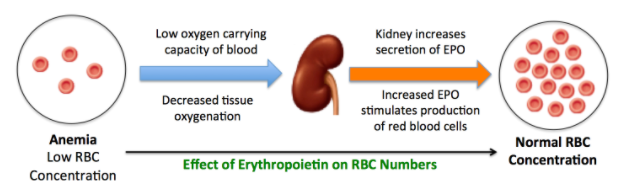
There has been much discussion on Racing Forums about allegations of the use of EPO (rHuEPO). This has been fuelled by speculative reporting from news outlets such as the Paulick Report, Thoroughbred Bloodhorse and Peter Profit. Although I'm loathe to call Peter Profit a news outlet he has gone so far as to post images of packaged EPO bought off the internet and then inferred this is the secret to many of the performances by top harness stables. I've done quite a bit of research over the last week or so which I'm in the process of writing up in full. However is the use of EPO in horse racing Fact or Fiction? My conclusion it is Fiction. What is EPO: EPO is a naturally occurring hormone produced by the kidney's. It is necessary for life in all Vertebrates. It's production is regulated by the amount of oxygen in the circulating blood e.g. if there is low oxygen then EPO is released and conversely when high oxygen is detected EPO production reduces. It is a self regulating system. The EPO hormone delivers a signal to the bone marrow to create more red blood cells (erythrocytes) and thus enable more oxygen to circulate. EPO as a PED (Peformance Enhancing Drug): The theory is that by injecting EPO into a horse you are stimulating the production of red blood cells, increasing the blood's capacity to carry oxygen and therefore increasing the horses performance. Manufactured rHuEPO : rHuEPO is a Biopharmaceutical, that is one derived from biological origins. rHuEPO is manufactured by cloning the HUMAN gene for EPO - essentially cells are harvested from humans and then multiplied using biological replication processes (mRNA vaccines are developed the same way with the spike protein manufacture using E. coli!). Recombinant erythropoietin drugs are known as erythropoietin-stimulating agents (ESAs). There are two types of ESAs on the U.S. market: epoetin alfa (Procrit,® Epogen®), and darbepoietin alfa (Aranesp®). The Allegations: Fact or Fiction EPO (rHuEPO is undetectable: Definitely Fiction. The Hong Kong Jockey Club lab (where most of NZ horse swabs go) has been testing for rHuEPO for at least 10 years. There have been positives returned in Harness in Australia. I believe the HKJC use high-resolution mass spectrometry as its test method and looks for two specific peptide fragments VNFYAWK (T6) and VYSNFLR (T17). There are numerous other methods including PCR tests. The fact is if a racing jurisdiction suspects rHuEPO is being used then it is a straight forward process to detect it. The first test for EPO at the Olympic Games occurred in Sydney in 2000. Micro-dosing of EPO avoids detection: Fiction. Micro-dosing is where supposedly undetectable amounts are given over a long period of time to stimulate the desired effect of an increase in RBC. This approach fails because very minute levels can be detected. To paraphrase the eccentric Nobel Prize Winning Biochemist inventor of the PCR test, Kary Mullis, "you can now find 1 molecule of a substance if you are motivated to but it doesn't mean the person has a disease" i.e. very very small amounts of a substance can be found. We have seen evidence of this in horse drug positives in recent years for substances that have a zero tolerance. The amounts are so small that there is no way that there could be a therapeutic let alone a performance enhancing effect. However that isn't the point with detecting rHuEPO. as any amount, no matter how small is an indication of administration. The other weakness with the "Micro-dosing" allegation is that small doses are unlikely to have the desired theoretical effect given the horse's body will self regulate the production of RBC and this is more likely to occur over time. So theoretically if you wanted to get a spike in oxygen carrying capacity then a large dose would more likely achieve it. Either way the administration would be detectable. EPO Doping Worked on Humans so Works on Horses: Likely Fiction. I say likely because there is little to no evidence that rHuEPO administration on horses increases their RBC sufficiently (if at all) to improve performance. Much was made of an article in The Paulick Report about Dr Mary Scollay (World Authority on Equine Health - Executive Director and Chief Operating Officer at RACING MEDICATION AND TESTING CONSORTIUM) and her comment about anecdotal evidence of widespread EPO use and micro-dosing (more about this in the comprehensive article). This comment was made coincidentally at the time she was seeking research funding. She was duly given NZD$225,000. Well that research has been completed and the findings were that yes EPO can be detected at micro-doses and NO there was no increase at all in the blood factors that influence performance. Oddly the research didn't use the current readily available tests but look to identify new markers. Lo and behold the recommendation was that more research was required and no doubt there will be another funding round coming up soon. Doesn't that remind you of Covid Scientists? But what about Lance Armstrong? Well he did use EPO and did improve his performance and did avoid detection. But the truth is a bit more complex than that. It is believed that he used EPO but also blood doping where blood that had artificially increased Red Blood Cell counts (artificially through EPO or from training at altitude) was stored (perhaps spun to remove the plasma) and later reinjected back into his body via infusion. He also avoided testing by using a number of scrupulous means. None of these techniques is likely with horses in NZ or Australia for that matter. The Peter Profit hypothesis is (it isn't the micro-dosing hypothesis): rHuEPO is used at a high concentration out of competition to increase the RBC count of a horse. Then blood is taken from the horse and spun extracting the RBC's and these are transfused into the bloodstream prior to competition. The flaws in this hypothesis are - - the assumption that rHuEPO will significantly increase the RBC; - costs of the rHuEPO. Although units of rHuEPO can be purchased at relatively low prices - $30 to $60 per 10,000 IU the volume required would be quite expensive and difficult to hide from authorities. The Paulick Report in 2015 published a letter from a Vet where the recommendation for in competition administration of EPO for was for 10 vials in the first seven days and then top ups twice a week. Aside from the fact that the EPO is detectable is that a cost that any NZ owner would be willing to pay?; - it would involve a compliant Vet regularly testing the blood for blood count levels. Two reason one you would want to take the blood when the count was up and two there is a fine line when the blood count is too high and the horse becomes seriously ill. Where ware all the compliant Vets and Labs?; - high volumes of blood would have to be taken. In human sports doping allegedly 4 units (2 litres) of blood is taken a month before competition. Too close to competition and the body is still catching up producing blood. So the equivalent in a horse would be 21 litres! Where do you store large volumes of blood before you spin it? Then where do you store the spun blood product?; - the spun RBC's would have to be transfused closed to competition to be effective (remember the horses body self regulates). Again careful vet monitoring would be required to get it right as too much could cause harm and reduce performance; - spinning is not 100% at separating the RBC's from all the constituents of the blood i.e. you wouldn't remove all traces of EPO. Which to sum up the PeterProfit hypothesis - FICTION! Horses don't adversely react to rHuEPO: Mostly Fiction A small minority don't however in the micro-dosing trial mentioned above all those administered rHuEPO at reactions of variable severity. The reason being that rHuEPO is a foreign body sourced from a human gene. The horse will develop antibodies and antigens upon injection. The same thing happened to some of you when you got the Pzifer jab. That's the short version. In summary to answer the Question: Is EPO widely used as a PED in horse training? Answer: NO unless you want to get caught! Unfortunately the counterfactual doesn't entertain or sell clicks plus the truth and explaining it can be mind blowingly boring! PS: I don't profess to be a Vet or an expert on this subject. However I did study Level 3 Biochemistry at Lincoln College and found it profoundly fascinating. I still remember the equation for how long it would take to burn the fat stored from a single glass of rum! Interestingly the manufacture of EPO uses similar processes as those that are used to create mRNA vaccines and the PCR and Rapid Antigen Tests are also not new. So although not an expert I do have a tuned radar for BS and know where to look to prove something isn't right.
-
Nup. This is expected. We are in a full blown La Nina event. It isn't out of the ordinary either. My local older sailing mates are running a book on not if but when we get nailed by a tropical cyclone out of the Pacific. Their guesses are based on memories going back 50 to 60 years of sailing.
-
Ruakaka - Wednesday 9 February 2020 - Track Conditions?
Chief Stipe replied to Chief Stipe's topic in Galloping Chat
More like it. Very warm (26 C) and humid here at the moment 12:29pm. Met Office says the "feels like" temp is 29 C! -
Ruakaka - Wednesday 9 February 2020 - Track Conditions?
Chief Stipe replied to Chief Stipe's topic in Galloping Chat
Shame really as there are a lot of the enthusiastic locals hanging out for a race meeting. Plus Ruakaka has acres of room under cover in their main public stand. -
Ruakaka - Wednesday 9 February 2020 - Track Conditions?
Chief Stipe replied to Chief Stipe's topic in Galloping Chat
Been very dry here and a considerable amount of the rainfall will have just washed off the surface. That coupled with the intensity - the majority of the rain fell in three hours. Add to that the sandy track...possibly only a D4 but I doubt whether a penetrometer was used. Sorry I meant Sunday to Monday (as you know!). These holidays one after another stuff me up. -
Uh? Only one black type race shifted and that's the 2yr old race. Arguably the other two will end up being softer races so easier for CD horses.
-
In theory that is correct but the problem when the soil structure is stuffed is you have to keep pouring it on because you have no buffer. The soil won't retain a buffer of moisture and so you have to keep pumping it on which would give you a S7 which is unacceptable. You can't fine tune it without having the buffer provided by a good soil structure. What's more you know how much irrigation is need to adjust the track to a defined point. With our tracks it is hit and miss. The other issue is you can't get a consistent gradient through depth - e.g. you might have a S7 at the surface due to the irrigation but 8 inches deeper only achieved a D4. Can you imagine the uproar when it has been fine all week and they pitch up to find that it is a D6 or worse and the excuse is "oh we were expecting rain".
-
The track is stuffed and has been for years. The inside is often very rough and you will see them running off the rail more than you would expect. They haven't invested anything into renovating the track. Why would you when you don't own it and the threat of closure is hanging over you. The only reason I can see for Taranaki to be a favoured racecourse is it is closer to the Waikato than the centre of the CD.
-
Happy to help.
-
La Crique 2022 Desert Gold Stakes - WOW!
Chief Stipe replied to Chief Stipe's topic in Galloping Chat
You are not talking in NZ are you with regard to "rich"? The Derby is a G1 and worth a million. It would seem from the latest article that the Derby was always the plan. She is going to the Avondale Guineas at Ellerslie over 2100m which will give them a good gauge on the next race. Note: the Avondale Guineas is a G2 worth a not so rich $120,000. I also disagree with the Derby taking the edge off. 2400m at Ellerslie is easier than 2400m at Trentham. -
La Crique 2022 Desert Gold Stakes - WOW!
Chief Stipe replied to Chief Stipe's topic in Galloping Chat
So the NZ Oaks would be off the table as well using that rationale. -
Trentham, Tauranga and Taranaki track management played a significant factor.
-
Ruakaka - Wednesday 9 February 2020 - Track Conditions?
Chief Stipe replied to Chief Stipe's topic in Galloping Chat
A test for the track. There has been over 75mm (3 inches) of rain since about 4pm yesterday Sunday to 8am Monday i.e. in 16 hours. -
Ruakaka - Wednesday 9 February 2020 - Track Conditions?
Chief Stipe posted a topic in Galloping Chat
MEETING NEWS Whangarei RC | Wednesday 9 February Withdrawal Morning Weather: Cloudy Track: Dead 4 Rail: True Weather and Track updated at 8.37am Saturday 5 February Nomination Morning Weather: Cloudy Track: Dead 4 Rail: True | Irrigating Today Weather and Track updated at 8.50am Friday 4 February Please note this meeting will be run as a closed door meeting, essential workers only. -
La Crique 2022 Desert Gold Stakes - WOW!
Chief Stipe replied to Chief Stipe's topic in Galloping Chat
The Derby it is for La Crique. Racing Talented filly La Crique will contest the Gr.2 AJC Avondale Guineas (2100m) ahead of the Gr.1 Vodafone New Zealand Derby (2400m) at Ellerslie Photo: Race Images - Peter Rubery La Crique confirmed on Derby path NZ Racing Desk 6 February 2022 Impressive three-year-old filly La Crique has had her immediate future confirmed as she gets set to tackle the boys at Ellerslie in both the Gr.2 AJC Avondale Guineas (2100m) followed by the Gr.1 Vodafone New Zealand Derby (2400m). Trainers Simon and Katrina Alexander met with owners John and Jan Cassin during the week to discuss the options available to the daughter of Rich Hill Stud stallion Vadamos, which included a possible Australian autumn campaign, with the decision taken to concentrate on the two New Zealand age-group features before most likely heading to the spelling paddock. La Crique, who defeated Gr.1 New Zealand 1000 Guineas (1600m) winner and Derby rival The Perfect Pink at Ellerslie before producing a dominant performance to take out the Gr.3 Desert Gold Stakes (1600m) at Trentham at her last run, has thrived following her return to her Matamata base. “We were delighted how she performed at Wellington and how she has come through the race,” Katrina Alexander said. “Her work has been very pleasing and she is taking the racing we have given her in her stride. “I actually think the race at Ellerslie, where she fought back to beat The Perfect Pink, has really given her a shot of confidence and has taught her she has another gear when she gets in a dogfight like she did that day. “With that in mind we sat down with her owners and had a really good discussion about the options open to her, which did include taking her to Australia. “I have never been a fan of adding something on to a campaign and the sentiment was we would like to see her tackle the Derby here and then have a good spell before going to Australia at some stage of her four-year-old season. “She will go to the Avondale Guineas on the 19th and then to the Derby a fortnight later before heading to the paddock for a spell.” Alexander is hopeful that the weather will hold over the next few weeks as she feels her charge is a far better prospect on top of the ground as opposed to operating on a rain-affected surface. “The worst she has been on is a slow track which she copped first up, but all of her jockeys have said she doesn’t really like it,” she said. “The weather starts to get a little variable around now so a few more weeks of fine days will suit us as we work towards the Derby. “The Derby field is starting to fall into place and we think she is definitely the type of filly who will get the distance as I see a lot of her dam in her and she won up to 2400m.” La Crique is out of the five-race winning Dubai Destination mare, Destiny Cove who was raced by the Cassins and has produced the Vadamos filly along with her promising elder half-brother Bari. La Crique is likely to be joined in the New Zealand Derby mix by her stablemate Te Toki, with the son of Westbury Stud stallion Tarzino also making good progress following a runner-up finish behind potential Derby rival Marchand over 1600m at his last start. “Things went a little pear-shaped for Te Toki when we had to scratch him from the Karaka 3YO Classic on Karaka Million night,” Alexander said. “That meant he went a month between runs so he really needed that race at Ellerslie last week. “It was only a small field and while he got to lead, he wasn’t suited by that at all, so we were pleased to just get the race into him and move forward from it. “He is a horse you have to keep on top off as he is such a good doer and he had a decent blow after that last race. “I think we have him where we want him now and he is ready to go to the Avondale Guineas now. “It is a shame that our two have to clash like that before the Derby, but that is just what happens sometimes. “We are actually incredibly blessed to have two serious chances in a Group One feature out of a stable where we currently have just ten in work and normally about 14 at most.” – NZ Racing Desk -
Racing Last start Gr.1 Telegraph (1200m) winner Levante (pictured inner) completed a pleasing exhibition gallop at Tauranga on Sunday before the meeting was Photo: Race Images – Peter Rubery Spate of abandonments curtail weekend racing NZ Racing Desk 6 February 2022 Inclement weather across the country has forced the abandonment of two further racemeetings with both the Tauranga meeting on Sunday and the Tauherenikau meeting scheduled for Monday called off without a race being run. The cancellations follow the abandonment of racing at New Plymouth on Saturday following the conclusion of race one that saw jockey Bridget Grylls take a tumble from her mount Madam Sass due to a slippery patch on the point of the home bend, caused by persistent rain throughout the morning. Thankfully both horse and rider were unharmed in the incident. Following an exhibition gallop by the Jamie Richards-trained Quattro Quinta and last start Gr.1 Telegraph (1200m) winner Levante, raceday officials at Tauranga spoke with riders Joe Kamaruddin and Ryan Elliot regarding the effect that light misty rain had had on the racing surface. Both riders expressed safety concerns about a patch of ground nearing the 1000m mark with the firm nature of the ground underneath the surface a potential safety hazard. A delegation of senior riders and officials inspected the track and the decision was taken to abandon prior to Race 1 due to an inconsistent racing surface. Similar inspections took place on Sunday morning at Tauherenikau after heavy rain in the previous 24-hour period and a similar forecast for Monday causing grave concerns for the meeting. The track received approximately 50mm of rain through to Sunday morning with more significant rain to come. With some surface water on the track and inconsistencies with the surface, the decision was made, in the interests of safety, that the meeting would not go ahead. New Zealand Thoroughbred Racing announced that a new race-meeting has been scheduled for Hawke’s Bay on Thursday February 10 with nominations for this meeting to close at noon tomorrow (Monday). The programme will be similar to that at Tauherenikau however with the rail out the 1000m races will now be 1200m while the 2050m races become 2100m. A maiden 3YO 1400m has been added to the programme after the loss of the Tauranga meeting, whilst the Listed Wairarapa Thoroughbred Breeders’ Stakes (1600m) will become the feature event on the day. They also announced that the R74 1600m, Maiden 1600m and R65 2100m from today’s Tauranga meeting have had their scratchings re-instated and will be raced at Ruakaka on Wednesday. Co-trainer Ken Kelso, who prepares Levante with wife Bev, was delighted they could complete the exhibition gallop at Tauranga as it was touch and go as whether permission would be granted. “When we got there, they were inspecting the track and while I thought it looked alright, I did think they would definitely be cutting into it pretty quickly,” he said. “We spoke with the stewards and asked if they ran the first race and then abandoned the meeting, would we be allowed to gallop after that. “That wasn’t an option so we agreed to go before the first and I am pleased we did as it would have meant missing a crucial gallop in the mare’s preparation for this coming Saturday. “I do feel for the owners and trainers who had horses engaged at the meeting as it is an expensive exercise where no one comes out on the winning side when a meeting is called off like this.” Levante is set to contest the Gr.1 BCD Group Sprint (1400m) at Te Rapa on Saturday with Kelso delighted with how she has recovered from her Telegraph victory. “She got around as good as gold and looks very bright,” he said. “We know that a gallop like today is very different to a race as the riders are holding their heads and keeping them out of trouble, so we were thankful we could get her out there for a good hit-out. “I think we clocked her coming her last 1000m in a tick over a minute, the 800m in just over 46seconds and the last 600m in around 34 seconds, so it was very good work. “She will head into Saturday in good shape and without the worry of having missed a crucial gallop that could have been the case today.” – NZ Racing Desk
-
My understanding is that ultimately everything requires the approval of TAB NZ and that is affected by overseas timing commitments.
-
Geez what time did that Bullet Proof Boy run his last 800m in!