
-
Posts
486,624 -
Joined
-
Last visited
-
Days Won
718
Content Type
Profiles
Forums
Articles
Videos of the Month
Major Race Contenders
Blogs
Store
Gallery
Everything posted by Chief Stipe
-

Kurtis Pertab Decision for Horse Positive
Chief Stipe replied to Wandering Eyes's topic in Galloping Chat
So if the Trainer of a horse that returns a positive can hair test negative within 90 days of the race should they be suspended? If all his staff are tested and are negative does that mitigate to a degree the penalty? -
Kurtis Pertab Decision for Horse Positive
Chief Stipe replied to Wandering Eyes's topic in Galloping Chat
Depends on what the tested level was relative to the time of the race and clearance rates. -
Leap to Fame any day.
-
What and where is the post?
-
Kurtis Pertab Decision for Horse Positive
Chief Stipe replied to Wandering Eyes's topic in Galloping Chat
How many stables or racecourses swab their stables?
-
Kurtis Pertab Decision for Horse Positive
Chief Stipe replied to Wandering Eyes's topic in Galloping Chat
Detection, pharmacokinetics, and selected pharmacodynamic effects of methamphetamine following a single transmucosal and intravenous administration to exercised Thoroughbred horses Heather K Knych 1 2, Rick M Arthur 3, Kirsten L Kanarr 1, Dan S McKemie 1, Philip H Kass 4 Affiliations Expand PMID: 31218824 DOI: 10.1002/dta.2661 Abstract Methamphetamine is a central and peripheral nervous system stimulant. There is only a single study that describes exposure to and disposition of this compound in horses. The potential for abuse and inadvertent exposure in equine athletes along with the limited data available necessitates further study. The objectives of the current study were to describe drug and metabolite concentrations, develop an analytical method that could be used to regulate its use, and describe selected pharmacodynamic effects. In phase 1, six horses were randomized into three transmucosal dose groups (n = 2/group; 0.5, 1.0 or 10 mg). In phase 2, horses received a single 10 mg intravenous dose. In phase 3, the effects of urinary pH on elimination were studied. Blood and urine samples were collected for up to 72 hours post drug administration. Concentrations of methamphetamine were measured using liquid chromatography-tandem mass spectrometry. Methamphetamine was below the limit of detection (LOD) in blood by 2, 4, and 18 hours following transmucosal administration of 0.5, 1, and 10 mg, respectively. Following intravenous administration, methamphetamine fell below the LOD between 12 and 18 hours. Following urinary acidification, methamphetamine fell below the limit of quantitation (LOQ) by 12 hours. In urine, methamphetamine was no longer detected at 48, 48, and 72 hours in the 0.5, 1, and 10 mg transmucosal groups and 18 hours in the intravenous group. Increased urinary pH resulted in urinary concentrations of methamphetamine falling below detectable levels by 48 hours post transmucosal administration. While the number of animals was small, behavioral, stimulatory, and cardiac effects were minimal. -
Idiots on RaceCafe - can't tell a shadow from a crack. Brazen...
Chief Stipe replied to Chief Stipe's topic in Galloping Chat
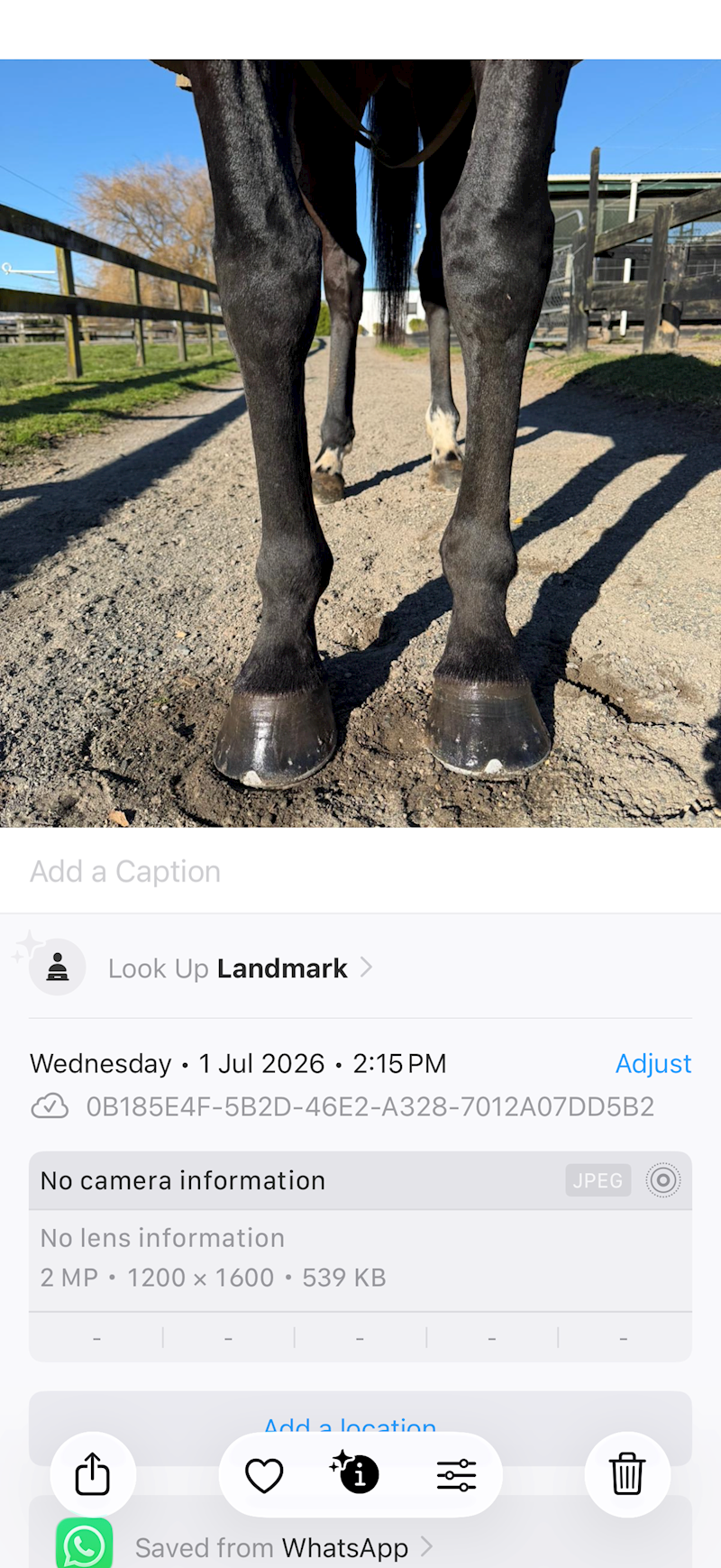
Interesting one must assume that the "world class farriers" haven't been asked for a second opinion based on the new evidence. Now the blame is on the photographer! Of course nothing to do with the online "experts" with their wild speculation. The irony of one of the owners trashing the horse online when it is up for auction who appears to be unable to see that his unfounded comments diminishes the value of the horse. -
Kurtis Pertab Decision for Horse Positive
Chief Stipe replied to Wandering Eyes's topic in Galloping Chat
So what's your point @curious with the NZ Herald article? The Harness Trainer mentioned had prior form. The SPCA "Senior Scientific Officer" needs to avail herself of the latest research. -
Kurtis Pertab Decision for Horse Positive
Chief Stipe replied to Wandering Eyes's topic in Galloping Chat
A case from the USA reported January 2026 - well worth reading. High Horse Debate: A Trainer’s Suspension Tests Views on Meth Exposure By Daniel Libit January 21, 2026 In a case that reads like a mashup of Seabiscuit and Breaking Bad, a New Mexico judge stepped in last month to block the state racing commission’s summary suspension of a prominent, Oklahoma-based horse trainer after one of his quarter horses tested positive for trace amounts of methamphetamine following a race in Albuquerque, N.M., last fall. The trainer, Michael Wayne Joiner, has maintained that neither he nor his team intentionally or inadvertently administered the drug to the 4-year-old horse, Js on Fire. Instead, Joiner argues that the positive test most likely stemmed from environmental exposure—specifically, contact with meth users allegedly living illegally in the barns at the Downs at Albuquerque, a racetrack situated on the edge of a high-crime area known locally as the “War Zone.” There, on Oct. 19, Js on Fire finished second in the American Quarter Horse Association Racing Challenge Championship. Eleven days later, the New Mexico Racing Commission (NMRC) was notified by its third-party testing lab, Industrial Laboratories in Denver, that the horse’s post-race blood sample had come back positive for D-methamphetamine. That is the more potent of the drug’s two isomers and can be found in both street meth and prescription medications such as Desoxyn. Js on Fire’s sample revealed 0.0485 nanogram per milliliter—or 48.5 picograms—which is an infinitesimal quantity equivalent to roughly 48 parts per trillion.https://bitofayarn.com In a petition for a temporary restraining order filed Dec. 13 in New Mexico’s Second Judicial District Court, Joiner pointed to his long, storied career in the sport—and largely unblemished disciplinary record—while seeking to downplay the significance of the lab’s latest finding. By way of context, he noted that a veterinarian employed by the state racing commission had once likened a full nanogram to one-nineteenth of a single grain of sand on a beach. To date, the 69-year-old Joiner’s horses have won a combined $32.1 million across 6,473 starts, finishing first in more than 1,000 races and taking 78 graded stakes wins. Attached to Joiner’s filing was a 2022 article from a local TV station documenting the scourge of barn squatters at the Albuquerque Downs, including an incident in which police caught one trespassing individual using meth on the premises. “Unfortunately, and with all due respect to the Downs of Albuquerque and its location, things have really changed over the years,” Joiner wrote to the court. “The public perception of the area … has been mentioned on public forums as having issues with crime and drug activity lurking around.” In a phone interview, Joiner credited his lawyer, Billy Ray Blackburn, for coming up with that specific line of defense. However, given the prevalence of the drug in America, Joiner says horse racing commissions like New Mexico’s should adopt minimal thresholds to account for unavoidable environmental exposure to the drug. “It is on money just like with cocaine,” Joiner said. “There can be contamination from almost anywhere.” Pushing back against any suggestion of intentional wrongdoing, Joiner proffered that the drug would be competitively counterproductive.https://bitofayarn.com “I am not a cheater, but if I am gonna cheat, I sure as hell am not going to use methamphetamine,” he said, though experts say that depending on the horse and dosage, D-methamphetamine, a stimulant, can indeed yield an unfair advantage. Almost exactly a year before Js on Fire’s failed test, another horse Joiner trains, Flying Sophia, tested positive for methamphetamine following a race at Lone Star Park in Texas. However, in a ruling last May, the Lone Star Park Board of Stewards cited “mitigating circumstances” in declining to suspend or penalize joiner, beyond disqualifying the horse in that race. In any case, Joiner’s situation reflects a broader debate within horse racing over how to regulate substances commonly abused by humans and detectable in vanishingly small amounts with sophisticated laboratory technology. Richard Sams, a veterinary pharmacologist and leading expert on equine drug testing, argues that the blood test threshold for methamphetamine should be set between 1 and 10ng/ml—a magnitude of order greater than the amount found in Js on Fireand many other horses whose trainers have faced punishment. Absent reasonable testing thresholds, Sams contends, the sport invites needless controversy and imposes unnecessary hardship on its participants. “It is detrimental to racing,” Sams said in a phone interview. “People who aren’t involved in racing will see findings for substances like methamphetamine and cocaine and heroin in racehorses, and their immediate reaction is, ‘It shouldn’t be there.’” Sams, now professor emeritus at Ohio State University, previously ran the racing laboratory at the University of Florida’s College of Veterinary Medicine, and he was the inaugural director of HFL Sport Science lab in Lexington, Ky., which later became the LGC Lab. Sams got his start in the field in the mid-1970s, joining Ohio State’s horse racing laboratory just as methamphetamine was gaining recognition as an increasingly prevalent, illicit performance-enhancing drug given to horses.https://bitofayarn.com “We weren’t even thinking of environmental risks at that time,” Sams said. Back then, he explained, equine drug testing for horses relied on gas chromatography, a process in which a sample of blood or urine is injected into a machine that separates it into their constituent components. Those components were then analyzed by a spectrometer, producing a unique molecular fingerprint for any drug present. In the late 1980s, veterinary scientists at the University of Kentucky, under the leadership of Dr. Thomas Tobin, advanced the use of enzyme-linked immunosorbent assay tests in horse racing that dramatically increased the rates of detection. With this improved technology, Tobin began flagging concerns about environmental contamination as a source of unexplained substances—like morphine and cocaine—turning up in racehorse samples. Tobin became an early advocate for establishing regulatory thresholds to distinguish intentional administration from environmental exposure to drugs commonly abused by humans. In 2016, Tobin co-authored a paper analyzing an incident in which low concentration positive tests in the urine of three racehorses were linked to a trailer that had been contaminated by methamphetamine. In light of the findings, the paper proposed a testing limit of 15 ng/ML in post-race urine testing. Three years later, Dr. Heather Knych, a clinical veterinary pharmacologist at UC Davis, published a seminal study examining the “pharmacodynamic effects” of methamphetamine in horses. The study involving six thoroughbreds showed little evidence of performance enhancement despite measurable exposure to the drug. The findings also demonstrated the high sensitivity of modern testing methods and the plausibility of accidental exposure. In light of Knych’s work, the Horseracing Integrity and Safety Authority (HISA), the congressionally authorized private nonprofit that regulates thoroughbred racing nationwide, has proposed a minimum reporting threshold of 0.1 nanograms per milliliter for methamphetamine and reduced penalties for positive results. The proposal, which just completed a public comment period, is expected to be submitted in the coming months to the Federal Trade Commission, which under federal law must sign off on any HISA rules changes before they can take effect. https://bitofayarn.com The FTC previously declined to act on similar proposed changes to HISA’s Anti-Doping and Medication Control (ADMC) rules in 2023, shortly after they were first introduced. Methamphetamine is one of over 1,000 regulated or banned substances by HISA—and far from the most commonly detected. In 2024, HIWU collected and analyzed over 76,000 samples, producing 364 “adverse analytical findings.” Methamphetamine accounted for only 12 of them. Among prohibited substances, the asthma medication clenbuterol generated the most findings (23), while restricted therapeutic drugs, such as the non-steroidal anti-inflammatory medication phenylbutazone (49 findings) and the corticosteroid dexamethasone (40), were responsible for the greatest share of positives overall. Js on Fire is one of just three horses to have tested positive for methamphetamine under the New Mexico Racing Commission in the past decade, according to public records obtained by Sportico. Nonetheless, against the backdrop of last decade’s spike in human meth overdoses in the United States, headlines like “Racehorse Tests Positive for Meth” all but scream for attention. This dynamic presents a political and public-relations problem for those seeking to chart a middle ground between strict liability and laissez faire.https://bitofayarn.com “A banned substance by definition should not be present in a horse at any time at any concentration,” said Dr. Michael Hardy, the acting chief of science for HISA’s Horseracing Integrity & Welfare Unit (HIWU), “so providing a minimum level by which a substance is reported could be perceived as permissive of that substance being present … I think the distinction here is that the industry recognizes there is another component at play, which is human substances of abuse, and potential exposures otherwise, so how do we provide a regulatory framework to consider both of those?” If HISA’s new policies are approved by the FTC, it would only cover thoroughbreds. The organization lacks jurisdiction over quarter horses, such as Js on Fire, or other racing breeds, which are instead regulated by state commissions that operate under reciprocal enforcement agreements but do not uniformly adopt testing thresholds or methods. The New Mexico Racing Commission—like most state racing authorities and HISA—currently operates under a zero-tolerance policy for banned substances. As a result, any detected amount identified by Industrial Laboratories automatically triggers disciplinary proceedings, as it did in Joiner’s case. A widely accepted principle holds that horse trainers serve as the absolute gatekeepers of the animals in their care, accountable for both affirmative conduct and failures over oversight, and face the harshest consequences when drug tests come back positive. Thus, Js on Fire’s owner, Joshua Owens, stands to lose only the purse from last October and the opportunity to race this one horse for two months; Joiner, on the other hand, faces a potential multiyear banishment from the sport. Ishmael “Izzy” Trejo, the executive director of the NMRC since 2016, says his group is open to establishing testing thresholds for methamphetamine, but he pushed back on the notion that the substance is so ubiquitous that trainers cannot be reasonably expected to keep it entirely out of their horses’ post-race samples. If that were the reality, Trejo submits, it would stand to reason that his commission would have discovered many more than just three positive tests over the last 10 years.https://bitofayarn.com On Oct. 1, the day after the NMRC was notified of Js on Fire’s positive result, Joiner was summarily suspended. One month later, he appeared remotely at an administrative hearing before the board of stewards of another New Mexico race track, Penn Entertainment-owned Zia Park in Hobbs, to argue that the summary suspension should be lifted pending the outcome of the full proceedings. The stewards declined, and the suspension stood, effectively barring him from competing anywhere in the country. Joiner’s most immediate concern, which prompted his lawsuit, was his ability to compete this spring at Remington Park in Oklahoma City, where he has raced for decades. For Remington’s upcoming season, which begins in March, Joiner had planned to race more than 80 horses on behalf of roughly 35 owners. Had the summary suspension remained in effect, Joiner told the court, he would have been unable to submit his stall application before the Dec. 29 deadline. The resulting fallout, he argued, would have been “financially devastating” for him and would have left those owners the nearly impossible challenge of securing replacement trainers with just weeks’ notice. In further support of his petition, Joiner submitted a 2024 paper co-authored by Tobin examining trace-level methamphetamine detections in racehorses. After reviewing the latest available HIWU positive drug test data, Tobin and his collaborators concluded that “a simple low nanogram/ml or less identification of methamphetamine in a jugular blood/plasma/serum sample is most likely evidence of nothing more than inadvertent environmental exposure of the horse to a pharmacologically insignificant amount of environmental methamphetamine.” In his petition, Joiner noted that despite the positive test, none of the owners of horses he trains had asked him to resign, a “testament to the fact that he does not pose a danger to the horse racing industry.” Trejo countered that that Flying Sophia’s positive test in October 2024 called that claim into question, though Joiner maintains that the Lone Star Park stewards’ ruling vindicated him. In arriving at their decision, the stewards cited “mitigating circumstances” that included the fact that meth is known to be found in horses due to human contamination and that there was no evidence the drug was administered by Joiner or any of his employees.https://bitofayarn.com Two other horses had tested positive for methamphetamine in races at Lone Star Park within weeks of Flying Sophia’s race, including Flyin Rabbit 123, handled by another prominent trainer, Toby Keeton, who was summarily suspended. Last February, the NMRC imposed a reciprocal suspension on Keeton in response to the Texas Racing Commission’s ruling and after of seven of his horses had tested positive for the bronchodilator Carmoterol after race in Ruidoso, N.M., the previous September. Keeton subsequently filed suit against the NMRC in March 2025, using the same attorney, Blackburn, who is representing Joiner. (Blackburn did not respond to an interview request.) A court denied Keeton’s request for a temporary restraining order that would lift his suspension pending the results of additional lab testing of the horses’ samples. He also remains suspended in Texas. Before Joiner, NMRC’s last methamphetamine positive test dated to 2017, when trainer Gerald E. Marr was issued a summary suspension after his horse, Alpha Doll, produced an adverse finding following a race in Ruidoso. Marr later overturned the suspension after presenting evidence that the horse had been contaminated by someone outside his control who came into contact with the animal after breaching security. Marr identified the likely source as a man who had approached him seeking a job before the race. NMRC records show Marr later lured the man to Zia Park, where racetrack security drug tested him, revealing that the man had methamphetamine and marijuana in his system. Although Marr conceded that he did not witness the man smoking meth around the horse, the hearing officer overseeing his disciplinary case cited that circumstnaces as mitigating and recommended the trainer’s suspension be lifted. As for Joiner, Following the court’s injunction last month, he successfully submitted his stall application for the Remington Park ahead of deadline. He is now awaiting the results from the split sample for Js on Fire that he sent off to a lab in Kentucky, to see if it either confirms or contradicts the positive test reported by Industrial Labs. Absent scientific evidence clearing him, Joiner is left to press his environmental-contaminant defense.https://bitofayarn.com Sams performed a calculation for Sportico estimating the total amount of methamphetamine in the horse’s system at the time of the sample’s collection. He came up with 110 micrograms—equivalent to one-fourth of the dose investigated by Knych in her 2019 study. That amount, says Sams, “produces no detectable effect.” Under the New Mexico Administrative Code, the recommended penalty for a methamphetamine positive in a racing horse ranges from a minimum suspension of one year to a maximum of three. At this stage of Joiner’s life, however, any suspension could amount to a forced early retirement. “I am pushing 70 years old,” Joiner said. “So, I don’t know what I would do.” -
Kurtis Pertab Decision for Horse Positive
Chief Stipe replied to Wandering Eyes's topic in Galloping Chat
The problem with this debate though is very few are willing to rationally and objectively discuss the issues. Instead the Racing Industry ends up hoisting itself on its own petard. -
Kurtis Pertab Decision for Horse Positive
Chief Stipe replied to Wandering Eyes's topic in Galloping Chat
I meant Zero tolerance but I don't know what the testing threshold is. -
Kurtis Pertab Decision for Horse Positive
Chief Stipe replied to Wandering Eyes's topic in Galloping Chat
Interesting conclusion from the attached paper. What is the NZ minimum threshold? A cluster of trace-concentration methamphetamine identifications in racehorses associated with a methamphetamine-contaminated horse trailer: A report and analysis Kimberly Brewer, Theodore F. Shults, Jacob Machin, Sucheta Kudrimoti, Rodney L. Eisenberg, Petra Hartman, Caroline Wang, Clara Fenger, Pierre Beaumier, Thomas Tobin Abstract — Three low concentration methamphetamine “positive” tests were linked to use of a methamphetaminecontaminated trailer to transport the affected horses. This incident establishes methamphetamine as a human-use substance that can inadvertently enter the environment of racing horses, resulting in urinary methamphetamine “positives;” an interim regulatory cut-off of 15 ng/mL for methamphetamine in post-race urine is proposed. Methamphetamine, a substance of human use/abuse, can inadvertently become part of the environment of racing horses, yielding trace urinary methamphetamine “positives” in postrace testing. As such, there is a need to establish a cut-off or threshold for methamphetamine in equine drug testing, as has been done for other environmental substances (caffeine, BZE, morphine, etc.) to avoid unjustly penalizing the connections of the horse and tarnishing the image of racing. We therefore suggest an interim urinary threshold/cut-off for methamphetamine of at least 15 ng/mL, similar to thresholds already established for other environmental substances, and well below the 500 ng/mL cut-off used by the US Department of Health and Human Services in human workplace drug testing. This interim threshold would be appropriate prima facie until a review leads to a formal regulatory decision to establish a threshold that takes into account metabolite concentrations and effects of other variables, such as urine pH, on racehorse sample concentrations. While it may need to be raised or lowered in the future, 15 ng/mL is at this time a conservative estimate based upon the current findings in the case presented. A Cluster of Trace-Concentration Methamphetamine Identifications.pdf -
Kurtis Pertab Decision for Horse Positive
Chief Stipe replied to Wandering Eyes's topic in Galloping Chat
So Getaway acquired the meth sometime in the next 14 days. Will be interesting to see the level but the RIB very rarely publish that. -
Kurtis Pertab Decision for Horse Positive
Chief Stipe replied to Wandering Eyes's topic in Galloping Chat
I find it a bit incongruous that you have to plead guilty of presenting even if you had no idea the horse would return a positive. That said under the rules he has no option but to plead guilty and then argue the penalty. Once again at excessive cost to the Trainer and the industry. If Getaway had been swabbed at the Trials it won (does the RIB do that?) then it could be argued that it came in contact with the drug in the following 14 days. If the level of contamination is very very small then it could be argued that it was environmental contamination. A further mitigation could have been obtained if all Pertabs staff were drug tested via hair testing. Hair testing would have proven if any staff had been using the drug. So arguably Pertab could mitigate the penalty to a fine but then you have all the drama of previous charges being reviewed. But as I have posted many times on BOAY for a long time environmental contamination of drugs that are highly prevalent in society is a real problem especially when there is a zero tolerance threshold for some of them. I had a discussion with someone recently who managed a large plant and he said when he introduced workplace drug testing he told the contracted tester and policy adviser that he wanted zero tolerance. The contractor replied that if he pursued that policy he would have no staff left in two months! -
Idiots on RaceCafe - can't tell a shadow from a crack. Brazen...
Chief Stipe replied to Chief Stipe's topic in Galloping Chat
For those not willing to appologise for casting aspersions. Another photo on Gavelhouse showing the time that the latest picture of Brazen Affair's front legs was taken 1 July 2026 at 14:15hrs. If you review the original picture you will see the "fake cracks" are indeed shadows probably of someone standing to the right of the mare.
-
Kurtis Pertab Decision for Horse Positive
Chief Stipe replied to Wandering Eyes's topic in Galloping Chat
There is nothing to be gained by doing it intentionally as it is easily detectable within 5 days of administration. Any PED benefit would require administration very close to racing. "Incredible turn around in form" - uh? It easily won a trial 15 days prior to the race it was DQ'd from. Note it has run 3 very good races since the DQ. A 4th, 2nd and a win at its last start. Sorry I have the cap, tie, blazer but not the windbreaker or onesie yet. -
Kurtis Pertab Decision for Horse Positive
Chief Stipe replied to Wandering Eyes's topic in Galloping Chat
You'd be a dumb arse administering anything with todays tech. All Trainers know that. Environmental or sabotage. The RIB has a policy of not publishing the levels which I think is wrong. But zero is the threshold. -
Kurtis Pertab Decision for Horse Positive
Chief Stipe replied to Wandering Eyes's topic in Galloping Chat
More than likely environmental contamination or possibly sabotage. No Trainer would administer meth to a horse for heaps of reasons. But we haven't and are unlikely to see the recorded levels. The threshold is zero regardless of what level would enhance performance. -
NZTR and the NZTBA are encouraging all industry participants to remain vigilant for signs of Strangles and to maintain good biosecurity practices. No images? Click here Strangles Update: Waikato Outbreak and Industry Guidance Key Actions Do not present an unwell horse to race. Horses showing signs of illness must not be taken to trials, race meetings or any equine event. Monitor temperatures daily. Check the temperature of every horse each day. A resting temperature above 38.5°C should be treated as a fever and investigated promptly. Practise strict biosecurity. Clean and disinfect equipment, vehicles and shared surfaces, and maintain good personal hygiene to help prevent the spread of infection. Do not move horses if there is any concern. If a horse has been exposed, is unwell or Strangles is suspected, do not move horses on or off the property until you have spoken with your veterinarian. Seek veterinary advice early. Contact your veterinarian immediately if you suspect Strangles or have concerns about the health of your horses. Protect the wider industry. Doing the right thing helps protect racing, breeding, sales, exports and the health and welfare of all horses. If in doubt, don't move horses. Current Strangles Situation New Zealand Thoroughbred Racing (NZTR), the New Zealand Thoroughbred Breeders' Association (NZTBA) are continuing to closely monitor the current Strangles situation and can confirm there is an active outbreak in the Waikato. Industry participants are urged to remain vigilant, follow recommended biosecurity practices and seek veterinary advice immediately if they suspect a horse may be infected. Strangles is a highly contagious bacterial disease of horses that spreads primarily through direct horse-to-horse contact and contaminated equipment, people and transport vehicles. Early recognition and prompt isolation remain the most effective ways to limit spread. The outbreak is primarily affecting training and pre-training properties, with a small number of stud farm properties also impacted. At this stage, the outbreak remains isolated to the Waikato region. Our focus remains on providing clear, consistent guidance that supports effective disease management while allowing racing to continue safely and helping protect New Zealand's sales and export markets. Industry Guidance Following discussions involving NZTR, NZTBA, veterinarians and other industry partners, two documents have been developed to support the industry: Strangles Industry Update – providing practical information and guidance for owners, trainers, breeders and industry participants: Strangles Industry Update Strangles Monitoring, Recommended Protocols and Biosecurity – developed by a group of seven respected equine veterinarians working in the Waikato region to assist industry organisations and properties in developing appropriate biosecurity protocols during the current outbreak: Strangles Monitoring, Recommended Protocols and Biosecurity Participants should note that these recommendations include the use of Serum Amyloid A (SAA) testing. While SAA testing is available in the Waikato and Auckland, it may not currently be available in all regions. This remains a developing situation and guidance will continue to be reviewed and updated as new information becomes available. Biosecurity Best Practice Good biosecurity protects everyone Most outbreaks can be contained through early detection, isolation and good biosecurity. One of the greatest challenges with Strangles is that some horses can continue to carry the bacteria after appearing clinically recovered, making appropriate veterinary testing important before returning horses to normal management. NZTR encourages all participants to work closely with their veterinarian if they have any concerns about a horse's health and continue following good biosecurity practices: Avoid sharing tack, grooming equipment, feed bins, or water sources between horses. Clean and disinfect equipment such as halters, buckets, grooming tools and lead ropes regularly. Thoroughly clean stables and yards, removing contaminated bedding, manure or nasal discharge. Clean and disinfect horse floats, trucks and other transport vehicles between uses. Monitor horses closely following travel or attendance at events where horses from multiple properties have mixed. Isolate any horse showing signs of illness and seek veterinary advice promptly. If you suspect a horse may have Strangles, contact your veterinarian immediately and avoid moving the horse until veterinary advice has been obtained. NZTR, NZTBA and the NZVA will continue to share information and guidance with industry participants as required. By remaining vigilant and maintaining good hygiene and biosecurity practices, we can collectively minimise the impact of disease and protect the health and welfare of New Zealand's horses. What trainers should do: Under Rule 320A, trainers are responsible for the care, control and supervision of horses in their charge. If any horse develops a fever, nasal discharge, swollen lymph nodes, or other signs consistent with Strangles: Immediately isolate the horse from others. Contact your veterinarian for advice and testing. Do not transport the horse until veterinary advice has been received. Monitor in-contact horses closely, including taking daily temperatures. Treat any suspect case as Strangles until testing confirms otherwise. Most importantly do not present a horse that is suspected to be infected with Strangles at a Raceday. Reminders for Racing Clubs: Racecourses and training facilities play an important role in reducing disease transmission. Clubs are encouraged to: Maintain good hygiene in shared facilities. Ensure wash-down areas and common equipment are regularly cleaned. Encourage participants not to share water buckets, feed bins or grooming equipment. Support trainers who need to isolate horses by providing appropriate communication and advice where required. Reminders for horse transport companies: Transport providers are an important part of preventing disease spread between properties. Please ensure: Floats and trucks are thoroughly cleaned and disinfected between consignments. Equipment such as lead ropes, halters and buckets are not shared between horses. Drivers use good hand hygiene and change protective clothing where appropriate when visiting multiple properties. Horses showing signs of illness are not transported without veterinary guidance. For further information on Strangles, please visit the NZEHA website or speak with your veterinarian: NZEHA Website - Strangles Kind regards, NZTR Welfare Team thoroughbredwelfare@nztr.co.nz New Zealand Thoroughbred Racing 18 Dick Street, Cambridge 3434 Email: thoroughbredwelfare@nztr.co.nz Tel: 0800 946 637 NZTR.CO.NZ Unsubscribe
-
Then why bother with restrictions unless a horse is visibly showing symptions? A horse can be shedding for months or years.
-
Kurtis Pertab Decision for Horse Positive
Chief Stipe replied to Wandering Eyes's topic in Galloping Chat
No doubt we will see the Bush Lawyers of the Internet baying for the hanging of the Trainer asserting deliberate administration. Who in their right mind would administer a Class A prohibited drug to their horse when it is so easily detectable? -
One way to save stakes. Research suggests that up to 40% of horses are asymptomatic carriers.
-
Which stables? More importantly have the horses that are travelling been fully vaccinated BEFORE the latest outbreak?
-
Idiots on RaceCafe - can't tell a shadow from a crack. Brazen...
Chief Stipe replied to Chief Stipe's topic in Galloping Chat
I've said it before and I will repeat it again for you. Those that I have named and continue to name publicly identified themselves. I gather you are someone who wishes to remain anonymous yet attack people who are trying to making a living and are generally succesful in the racing industry. As you should know by now I have no interest in BOAY becoming a repository for a group of people who do not have the courage to stand by their convictions, do not wish to have their opinions challenged or disagreed with and especially those that continue to write misinformation online and make promises of posting evidence that never materialises. Nor am I a Forum owner who stoops to their level and feeds them all in the interests of website traffic. -
Idiots on RaceCafe - can't tell a shadow from a crack. Brazen...
Chief Stipe replied to Chief Stipe's topic in Galloping Chat
Further @JJ Flash what does it tell you about a forum that has a small group of individuals posting 400 posts on two separate Topics both attacking NZ's leading stable? Do you get off on that? It seems many do without any understanding of the operation or the work that has gone into it and still does every day. I might add that that stable is once again going to win the Premiership with the best strike rate by far in the Top 10 trainers list. Over $8m in stakes, 135 wins and 19 Group and Listed wins. One of those G&L wins I have an interest in. So yes deride me as "fan boy" blah blah but I would, and have, defend anyone in the industry who is being attacked for no other reason that envy. If the allegations that the rabble are making are true then they should man up and show some balls and make a complaint especially on the horse welfare allegations. They won't because they are too gutless and in truth they no there is no issue. To think that one of their ilk used to work for the RIB!!