
-
Posts
484,423 -
Joined
-
Last visited
-
Days Won
661
Content Type
Profiles
Forums
Articles
Videos of the Month
Major Race Contenders
Blogs
Store
Gallery
Everything posted by Chief Stipe
-
Well I have seen some science research that shows that not only does the Pzifer vaccine not prevent Omicron infection it also makes you more vulnerable to infection. I haven't seen any follow up yet on that research. Of course "vaccinated" is now a loose term anyway given how quickly the vaccines efficacy wanes.
-
It is from official MOH data. Unfortunately you have to apply to see the actual data now. Not long ago when the stats started going against the narrative the data was no longer published for all to see.

-

TABNZ 2021-22 Six Month Financial Results
Chief Stipe replied to Chief Stipe's topic in Galloping Chat
So being up on your Budget by $2.1m but DOWN on the previous year by $12.4m is considered a GOOD result? -
TABNZ 2021-22 Six Month Financial Results
Chief Stipe replied to Chief Stipe's topic in Galloping Chat
24 February 2022 TAB New Zealand (TAB NZ) provides the sixth monthly trading update for the 2021/2022 financial year, with the results and highlights for January 2022. The TAB was able to continue to operate successfully through its online and available retail channels throughout January. With the majority of New Zealand in the Orange setting of the Covid-19 Protection Framework/Traffic Light System through most of January, traditional holiday racing clubs welcomed crowds back on course. High quality racing through the month led to a strong month of turnover compared to January 2021. The Karaka Million meeting continued its rise as a leading meeting on the calendar, with $5.5 million turnover on the six-race card. With all of New Zealand moving to Red in the Traffic Light System at 11.59pm on Sunday 23 January, this had an effect on on-course attendance and therefore on-course turnover. Notwithstanding this, the turnover result for January was comfortably up on budget, rounding out a solid six months of trading. The TAB NZ Board has been able to maintain betting profit distributions at budgeted levels through the year to date. With funding from Betting Information Use Charges and the Betting Levy tracking above budget, this has meant that total distributions have been above budgeted expectations. As New Zealand enters new phases in its response to the Omicron variant of the Covid-19 virus, the Board will maintain a close watch on potential developments, any potential flow-on effect on trading conditions and any effect on profit distributions. Wagering Performance Summary In January, the key performance results for TAB continued to trend positively off the back of a strong December. Subject to final audit, turnover of $241.3m was 7.2% ($16.3m) up on budget and gross betting revenue (GBR) of $40.0m was 11% up on budget, at a gross betting margin (GBM) of 16.6%. Racing Average NZ thoroughbred starters per race was 10.8, matching the Year To Date (YTD) average of 10.7, while the peak turnover for a domestic meeting was $6.10m on 1 January for the New Year’s Day Races at Ellerslie. Harness average starters per race was 11.0, above the YTD average of 10.3, while the peak meeting turnover of $1.55m was on 2 January for the New Year's Meeting at Omakau Racecourse. For greyhound racing, the average starters per race was 7.6, matching the YTD average, while the peak turnover for a domestic meeting was $435k on 20 January at Addington. The total margin for the month across all New Zealand racing was 19.5%,, above the YTD domestic racing margin of 18.5%. Overseas racing margin was 19.4%, above the YTD average of 18.4%. Sport Australian Open tennis led the sporting events in January with turnover of $6.4m across the entire tournament. The total margin on in-play sport throughout January was 6.5%. Basketball and tennis dominated in-play performance, accounting for 61% of in-play turnover at 7.1% and 4.4% margin respectively. The pre-match singles margin was 11.%, driven by basketball (32% of pre-match sports turnover) at a margin of 14.6% and cricket (23% of pre-match sports turnover) at 8.1%. Sports Multi margin was 26.0%. January Operational Performance Reported Profit for the month was $17.8m, which was $2.1m above Budget. Operating Expenses were $9.9m for the month, which was $0.2m below Budget. Year To Date (1 Aug 2021 to 31 Jan 2022) Reported Profit* was $85.6m, which was $2.1m above Budget and $12.4m below last year. Year To Date (1 Aug 2021 to 31 Jan 2022) Operating Expenses* were $57.5m, which was $2.4m below Budget and $2.5m above last year. * - Note: Year to date figures are subject to final audit. December Distributions Racing codes were paid $17.4m in distributions and other payments for January, versus $16.7m budgeted. This consisted of TAB NZ Betting Profit (listed as Fixed Distribution in the table below), offshore bookmaker commission fees, which are based on actual turnover (termed Betting Information Use Charges (BIUC) in the table below), and Betting Duty/Levy repeal. Top 10 Racing events by turnover Date Venue Race No. Race description Turnover 22-Jan Ellerslie R6 Karaka Million 3YO Classic $1.2M 22-Jan Ellerslie R4 Doubletree By Hilton Karaka Million 2YO $1.0M 22-Jan Ellerslie R3 Cambridge Stud Almanzor Trophy (G3) $902K 1-Jan Ellerslie R7 Dunstan Feeds Stayers Championship Final $855K 29-Jan Trentham R7 Harcourts Thorndon Mile (G1) $830K 29-Jan Trentham R9 NZCIS Wellington Cup (G3) $825K 22-Jan Ellerslie R2 Westbury Classic (G2) $820K 22-Jan Ellerslie R5 Brighthill Farm Eminent Concorde Handicap (G3) $790K 1-Jan Ellerslie R9 Rich Hill Mile (G2) $770K 1-Jan Ellerslie R8 Sistema Railway (G1) $770K Top 10 Sporting events by turnover Date Code Event Turnover 9-Jan Cricket Australia v England (Ashes series 4th test) $475K 5-Jan Cricket New Zealand v Bangladesh $346K 31-Jan Tennis R Nadal v D Medvedev $315K 16-Jan Cricket Australia v England (Ashes series 5th test) $273K 2-Jan Cricket Sydney Thunder v Adelaide Strikers $247K 23-Jan MMA Francis Ngannou v Ciryl Gane $246K 8-Jan Basketball Los Angeles Lakers v Atlanta Hawks $231K 5-Jan Basketball Los Angeles Lakers v Sacramento Kings $228K 26-Jan Cricket Sydney Sixers v Adelaide Strikers $222K 28-Jan Basketball Golden State Warriors v Minnesota Timberwolves $217K -
-
But then some would complain if the question wasn't asked.
-
The Anti-Racing Beat-Up Using Years Old Video of Sir Mark Todd
Chief Stipe replied to Joe Bloggs's topic in Galloping Chat
No one is a Champion and Double Gold Olympian. Proven horse trainer both equestrian and racing. You don't achieve what he has achieved without gaining the respect of the horses you work with. -
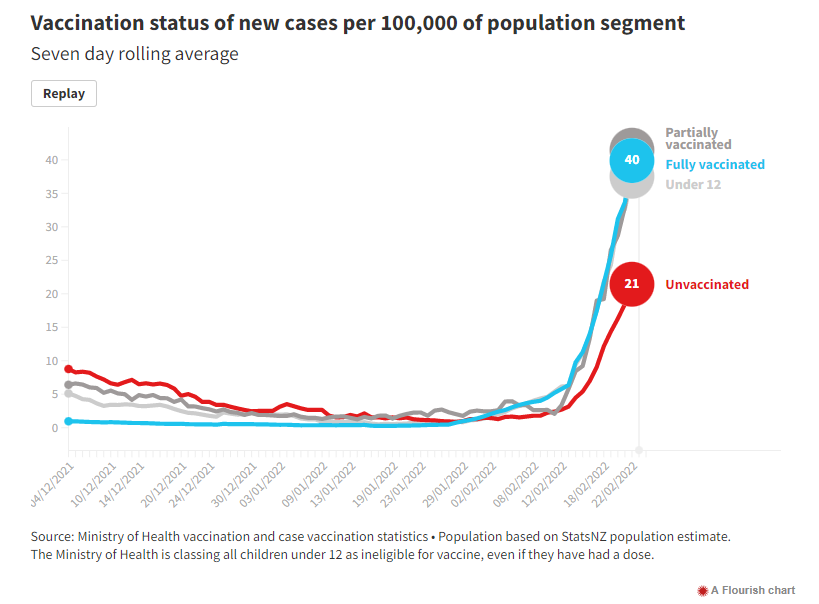
It is more likely that the horse would catch Covid than any other Jockey or Trainer. If you look at the vaccinated versus unvaccinated cases at the moment the rate of infection is greater in the vaccinated than the unvaccinated. Has NZTR adjusted their rules for the changes in the traffic light system? If not then we are rapidly heading towards abandoned meetings. Which is as bizarre as the unvaxxed airline pilots who were sacked where their place of work is a locked up cockpit yet who can travel as passengers amongst the great unwashed.
-
Where is that rule stated by Government?
-
It is relevant. If the rule is an incorrect interpretation of a Government directive then it is very relevant i.e. it is a bad rule. So you put the onus back on someone trying to do their job under what is an illogical and irrelevant rule? I guess you find it acceptable for ordinary New Zealanders acting as enforcers of just plain dumb rules handed down by an out of control Government and made doubly worse by Racing administrators who are equally no where near the coal face of enforcement. Who handed out the brown shirts? Where at any stage was any other private licensed contractor or employee on that racecourse in "harms way" from an unvaccinated person?
-
Are you serious? Isn't NZTR’S interpretation of a workplace and what restrictions are required WAY WAY over the top? What risk does a Jockey galloping a horse on its own have to anyone else in terms of Covid? Might be a problem if he galloped the horse in the wrong direction.
-
Revised Whip Rules 2022 - UPDATE 24-02-2022
Chief Stipe replied to Chief Stipe's topic in Galloping Chat
The memo! No.25 -24-2-22 - NZTR Circular - Amendment to Penalty Guideline.pdf -
Revised Whip Rules 2022 - UPDATE 24-02-2022
Chief Stipe replied to Chief Stipe's topic in Galloping Chat
Latest from NZTR new whip penalty guidelines. Penalty Guidelines -Whip and Careless Riding - With effect from 1 March 2022.pdf -
Seems the maxim of pleading guilty to lower costs doesn't work with the RIB!
-
- 1
-

-
He did plead guilty! So wasn't exactly as if big legal eagle costs were necessary. Non Raceday Inquiry – Decision dated 20 December 2021 – Calum Weir ID: RIB6579 Respondent(s): Calum Weir - Trainer Applicant: Racing Integrity Board Adjudicators: Mr J R Rapley QC (Chair) and Mr D Anderson Persons Present: C J Weir, D M Jackson (for the RIB), A J Davis (for Defendant Weir) Information Number: A15806 Decision Type: Adjudicative Decision Charge: Misconduct Rule(s): 62.1.o Plea: Admitted Stewards Report Results Code: Greyhound Race Date: 29/07/2021 Race Club: Christchurch Greyhound Racing Club Race Location: Addington Raceway - 75 Jack Hinton Drive, Addington, Christchurch, 8024 Hearing Date: 22/11/2021 Hearing Location: Addington Raceway, Christchurch Outcome: Proved Penalty: Trainer Calum Weir is fined $1,120 and ordered to pay costs of $3,191.80. Mr Weir is to complete an anger management and grief counselling course within 6 months Introduction [1] Calum John Weir appeared before the Adjudicative Committee (‘the Committee) on 22 November 2021 and pleaded guilty to the charge of misconduct by using improper and abusive language (Rule 62.1(0) Greyhound Racing New Zealand Rules of Racing) (“the Rules”). Submissions were presented by Mr Jackson on behalf of the RIB and Mr Davis for Mr Weir. Mr Weir was present. [2] An agreed Summary of Facts was presented to the Committee, and we were invited to view CCTV footage of the incident. We have done so. After hearing submissions, the Committee adjourned to consider the matter. [3] The charge arose out of an incident that occurred on 29 July 2021 at Addington Raceway. Facts of the Offending [4] In brief the facts are that Mr Calum John Weir was at all relevant times, a licensed public trainer under the Rules. Mr Weir has been involved in the greyhound industry for many years. [5] On 29 July 2021, the victim and a colleague were at Addington Raceway to collect a retired greyhound. The pair were just outside the main entrance to the kennel block. Mr Weir was upset by the victim’s colleague’s presence. Mr Weir approached the victim’s colleague and told them to leave the raceway as they were unlicensed. [6] The victim told Mr Weir that officials were calling him for his race. This caused Mr Weir to react. He stepped towards the victim with his hand raised as if to shoo her away. Mr Weir shouted profanities at the victim, asking who she was. A steward spoke to the victim and her colleague and moved them to another area. [7] Shortly thereafter Mr Weir returned with his dog and walked past the steward, the victim, and her colleague. The victim was frightened of Mr Weir. She tried to remove herself from the area. As Mr Weir walked past the steward and the victim’s colleague, he told them they were unlicensed and shouldn’t be in the area. Mr Weir then walked past the victim. Mr Weir stood over the victim again asking asked who she was and called her a name. Mr Weir was rude and swore at the victim. One of the obscenities was a demeaning gendered insult calculated to cause distress. The victim was very upset. The steward intervened and escorted Mr Weir away to another area. Sentencing [8] We now turn to sentence. There are three steps in the sentencing exercise. Firstly, we will identify the starting point for sentence for this type of offending. This involves identifying the aggravating and mitigating features of the offending and comparing it to other similar cases, analysing the sentences that have been imposed for those similar cases. We then adjust that starting point up or down to take into account Mr Weir’s personal circumstances. Finally, we apply a discount for his guilty plea. [9] In doing so, the Committee has regard to the purposes and principles of sentencing. Mr Weir must be held accountable for the harm he has caused, and his conduct must be denounced. This means, in the racing context, a penalty must be imposed that not only deters Mr Weir but others from committing similar offences. Any penalty must be consistent with the sentence imposed for similar offending in other cases. [10] Any sentence imposed also needs to take into account the rehabilitative needs of the offender and finally, the sentence imposed must be the least restrictive outcome on Mr Weir that is appropriate in all the circumstances. Starting Point [11] The RIB Guidelines on penalty (2015) for Harness Racing and Thoroughbred Racing both list the starting point for the serious racing offence of using offensive, insulting or abusive language to an official as a $1,500.00 fine (Rule 1001(1)(b)(i) and 801(1)(s)(ii) respectively). There is no equivalent starting point guideline listed for greyhound racing. [12] In RIU v Scott (2021), a fine of $850.00 plus costs of $353.75 was imposed where there was abusive language directed towards a steward. In RIU v Grant (2021), a fine of $1,250.00 was imposed where abusive language was directed at a swabbing official. In RIU v Waratini (2018) a $750.00 fine was imposed for abusive language directed towards a steward. That same year, in RIU v Kettlewell (2018) a $250.00 fine was imposed for abusive language being directed towards a steward. [13] In RIU v C Steel (2020), a six month suspension was imposed for threatening a steward. In RIU v Goode (2017) a four month suspension was imposed for abusing and threatening a steward. Again, more serious than this case because there were threats. [14] The complainant was not an official, but rather employed by Greyhound Racing New Zealand as a contractor. Nevertheless, the fines imposed set out the levels of sentence expected for misconduct through improper conduct by using abusive or offensive language. [15] Each case is fact specific. This requires, not only an assessment of penalties imposed in other similar cases but importantly, an analysis of the aggravating and mitigating features of this offending. Mr Weir used profanity and “stood over the victim’. One of the insulting words was directed at the victim because she is a woman, calling her a ‘slut’. The victim was frightened by Mr Weir. No-one should be made to feel that way. Mr Weir’s language was offensive, uncalled for and caused the victim distress and emotional harm. [16] Mr Weir, as a license holder, is expected to maintain high standards. His actions affect the wider greyhound racing industry given his comments were made at Addington on a race day. [17] It is accepted as a mitigating feature of the offending that the interaction was brief and spontaneous. It is also accepted the comments were said in the heat of the moment as an unacceptable reaction to two people accidentally being in the wrong area of the racecourse. [18] Whilst by no means excusing such behaviour it means the offending was therefore not premeditated. [19] The Committee is therefore of the view that the starting point would be a fine of $1,200.00. Personal Aggravating and Mitigating Factors [20] We now turn to consider what adjustments should be made, if any, to reflect Mr Weir’s personal circumstances. This step incorporates all aggravating and mitigating factors personal to Mr Weir. [21] Mr Weir has a history of breaching the Rules and committing similar offences. In 2014, he sent an email containing offensive language to a Greyhound Racing New Zealand official and was fined $200.00. Three years later, in 2017, Mr Weir used improper and insulting, offensive language towards a steward. He was fined $500.00. In 2018, there was a misconduct charge where Mr Weir damaged a wall at Addington Raceway. On that occasion he was fined $800.00. [22] This history warrants an uplift in penalty. This is because there is a worrying pattern of conduct-related breaches. [23] Counsel for the RIB submitted that this pattern of conduct-related breaches was such that a period of suspension and/or disqualification could be imposed by the Committee. Mr Davis, for Mr Weir, acknowledged that such a sentence could well be imposed. However, the Committee was told that Mr Weir had reached a point in his life where he now acknowledged and accepted that he had a problem controlling his anger. It seems that Mr Weir’s anger problem arose from a personal family tragedy. Mr Weir had never properly addressed the problem or obtained counselling to deal with his grief and the consequent anger issues that arose from it. [24] Mr Weir has engaged with a counsellor. This is the first time he has done so. Mr Weir has been a licensed public trainer for 15 years. Mr Weir clearly enjoys and is passionate about the sport of greyhound racing. He provided to the Committee, a copy of a letter of apology he had written to the victim. [25] The fact that Mr Weir has taken steps to address the issue is an important aspect when it comes to imposing a penalty. But for taking those steps, the Committee would have imposed a sentence suspending his licence for six months. [26] The starting point a sentencing suspending Mr Weir’s licence for eight months and a fine of $1,200 is increased because of his previous similar offending by $120 to make a fine of $1,320. [27] The Committee must also consider and acknowledge the fact that Mr Weir has pleaded guilty to the charge, albeit not long before the scheduled defended hearing. The change of plea demonstrates an acceptance of wrongdoing and is an expression of remorse. A reduction of 15% for his plea reduces the suspension to six months and fine to $1,120. [28] By a narrow margin, the Committee has decided to step back from suspending Mr Weir. Mr Weir appears to have arrived at a crossroad in his life where he is now showing some insight into his behaviour and the reasons for it. He wants an opportunity to deal with his issues so that they do not happen again. The Committee will give him that opportunity. [29] The Committee considered adjourning the sentencing to allow Mr Weir time to complete his counselling course. It was felt however, that it is in everyone’s best interests that a penalty be imposed now. However, this is done with an expectation that Mr Weir will provide a letter from Salvation Army Racecourse Chaplain, Mr McKerrow, and any other counsellors, confirming that Mr Weir has indeed followed through on his promise to complete the anger management and grief counselling course. This must be provided within 6 months from the date of publication of this decision (‘the date of default’). [30] If Mr Weir does not provide confirmation that he has undertaken and completed these courses as promised, then his trainer’s licence will be suspended for six months from the date of default. Sentence [31] On the charge of misconduct, by using improper and abusive language, Mr Weir is fined $1,120. [32] Mr Weir is ordered to pay costs of $3,191.80 (being RIB’s legal costs for the sum of $3,155 and costs of $36.80 for transcription of Mr Weir’s interview). [33] Mr Weir is ordered to provide the RIB with documentation from the Salvation Army Chaplain, Mr McKerrow, or any other counsellor, confirming Mr Weir has undertaken a course in anger management and/or grief counselling.
-
Appeal – Decision dated 22 February 2022 – Calum Weir ID: RIB7277 Respondent(s): Simon Irving - Other (Investigator) Applicant: Calum Weir, Greyhound Trainer Appeal Committee Member(s): Russell McKenzie (Chair) and Stewart Ching Persons Present: Heard on the papers Information Number: A15806 Decision Type: Appeal Charge: Appeal against costs awarded by Adjudicative Committee Rule(s): 68(2)(b) - Appeals Hearing Date: 22/02/2022 Hearing Location: Heard on the papers Outcome: Appeal Upheld Penalty: Trainer Calum Weir - reduction in Costs Award of Adjudicative Committee BACKGROUND: 1. In its decision dated 20 December 2021, following a penalty hearing on 22 November 2021, an Adjudicative Committee imposed a fine of $1,120 on the Applicant for an admitted charge of misconduct by using improper and abusive language and made the following order in relation to costs: Mr Weir is ordered to pay costs of $3,191.80 (being RIB’s legal costs for the sum of $3,155 and costs of $36.80 for transcription of Mr Weir’s interview). 2. Mr Weir has filed a Notice of Appeal on the ground that the amount of costs charged was excessive. 3. A teleconference was held on 31 January 2022, attended by the members of the Tribunal, Mr Weir and Mr Irving. It was agreed that the Appeal could be determined “on the papers” as provided in Clause 47 of the Common Rules of Practice and Procedure contained in the Seventh Schedule to the Rules of New Zealand Greyhound Racing Association. 4. For the reason that the Adjudicative Committee’s decision did not explain how the amount of costs awarded had been arrived at, the Tribunal ordered that the Respondent should file written submissions addressing this, following receipt of which and service on the Appellant, the Appellant was to file his written submissions. 5. Written submissions have now been received from both parties. SUBMISSIONS OF THE APPELLANT: The Appellant filed the following submissions following receipt of the Respondent’s submissions below: 1. No breakdown in costs was provided by the submissions end-date for the RIB. I was provided with a total amount with RIB claiming 60% of which the total was $2,400. 2. A breakdown was subsequently provided including a new costs award to the Adjudicative Committee – $755.00 being 34% of the Committee’s cost of $2,200.00. This has been misrepresented by the Respondent in his submissions. The decision of the Adjudicative Committee, in relation to costs, clearly stated Mr Weir is ordered to pay costs of $3,191.80 (being RIB”s legal costs for the sum of $3,155 and costs of $36.80 for transcription of Mr Weir’s interview). 3. Counsel for the RIB stated in his invoice that he had “secured a resolution”. This is only correct in respect of the guilty plea, apology, moderate fine and restorative justice. The Appellant filed the following submissions with his Notice of Appeal: 1. The excessive costs awarded against myself would leave myself and young family in extreme financial hardship after an already extremely costly year with several stoppages to earnings. 2. This is low level misconduct. 3. Summary of Facts and accusations from the complainants and the RIB were inconsistent and incorrect requiring reviews and agreed changes hence the RIB needing representation to fix the multiple issues. 4. The submissions then cited extracts from a letter from counsel for the RIB and the Appellant’s counsel. This is not a case for disqualification or suspension therefore. I am sure that he [the Appellant] will incur no more than a modest fine which will represent a significant saving on the cost of a two-day fixture and the risk of adverse costs awarded to both the RIB and the Committee. 5. I believe I have had my rights and beliefs persuaded by the completely incorrect and misinformation provided to myself via the legal representation from the RIB. 6. The final comment from the counsel for RIB in the letter is “I say this is no more than low level misconduct”. SUBMISSIONS OF THE RESPONDENT: 1. Mr Weir has lodged an appeal against the costs awarded by the Adjudicative Committee in its written decision on penalty dated 20 December 2021 and delivered on 21 December. 2. Paragraph 32 of the decision refers: “Mr Weir is ordered to pay costs of $3,191.80 (being RIB’s legal costs for the sum of and costs of $36.80 for transcription of Mr Weir’s interview”. 3. There is no detail provided for how the amount of $3,155.00 was deduced. 4. Rule 66.12 of the GRNZ Rules of Racing provides the Adjudicative Committee can order costs as it sees fit. The Seventh Schedule of the GRNZ Rules also provides: 29. Costs 29.1 On the determination of an information or its dismissal or its withdrawal, the Judicial Committee may order that all or any of the costs and expenses of: (a) any party to the hearing; (b) any person granted permission to be heard at the hearing by direction of the Chairperson of the Judicial Committee; (c) NZTR or HRNZ or GRNZ (as the case may be) and/or any employee of officer thereof; (d) the Judicial Control Authority and the Judicial Committee; be paid by such person or body as it thinks fit. 5. The RIB’s written Penalty Submissions dated 19 November detail the costs sought in the last two paragraphs. No finite figure for legal costs was presented as the matter had not reached its conclusion: 24. The RIB seek legal costs of preparing the matter for a defended hearing… 25. The RIB also seek costs of $36.80 for the transcription of Mr Weir’s interview. 6. In the Penalty Hearing on 22 November there was no discussion as to costs. 7. On 21 December, following correspondence with the Executive Officer regarding a costs amount sought, the RIB submitted the invoice for legal services provided by RIB Counsel, David Jackson. 8. The amount of this invoice was $4600 ($4000 +GST) for “professional services since 17 September 2021 and up to the conclusion of a sentencing hearing before the JCA on 22 November 2021 including receipt and review of charging material, analysis and advice, attendances on three telephone conferences with the JCA, extensive attendances on Al Davis of counsel for Weir and on Simon Irving re video footage and so on, securing resolution and attending on the JCA for sentence and all incidental attendances thereto.” 9. When submitting the invoice, the RIB requested the costs sought in line with the standard award of 60% of legal fees, which would equate to $2,760 (a difference of $395 from the cost figure awarded). 10. The RIB has incurred these costs as a result of investigating and prosecuting Mr Weir for a breach of the Rules. 11. Mr Weir, through his counsel, denied the charge as indicated in the first teleconference on 24 September and following a further teleconference, a two-day defended hearing fixture was set for 22 November. Only in a third teleconference on 10 November did Mr Davis, following extensive discussion between counsel, advise the Committee that Mr Weir would change his plea. 12. The RIB would also conclude that Mr Weir should also have been ordered to pay the usual contribution to the Adjudicative Committee costs. 13. Page 2 of Mr Weir’s initial appeal submissions is a page (2 of 2) of a letter written by RIB counsel David Jackson to Mr Weir’s counsel Allister Davis, in which Mr Weir has underlined a number of sentences. This letter between counsel was scripted on a “without prejudice” basis when counsel were attempting to reach resolution and should therefore be considered “privileged” and not considered by the Committee. REASONS FOR DECISION: 1. The power for an Adjudicative Committee to make an award of costs is contained in Rule 66.12 and para 29.1 of the Common Rules of Practice and Procedure for the Adjudicative Committee and Appeals Tribunal: 29.1 On the determination of an information or the dismissal of an information or its withdrawal, the Adjudicative Committee may order that all or any of the costs and expenses of: (a) any party to the hearing; (d) the Racing Integrity Board and Adjudicative Committee; be paid by such person or body as it thinks fit. 2. Guidance can be obtained from the (then) Judicial Control Authority Practice Note on Costs and Filing Fees (as at 3 September 2015). 3. That Practice Note states, at para 6, that general principles to be taken into account include the following: (a) Decisions whether to award costs, and in what amount, are discretionary (b) Under general costs principles an award of costs should only be made: (i) Against a defendant, where the charges have been proved against him or her; noting that there may be cases where, although the charge has been proved it may not be appropriate to award costs against an unsuccessful defendant. Such cases will be rare. (c) In cases where costs are awarded, costs are usually awarded against the unsuccessful party or parties in the proceedings in favour of the party or parties who have succeeded and the authority. (e) It is desirable to recover costs incurred as a result of the defendant’s conduct from the defendant rather than passing those costs on to the racing industry as a whole. (f) There is a public interest in bringing charges in order to better promote and protect the interests of consumers and the integrity of the racing industry. (g) The amount of any costs awarded must be reasonable in all the circumstances of the case. (h) The amount of costs will usually be a proportion of the actual costs incurred by the party claiming costs and/or the authority. (i) In general, where costs are awarded to a party a good rule of thumb is an award of 60% of the actual costs reasonably incurred by that party, recognising that costs are discretionary and there will be a range of factors which might persuade an Adjudicative Committee or the Appeals Tribunal to move up or down from that starting point. (ii) In general, where costs are awarded to the Committee a good rule of thumb is an award of 100% of the actual costs reasonably incurred by the Committee, recognising that because costs are discretionary there may be a range of factors which might persuade an Adjudicative Committee or the Appeals Tribunal to move down from that starting point. 9. A defendant who seeks to rely on a lack of financial means in opposing an award of costs must provide evidence in a form satisfactory to the Adjudicative Committee or the Appeals Tribunal containing information on the sources and amount of the defendant’s income, assets, liabilities and outgoings. 4. The only reference to costs in the written decision of the Adjudicative Committee is in para [32] where it is stated: Mr Weir is ordered to pay costs of $3,191. 80 (being the RIB’s legal costs for the sum of $3,155 and costs of $36.80 for transcription of Mr Weir’s interview). 5. The Respondent, in his penalty submissions, states that, at the penalty hearing, there was no discussion as to costs. 6. The Appellant is justified in asserting that no breakdown in costs was provided and, in particular, the discrepancy between the amount of $3,191.80 and 60% of the RIB’s legal costs ($2,400), together with the transcription cost ($36.80) was not explained. 7. The amount of the discrepancy is $755.00 which, it has since been ascertained, was calculated on the basis of a percentage of the costs of the Adjudicative Committee (34% of $2,200.00). 8. The prosecution of breaches of the Rules is a fundamental function of the RIB. When prosecution of a breach succeeds, and the Respondent has been proved to have breached the Rules, the Adjudicative Committee has the task of deciding the code’s response in terms of penalty. Since the RIB may have expended considerable resources in proving the breach, it is reasonable to recoup some or all of that expenditure. 9. A hearing is an expensive process for both parties. The Appellant has, of course, to bear the expenses of legal fees associated with his defence. The RIB incurs, not only prosecution expenses but also Tribunal expenses. 10. In the present case, it is necessary to traverse events leading up to the penalty hearing on 21 November 2021. The events leading to the charge of misconduct by using improper and abusive language against the Appellant occurred on 29 July 2021. From the outset, the Appellant asserted that he intended to defend the charge. 11. A teleconference was held on 24 September 2021 during which the Appellant, through his counsel, denied the charge. A subsequent teleconference was held on 18 October 2021 at which the Adjudicative Committee was advised that counsel had been in discussions in an attempt to resolve the matter. Discussions were said to be ongoing. The charge was set down for hearing over two days on 22 and 23 November 2021, an earlier hearing date of 2 November being vacated. The Minute issued by the Adjudicative Committee recorded the the later hearing would “ensure the parties have sufficient time to debate and discuss the issues with a view to resolving the matter and, if that cannot occur, to at least narrow the issues and focus for the hearing”. 12. A further teleconference was held on 10 November 2021. Counsel for the Appellant advised that his client now intended to plead to the charge. It was recorded in a Minute of the Adjudicative Committee that counsel “will now discuss the Summary of Facts in the hope that an agreed summary is presented” and also “share with each other their views on the possible penalty”. It was further recorded that the matter would still be called on 22 November 2021 when “it seems likely” that a plea will be entered. 13. The Appellant pleaded guilty to the charge at the hearing on 22 November 2021. It is understood that there was no discussion as to costs at that hearing. The written decision of the Adjudicative Committee was delivered on 20 December 2021. 14. The power for an Adjudicative Committee to order against a Respondent clearly exists, but costs need to be reasonable. There is a concern in the present case that the practical outcome is that the costs order will likely have a more significant impact for the Appellant than the penalty itself. The Appellant was fined $1,120.00 by the Adjudicative Committee. 15. Procedural fairness requires that the Adjudicative Committee, having awarded substantial costs, provide written reasons. 16. Some factors that an Adjudicative Committee should consider when exercising discretion to order costs include the degree of success, if any, of the Respondent of resisting the charge, whether the Respondent cooperated with respect to the investigation and offered to facilitate proof by admissions, etc, and the financial circumstances of the Respondent. A significant costs award was appropriate having regard to the fact that the Appellant did not enter a guilty plea to the charge until the day of the hearing, requiring the RIB to incur ongoing costs. 17. The Respondent has, appropriately, not attempted to recover investigation costs but only legal fees relating to the prosecution of the charge. In this regard it has engaged the services of counsel, as the Appellant himself had done so. The Respondent has not attempted to recover full legal fees, but only 60% thereof. The Tribunal has examined the invoice rendered by counsel and finds it to be reasonable and within the range that could reasonably have been anticipated in the circumstances. The Appellant notified his admission of the charge just prior to the date set down for hearing as a defended hearing. 18. The costs of $755.00 which the Adjudicative Committee awarded in its own favour was, we believe, in the nature of a “hearing fee” – a single administrative charge intended to compensate to costs incidental to the Adjudicative Committee. 19. The costs awarded by the Adjudicative Committee we find were, per se, reasonable and justified. 20. However, there are three matters that concern this Tribunal. Firstly, at the penalty hearing before the Adjudicative Committee when the Appellant would have had the opportunity, through his counsel, to make submissions on costs, the matter of costs was not raised. When its decision was issued, one month later, that decision contained a bald order for costs in the sum of $3,155.00, plus a disbursement. Secondly, and following from that, the Appellant was denied the important opportunity to make any submissions in relation to his financial circumstances. Finally, no breakdown or explanation for the costs award arrived at was given in the Adjudicative Committee’s written decision, effectively, obliging the Appellant to file this Appeal. 21. The financial circumstances of a party or ability to pay, as a general rule, should be taken into account in fixing a costs award. This Tribunal has no information concerning the Appellant’s financial position other than his submission that “excessive costs against myself would leave myself and young family in extreme financial hardship after an already extremely costly year with several stoppages in earnings”. 22. We accept the likelihood that the combined effect of the fine and the costs order will cause some degree of hardship to the Appellant. A total cost of $4,311.80 (fine and costs) is not an insignificant burden. We need to have some regard to this. 23. The Tribunal is satisfied that the Appeal should partially succeed for the reasons given in paras 20, 21 and 22. In coming to that conclusion, we find no fault and make no criticism of the Adjudicative Committee for its calculation of the original costs award. However, this Tribunal is required to make its own assessment of what would be an appropriate costs award in all of the circumstances. In making this assessment, the Tribunal has taken the costs award of the Adjudicative Committee and reduced it by a percentage, which we have fixed at 25% which we consider to be fair and just, and appropriate, in all of the circumstances. 24. Accordingly, the costs award of the Adjudicative Committee in para [32] of its written decision dated 20 December 2021 is set aside and the following order substituted therefor. 25. The Appellant is ordered to pay costs in the sum of $2,396.80 made up as follows: RIB legal fees $1,800.00 RIB costs Adjudicative Committee costs $560.00 Transcription cost $36.80 26. There will be no order for costs pertaining to this Appeal. 27. It is ordered that the filing fee for the Appeal be refunded to the Appellant.
-
The Anti-Racing Beat-Up Using Years Old Video of Sir Mark Todd
Chief Stipe replied to Joe Bloggs's topic in Galloping Chat
https://www.horseandhound.co.uk/news/rider-who-shared-mark-todd-viral-video-was-given-final-warning-at-previous-job-for-hitting-and-kicking-horses-and-bullying-777861?utm_source=twitter.com&utm_campaign=socialflow&utm_medium=social Rider who shared Mark Todd viral video was given final warning at previous job for ‘hitting and kicking’ horses and ‘bullying’ Eleanor Jones21 February, 2022 14:51 The rider who shared video of Sir Mark Todd hitting her horse during a training clinic walked out of a previous job at a livery yard after she was threatened with dismissal for “hitting and kicking” horses, it has been claimed. H&H was contacted about these claims and has seen a letter sent to the rider by her employers in April 2019, a record of a discussion in which two specific allegations were raised: cyber-bullying of people and apparently witnessed abuse of five named horses, “hitting and kicking” them. The letter adds that any further evidence of abusing or bullying animals or people would be gross misconduct and that she would be dismissed. Yard owner Susan MacKenzie told H&H the rider walked out of the meeting and did not return to work. “Some of the things she did were outrageous,” Ms MacKenzie said. “A big thing was the way she treated the horses.” Ms MacKenzie claims that “several liveries saw her kicking and hitting the horses… so I find this current situation ridiculous.” Ms MacKenzie said the meeting in April was the second at which incidents of kicking and hitting horses, as well as other issues, were raised with the rider. “One of our big rules on the yard is no bullying, of animals or people,” she said. “I told her, ‘This has to stop, I can’t have a staff member kicking and hitting horses’.” Ms MacKenzie added that she does not condone what Mark did in the video, but questioned why the rider had released it. Sharon Smith, who kept a horse on livery at the yard when the rider worked there, claims she had seen her kicking and hitting horses. “I don’t condone what Mark Todd did but coming from someone who’s been abusive to horses, it’s just not on.” she said. The rider told H&H she had no comment to make on the horse abuse claims, and that she had no recollection of the incidents described by Sharon, adding: “I worked there over two years ago.” In a video interview with a US “animal activist”, the rider said she “never consented for that to happen to my horse”, in reference to the incident in the video. She added: “There was no permission, therefore it shouldn’t have been done and that’s what needs to be held accountable… I never gave any permission for my horse to be hit with anything”. The rider said she hoped the thing people would learn from her video was that “if there’s something you believe is wrong, it needs to be highlighted” and that “if you feel something is wrong, it most likely is”. She added that “You can’t be using these techniques against horses” and that people “absolutely need to be an advocate for your horse”. -
The Anti-Racing Beat-Up Using Years Old Video of Sir Mark Todd
Chief Stipe replied to Joe Bloggs's topic in Galloping Chat
Not wishing to give any more oxygen to this story which as predicted faded fairly quickly from media attention.... -
Non Raceday Inquiry – Written Decision dated 22 February 2022 – James Pender ID: RIB7476 Respondent(s): James Christie Pender - Trainer Applicant: Mr N Grimstone - Investigator - RIB Adjudicators: Hon J W Gendall QC Persons Present: Mr N Grimstone, Mr J C Pender, Mr B McKenzie - Lay Representative for Respondent Information Number: A17901 Decision Type: Adjudicative Decision Charge: Misconduct Rule(s): 340 Plea: Admitted Hearing Date: 16/02/2022 Hearing Location: Tauranga Racecourse Outcome: Proved Penalty: Trainer James Pender is fined $500 REASONS FOR DECISION 1. The Information presented to the Adjudicative Committee alleged that Mr J C Pender committed a breach of Rule 340 of the Rules of Thoroughbred Racing in that he misconducted himself at Tauranga on 21 December 2021 by using insulting and offensive language directed at an employee of the Tauranga Racing Club. 2. Mr Pender admitted the charge. 3. Rule 340 provides: “A licensed person, owner, leasee, Racing Manager, Official or other person bound by these Rules must not conduct himself in any matter relating to the conduct of Races or Racing.” 4. The penalty provision for a breach of Rule 340 is the general provision in Rule 803(1) – namely disqualification and/or suspension for up to 12 months and/or a fine not exceeding $20,000. But the Adjudicative Committee immediately adds that such levels are for the most serious of offences. 5. The hearing was conducted at Tauranga Racecourse before racing on 16 February 2021. The Adjudicative Committee had received and considered written submissions on behalf of the Informant and Respondent as to penalty. It received further oral submissions at the hearing. BACKGROUND FACTS 6. Mr Pender has held a Class A Trainers Licence for more than 30 years and trains horses at Tauranga Racecourse. Because of COVID-19 restrictions, the NZTR had issued a Directive to Racing Clubs of Rules that were required to be followed in their work places. These included a Directive that no employee or others were permitted to enter a racecourse if they were unvaccinated. The Tauranga Racing Club issued this notice to Trainers, directing that persons using the Club’s facilities were to strictly adhere to the Rules. 7. An employee of the Club had the duty, along with others, of the task of monitoring horses using the “Gap” at the track in their training. On the morning of 21 December 2021, at about 6am, a horse of which Mr Pender was the Trainer, and being ridden by his Trackwork Rider (his son) endeavoured to enter the track at the “Gap”. The Club employee believed that the Trackwork Rider had not obtained the necessary vaccination status required, and provided to the Club the necessary certificate. He told the Rider that he was not permitted to take the horse onto the track. The Rider believed that he had met such requirement, but left the track. He complained about the employee by a phone call to Mr Pender. Whether the belief of the employee was mistaken, or whether the Track Rider’s assertion was correct is not something that can or needs to be resolved in this inquiry. 8. Mr Pender was at the track and some distance from the “Gap”. He immediately drove his vehicle to an area near the “Gap” and angrily confronted the employee. He was told that, in the employee’s view, the Track Rider did not meet the requirements to enter the track. Mr Pender was angry and agitated. He then yelled at the employee using abusive and obscene language, in derogatory and insulting terms which included insults over the employee’s body size. 9. The Summary of Facts records the words used by Mr Pender in describing the employee in the following abusive manner: “You are a f…..g useless manager – worst in the country” “You are a f…..g large c..t” “Look how fat you are” “You useless c..t” 10. Upon being subject to such abuse, the employee (the summary records) was shocked and responded to the effect that Mr Pender was “being cruel” which resulted in Mr Pender telling the employee “you can go and get f….d”. 11. A complaint was made to an RIB Investigator and Mr Pender was interviewed on 23 December 2021. The summary states that he originally downplayed the event, but later admitted that he had “lost [his] cool” and “over reacted”. He said he had been angry, because his horse had not been allowed onto the course to work. He admitted using the abusive language [although he told the Adjudicative Committee that he does not remember the exact words used – but accepts the allegation]. He was told by the Investigator that the employee “was only doing his job” which Mr Pender appeared to accept and apologised for his behaviour. 12. Mr Pender is aged 69 years and has spent a lifetime in the Racing Industry without any previous breach of the Rules. SUBMISSIONS PRESENTED BY LAY ADVOCATE FOR MR PENDER 13. There had been forwarded to the Adjudicative Committee before today, lengthy submissions and statements. These comprised: (a) An affidavit of the Track Rider containing 23 paragraphs setting out his version of the various background facts and relating to his dealings with the employee. They do not focus on the real issue, namely the admitted abusive behaviour, as Mr Pender Junior was not present, so could not express a view as to what then occurred. He expresses his opinion that it was the action of the employee towards him, that caused Mr Pender to become upset. (b) Written Submissions of Mr McKenzie which encompass 40 paragraphs. These contain many paragraphs and detailed versions as to why he says the abusive, offensive language occurred. 14. It is not the function of the Adjudicative Committee to determine any dispute between the Track Rider and Club Employee. It is not able to engage in discussion of, or make any conclusions or findings on matters advanced to contend that the employee “contributed” to Mr Pender’s admitted breach of the Misconduct Rule. What the rights or wrongs of the beliefs of the employee and the Track Rider, vis-a-vis the disagreement between them, they are not directly pertinent to the behaviour of Mr Pender. The same comment applies to past concerns harboured by Mr Pender towards some Club related aspects. These matters may provide some background to the antagonism that existed, and why Mr Pender lost his temper, but they do not excuse his misconduct. Nor do they provide support for the submission that the employee “contributed” to the behaviours. 15. Rule 340 is concerned with dealing with misconduct which is designed to protect and uphold the standards of behaviour to be expected and required of licence holders (and others bound by the Rules). The Adjudicative Committee’s function is not about adjudicating or ruling upon, respective arguments as to rights and wrongs of licence holders or others. If differences should exist, they may be resolved in other ways. But if standards of behaviour are breached, the entire profession comes into disrepute, its public standing is in jeopardy, and its standing as a respected and honourable profession is diminished. It is not an answer to misconduct in breach of the Rule to say that some other person was partially to blame, for the misconduct of the offender. The need to deter other licencees, from employing similar misconduct is very important. 16. “Abuse” which amounts to misconduct can involve many different forms. It may usually involve vulgar offensive, belittling and derogatory words, being extremely insulting and offensive. It often involves hurtful and humiliating words which can cause the recipient to feel upset and wounded. That could be said to be the case here. 17. A marginally analogous case is that of RIU v HA Wynard (27 July 2020) which involved a misconduct breach of Rule 340. There a Licenced Trainer directed serious repeated abuse, in obscene terms, to two teenage Track Riders which arose because she was angered over how she believed they were using the training area of the track. She admitted the charge and argued that she had “anger issues”. Her displeasure with the young Riders was not regarded as an excuse. She had no previous breaches of the Rules but was fined $1,000 and ordered to pay costs of $300. 18. There was obviously some background tensions existing in Mr Pender’s mind relating to his comments about Club matters, and of the employee, which led to his losing his temper with the angry, offensive and insulting outbursts. But, as Mr Pender accepts, that was no excuse. 19. Human frailty is such that it may lead to a person momentarily losing self control, loss of temper, and result in emotional angry outbursts. That person will otherwise be a decent human who “loses his mind” for an instant. Mr Pender’s behaviour on that morning falls into that category. He is remorseful and has apologised for his insults. Although no one else was present to see or hear the exchange, the Club employee was hurt by the personalised outbursts. 20. Mitigating factors include Mr Pender’s blameless record over many years, his reputation for honest and respected behaviour, the impressive references as to his character from prominent members in the Racing profession (which references were provided to the Adjudicative Committee). He is entitled to significant credit for these factors. Although Ms Wyngard was fined $1,000, and the Informant here suggested a fine for $1,500 was appropriate in this case, the Adjudicative Committee prefers to take as a “starting point” a fine of $1,000, and allow Mr Pender a very generous discount of 50% to reflect the strong mitigating features. But it has to be impressed upon licencees in the profession that stern consequences may follow for such misconduct. 21. Accordingly, Mr Pender is fined $500. As the matter has been dealt with on a raceday there is no order for costs. Hon J W Gendall QC – Chair Decision Date: 22/02/2022 Publish Date: 22/02/2022
-
Does Amore Vita have the 2022 NSW Oaks at her mercy?
Chief Stipe replied to Chief Stipe's topic in Trotting Chat
-
Does Amore Vita have the 2022 NSW Oaks at her mercy?
Chief Stipe replied to Chief Stipe's topic in Trotting Chat
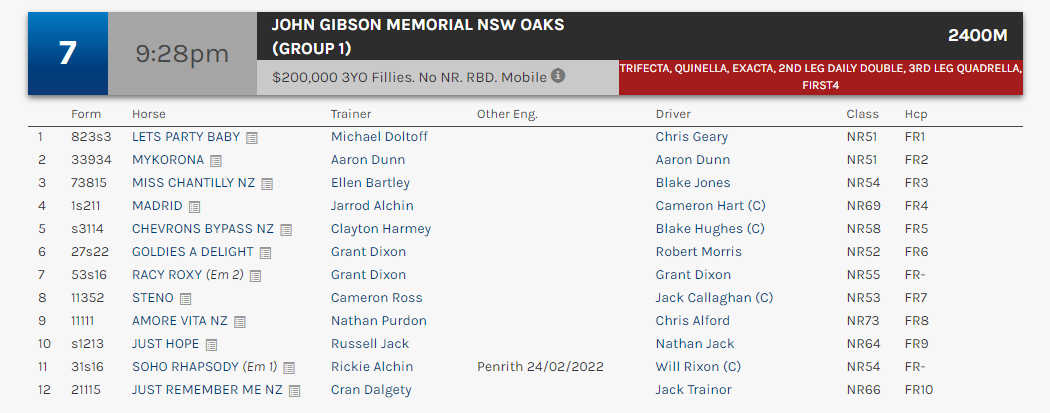
The draws might undo them both as I'm sure Amore Vita will attack at some stage. Amore Vita won by more than 10m and ran her last 400m 2 seconds quicker than Madrid - 26 vs 28. -
@Thomass Pffft!
-
I wouldn't worry about @Thomass - if you look at his Twitter account you'll see he just gone right raving bonkers. I suspect it is a reaction to the vaccine booster!
-
The PCR tests cost $130 per test. $500m has been spent on them. What was the point? There has been a less than 6% positivity rate I.e. 94% of those tested for $130 a pop didn't even have Covid! $500m would have bought a lot of primary health care.
-
Manobo - five in a row. Melbourne Cup Horse?
Chief Stipe replied to Chief Stipe's topic in Galloping Chat
Grp 2 Qatar Prix Chaudenay at Longchamp start 4.