
-
Posts
484,445 -
Joined
-
Last visited
-
Days Won
662
Content Type
Profiles
Forums
Articles
Videos of the Month
Major Race Contenders
Blogs
Store
Gallery
Everything posted by Chief Stipe
-

Catalyst coming home for another spell?
Chief Stipe replied to Chief Stipe's topic in Galloping Chat
They should do away with the blinkers when they bring him back to racing. -
There are some rumours doing the rounds that Catalyst is coming back to NZ for a spell.
-
Based on what criteria?
-
BREAKING NEWS: James MacDonald falls off Nature Strip at Trials.
Chief Stipe replied to Chief Stipe's topic in Galloping Chat
20200921RANR01T_V.mp4 -
Rule Number(s): 638(3)(b)(ii)Following Race 10 (Group 1 Tarzino Trophy), Stipendiary Steward, Mr Goodwin lodged an Information with the Judicial Committee alleging a breach of Rule 638(3)(b)(ii) in that Ms Johnson used her whip excessively when riding AVANTAGE prior to the 100m. At the outset of the hearing, Ms Johnson confirmed ... (Feed generated with FetchRSS)View the full article
-
Rule Number(s): 638(1)(d)Following the running of Race 6 (El Roca – Sir Colin Meads Trophy Listed Race), an Information was lodged by Mr Goodwin alleging a breach of Rule 638(1)(d) in that R Bishop allowed his mount KOBE ROCKS to shift in when not sufficiently clear of CUTTING EDGE which was checked near the 400 metres. Mr Goodwin ... (Feed generated with FetchRSS)View the full article
-
Rule Number(s): 638(3)(b)(ii)Following Race 2, Stipendiary Steward, Mr Goodwin lodged an Information with the Judicial Committee alleging a breach of Rule 638(3)(b)(ii) in that Troy Harris used his whip excessively prior to the 100m. At the outset of the hearing, Mr Harris confirmed he understood the Rule and that he admitted the ... (Feed generated with FetchRSS)View the full article
-
BREAKING NEWS: James MacDonald falls off Nature Strip at Trials.
Chief Stipe replied to Chief Stipe's topic in Galloping Chat
No harm to James Mac - back riding in the next trial. No word on Nature Strip but seems OK. -
MacDonald parts company with Nature Strip at the barriers in today's trial. Video to come. Nature Strip found the best going on the outside of the track and convincingly won the trial and eased down at the line. Returned to the stables all intact!
-
But the assumption with "using the facility more" is a bad one based on the premise that we can get thousands back to the races. The fact is in today's age that isn't going to happen. Remember "a day out at the races" is in fact a "day out". Name any other sporting activity in New Zealand that lasts 5 to 6 hours AND attracts large crowds. Putting a harness track inside the galloping track at Wingatui negates one of the oncourse advantages of harness - you are close to the action when you stand beside the outside fence. You are still close to the action when you have a purpose built stand close to that fence. If you can't get a crowd to Forbury putting harness 20km away at Wingatui isn't going to change that. Plus don't forget that Forbury houses both harness and greyhound racing. Why should those two codes "sell out" to Wingatui? Forbury Park Trotting Club didn't lose money on its racing activities but on its catering business. Have a look at the "new facilities" that are being built around the world for gallop tracks. Pakenham for one. They are not huge grandstands that hold thousands of spectators but small stands closer to the action that accommodate owners and trainers and the few local diehards.
-
Yes I have a few dairy farming friends. Mycoplasma bovis is a hot topic with them. Eradication in their opinion is a stupid approach with most dairy countries managing it. MPI still haven't achieved it. $400m later!
-
I've thought about this article over the last day or so and have worked out the agenda. It is following the consult part of the new legislation. It is smoke and mirrors leading to the justification to confiscate the courses. Basically - "well Minister we followed the legislation, spent money on engaging expert consultants and the Otago/Southland racing stakeholders and we couldn't get agreement. So we need to confiscate Forbury, build an AWT at Wingatui, confiscate Riverton and close it down." I guess NZTR have shown their hand now and the process has started. At the end of the day I still believe we are heading down a path of self-destruction for the wrong reasons. Replacing a low-cost model of racetrack operation with a high-cost one is not the answer. The issue is and has always been the largesse and poor management by NZRB and the code administrators. THAT is where the high costs that have dragged the industry down have been.
-
The whole country has been forced to go "overboard". But racing needs to be like Caesar's wife - beyond reproach. Afterall racing can't afford too much scrutiny can it when they have been the beneficiary of large sums of taxpayer money to keep it afloat during the last year! I wasn't going to comment on what I saw at Hastings on Saturday - too easy to be critical about everything at the moment and to be honest the general public wouldn't have noticed - how many of them actually have a TAB account that has money in it that allows them to watch the racing online or those with a SKY subscription even bother to switch channels on a Saturday afternoon? But what your post Freda highlighted to me is what is really wrong with the industry at the moment. The inconsistency and the treatment of the average stakeholders (owners, punters, support industries etc.) with arrogance and apparent disdain. The inconsistent application of Covid-19 protocols on Saturday was glaringly obvious and as your rightly point out Freda what does it say to those owners that were turned away from Riccarton recently? The classic for me was when the Bary Stable representative was shown in the stand with a bunch of hangers on (I thought Callsign Mav was Australian owned?) leaping up and down when Callsign Mav won. No masks! We then see that rep galloping down the stairs from the stand with no mask - next minute he is being interviewed on TV with a mask hanging around his neck. Obviously Big Sweney handed him one before he got in front of the camera. Inconsistency! This is the rule from NZTR when did it change for Hastings? No attendances at Race or Trial meetings (clause 2.1(a)(v)) Whilst there is provision in the Level 2 Directive for attendance of owners, sponsors or other ticketed guests, provided that this is done in line with government mandated requirements, NZTR has suspended this provision until further notice. This will be reviewed after the next Government announcement on Alert Levels. Aligned to this decision, there will be no provision for on-course wagering, except where self-service terminals are already on site. Applying a rule inconsistently is worse than having no rule at all. Look at the difference between NZ and OZ - if what we had seen at Hastings had happened at Rosehill then Monday Morning's RIU report would have been littered with substantial fines and suspensions!
-
I had to check and double check the date on this article. Was it 2010 and not 2020. Or was it 20 September 2019 not 19 September 2020. Or.... Yeah na. Did they hire consultants to do the PGF AWT application? Do these people actually understand that the industry is bleeding to death?
-
Is Saundry pitching for CEO of the new three code management entity?
-
Yes but Santa Anita ISN'T a Polytrack. The article that I read misreports the type of surface it is dirt.
-
The only way to stop the wax melting in high temperatures is to apply water to keep it cool! Supposedly Polytrack is the least sensitive of synthetic surfaces to moisture. But that doesn't explain why there have been issues aka Pakenham. I can understand under laboratory conditions where the Polyfill maintains its moisture properties but in the practical world subjected to climate and mechanical forces I can see how it would have issues.
-
I just read this about Santa Anita.....will check out if this is EVERY WEEK! Tonight, the Santa Anita crew will add 100 tons of material to the track as part of their weekly maintenance—it gets lost to wind or water runoff or trapped in the curve of horses’ hooves and picked out back at the barn.
-
WTF! What do our administrators actually do? How much are the THREE Business Consultant Company's being paid? Unbelievable!
-
Saturday, 19 September 2020 Three codes urged to work collaboratively By Steve Hepburn Bernard Saundry The next step in the regional racing review for the South will take place next week but all parties are being urged to get involved. As part of the decision to give the Forbury Park Trotting Club in Dunedin dates for the season, a review into the Otago-Southland racing structure had to be undertaken. It was to be completed by December but that looks like a very tight timetable. New Zealand Thoroughbred Racing chief executive Bernard Saundry said the review was about how the racing industry involving the three codes — thoroughbreds, standardbreds and greyhounds — would have a sustainable future in the Otago-Southland region. "Ultimately clubs in the region can build their own future. It is a really important the three codes work together," he said. "There is always politics in these sort of things but the sole focus should be how we can make racing the best it can be in the region," Saundry said three business consultant companies would come back to the New Zealand Racing board next week and offer ideas on how the review would take place and what methodology would be used to progress the review. From there the board would study the ideas and map out how the review would take place. Clubs and stakeholders would be engaged and there would be research and analysis on the economics of racing. "We want to be engaging the racing community and asking what does racing need to look like in five to 10 to 15 years. It is a very important piece of work and we’ve got to have the three codes working together. There is no use each code working out on its own without understanding what other codes are doing. "We want an efficient business which works for the benefits of the three codes, driving participation, ownership and improving wagering outcomes." One suggestion was to build an all-weather track at Wingatui using the proceeds from the sale of the land where Forbury Park was located. Saundry said nothing would be ruled out and everything was on the table. He admitted a lot of work had to be done and come December no firm plan on where the next 10 years would lead would be decided upon. It would be a phased process. The review simply had to be carried out. "This has to be done... You’ve got to own the future of the sport. "It’s an exciting opportunity for clubs to revitalise venues in the region and they should be making the most of the opportunity." He acknowledged there would be parochialism between regions but this could be used in a good way. The codes had been living in the past for too long and it was time to put parochialism away and work together. Other parts of the country such as the Auckland region were also undertaking reviews of the sector.
-
Saturday, 19 September 2020 Three codes urged to work collaboratively By Steve Hepburn Bernard Saundry The next step in the regional racing review for the South will take place next week but all parties are being urged to get involved. As part of the decision to give the Forbury Park Trotting Club in Dunedin dates for the season, a review into the Otago-Southland racing structure had to be undertaken. It was to be completed by December but that looks like a very tight timetable. New Zealand Thoroughbred Racing chief executive Bernard Saundry said the review was about how the racing industry involving the three codes — thoroughbreds, standardbreds and greyhounds — would have a sustainable future in the Otago-Southland region. "Ultimately clubs in the region can build their own future. It is a really important the three codes work together," he said. "There is always politics in these sort of things but the sole focus should be how we can make racing the best it can be in the region," Saundry said three business consultant companies would come back to the New Zealand Racing board next week and offer ideas on how the review would take place and what methodology would be used to progress the review. From there the board would study the ideas and map out how the review would take place. Clubs and stakeholders would be engaged and there would be research and analysis on the economics of racing. "We want to be engaging the racing community and asking what does racing need to look like in five to 10 to 15 years. It is a very important piece of work and we’ve got to have the three codes working together. There is no use each code working out on its own without understanding what other codes are doing. "We want an efficient business which works for the benefits of the three codes, driving participation, ownership and improving wagering outcomes." One suggestion was to build an all-weather track at Wingatui using the proceeds from the sale of the land where Forbury Park was located. Saundry said nothing would be ruled out and everything was on the table. He admitted a lot of work had to be done and come December no firm plan on where the next 10 years would lead would be decided upon. It would be a phased process. The review simply had to be carried out. "This has to be done... You’ve got to own the future of the sport. "It’s an exciting opportunity for clubs to revitalise venues in the region and they should be making the most of the opportunity." He acknowledged there would be parochialism between regions but this could be used in a good way. The codes had been living in the past for too long and it was time to put parochialism away and work together. Other parts of the country such as the Auckland region were also undertaking reviews of the sector.
-
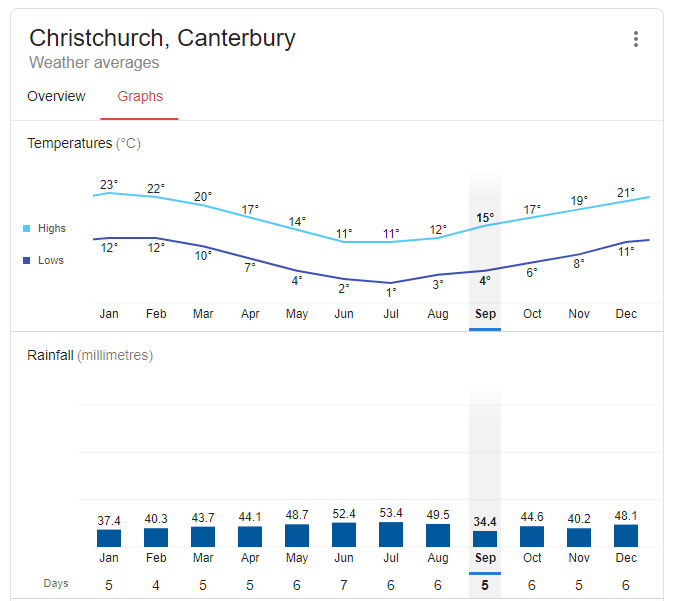
Difference in climate between Pakenham and Riccarton.

-
I find that hard to believe when every article I have read online says the opposite or rather says that water content of the polyfill is important in maintaining a consistent racing surface. A "consistent racing surface" is THE goal is it not? I've been trying to get my head around the science of the polyfill and have tried comparing it to my horticulture and turf culture university education. The polyfill is a type of soil - soil is made up of four components - minerals, organic matter, water and air. Water and air percentage composition is largely influenced by the first two components minerals and organic matter. Minerals are made up of sands, clays and silts. Organic matter is decaying vegetation, worm and insects crap etc. About 50% of a soil is made of solid material - 45% minerals and 5% organic matter so 50% of your average soil is made up of voids that are filled with water and air. The % of water and air varies with one replacing the other depending on rainfall/irrigation and evaporation. The mix of the minerals largely determines the water holding capacity of soil. If the soil has a high sand component then its ability to retain water is limited as it drains well. At the other end of the spectrum are clay soils which retain water well but don't drain well - contrary to what one may intuitively think clay soils don't have a lot of water available for use - it gets tied up in the clay. The outcome of that is a clay soil can go from being very fluid when extremely wet (muddy) to very hard when dry - a bit like unset cement vs set cement. Just as it is very hard to grow grass on 100% sand it is hard to grow grass on 100% clay. Fortunately there are enough soils in between that allow agriculture and horticulture to exist. As cultivators of the land we can affect the base structure by changing the mineral composition and/or adding organic matter. This occurs naturally e.g. the succession of plants on sand dunes - tough plants get a foothold and go through life cycles adding organic matter to the sand allowing larger plants to follow adding more organic matter and so on. The mix of the different minerals plus the organic matter is referred to as soil structure and this structure determines the water/air characteristics of a soil. I better pull up here......back to the topic..... Now if we look at the Polytrack fill we can compare its characteristics with a soil. It has the same base characteristics of soil - minerals, organic material, water and air. With two differences the organic material is replaced by synthetic material and a petroleum based wax is added. Its mineral composition is predominantly silica sand. So without the addition of any other material it has a very low water retention i.e. it drains well. Mixed into this sand are synthetic fibres (bits of recycled rubber/carpet - akin to adding organic matter to a clay soil) which add structure to the sand i.e. create air and water voids. They are the source of the "cushion" for the horses to gallop safely on. They provide a better cushion than straight sand. The science of soils suggests that this addition of "structure" and the creation of voids will increase the capacity of the sand to retain water as there are more voids. You can't have the cushion without creating the voids - the weather or irrigation will influence the ratio of water to air in those voids. Now this is where the addition of the petroleum based wax comes in. Science suggests that this wax does two things it helps to aggregate the solids (increases structure) and alters the water retention characteristics by changing the polarity of the aggregate surfaces and repels water. Just like when your spray silicon over your fishing reels. This will improve drainage. So the theory behind not needing irrigation is that field capacity/water holding potential of polytrack fill is a very narrow range - if it rains or is dry then there isn't a big difference in the amount water/air ratio. That's the theory! BUT it doesn't seem to work like that in practice. For example look at the issues at Pakenham in Victoria. Pakenham has a similar climate profile to Riccarton but not the same. Observe what has also happened at other Polytrack venues and you will see similar issues. Now each Polytrack will have a different composition of Polyfill relative to climatic conditions e.g. Riccarton will have a different ratio of sand, fibre and wax when compared to Cambridge, Awapuni and Pakenham. Why? Well the science suggests that temperature and rainfall influence the amount of/and type of wax and fibre that you add to the sand. The manipulation of these ratio's will be to optimise the track conditions to a narrow range relative to the weather experienced. I'm guessing in a very dry climate you will use a wax that has a greater aggregating and water retention factor to limit the potential of the fill from blowing away. In a high temperature environment you might use a wax that has a higher melting point. In a wet environment you might use a wax that has a higher water repelling factor. Now this is where I see a case for irrigation. If you have an environment where there is a large seasonal variation (that variation could be daily, weekly, monthly or seasonal) how do you optimise the polyfill composition? You would have to compromise with the polyfill and accept lots of variation during the year. Or use artificial means to keep it within the optimal range e.g. irrigation and mechanical grooming. Why does the Polyfill need replenishment and eventually replacement? That's because the mechanics of horse's galloping on the surface, the regular mechanical grooming and the variations in climate cause the components of the polyfill to break down. Even the sand gets finer! The wax decays and the bits of carpet and tyres breakdown into microplastics. I've run out of puff......
-
I just don't understand why the secret squirrel's. We wouldn't even be discussing this if decades of over priced management hadn't made so many poor decisions and squandered resources. We forget that history at our peril.
-
All the speculation and doubts could easily be eliminated if RITA/NZTR/CJC published the PGF application and supporting analysis. In my opinion there is zero commercial sensitivity. It seems stakeholders are expected to follow the line - "Trust Us, we know what we are doing"! Unfortunately history is littered with their stuff ups. If they want the investment to be successful then trainers, owners and punters need transparency to encourage them to invest and plan. Otherwise -