-
Available Subscriptions
Dog Chat
532 topics in this forum
-
- 9 replies
- 1.6k views
-
- 38 replies
- 4.6k views
-
- 5 replies
- 1.2k views
-
- 2 replies
- 961 views
-
- 15 replies
- 2.2k views
-
- 1 reply
- 900 views
-
- 0 replies
- 750 views
-
- 1 reply
- 872 views
-
- 1 reply
- 930 views
-
- 0 replies
- 812 views
-
- 13 replies
- 1.8k views
-
- 43 replies
- 5k views
-
- 34 replies
- 4k views
-
- 0 replies
- 776 views
-

- Guest
-
- 5 replies
- 1.2k views
-
- 46 replies
- 5.3k views
-
- 6 replies
- 1.4k views
-
- 20 replies
- 2.7k views
-
- 0 replies
- 946 views
-
- 2 replies
- 1.1k views
-
- 11 replies
- 1.9k views
-
- 0 replies
- 1.4k views
-
- 7 replies
- 1.4k views
-
- 0 replies
- 1.1k views
-
- Guest
-
- 0 replies
- 762 views



Announcements
-
Posts
-

By Chief Stipe · Posted
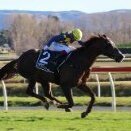
‘I’m not here to hold the bridle’ – A year in, Kiwi racing boss Ballesty on his plans for New Zealand’s thoroughbred industryhttps://bitofayarn.com After 12 months in the role, New Zealand Thoroughbred Racing’s chief executive Matt Ballesty is attempting to reposition the national industry for long-term sustainability. By Warwick Barr ● Racing Industry ● March 19, 2026 Matt Ballesty (right) describes the changes required in New Zealand racing as more revolution than evolution. (Photo: Christine Cornege) Matt Ballesty knew when he took the job as chief executive of New Zealand Thoroughbred Racing that the role would demand change rather than caretaking. “It’s never a dull moment,” Ballesty says of his first 12 months in the position, reflecting on a career that has taken him from Sydney to Macau and Canada before crossing the Tasman. The Sydney-born executive, a self-described casino guy who now leads New Zealand’s national thoroughbred body, says he arrived with a mandate to reshape an industry that has spent much of the past decade confronting declining infrastructure, fractured stakeholder confidence, and the lingering shadow of reform reports demanding change. “I’m not here to hold the bridle and make sure everything’s OK (as it is),” Ballesty says.https://bitofayarn.com “I’m here, with the board’s direction and support, to make significant changes and test the status quo and make the bold decisions that need to be made. “But we’ve got to build trust, we’ve got to earn respect (but) it would be good for the industry to now give this team a chance to add some professionalism and quality to the decisions that are made.” The scale of that challenge is evident across almost every part of the New Zealand racing ecosystem, from racetrack infrastructure to wagering economics, ownership engagement and the delicate balance between tradition and financial sustainability. Ballesty describes the moment not as a gradual adjustment but as something more fundamental. Asked if it is a revolution or evolution, Ballesty is adamant: “I would say revolution. “We’re in a year of transformation, and me coming into the role wasn’t going to be about just keeping the status quo going. “I was brought in for change and agitation to move us in a direction that’s not the same as what it’s been. “We need to make sure that the investment that has been made into New Zealand sets us up for the years ahead.” Yet before any transformation can take hold, the industry must rebuild confidence after years of debate about its direction. “I think confidence and positivity all need to be rowing in the same direction,” Ballesty says. “People can see change and support change and look to the future, not to the past.” Like most executives, Ballesty will never be able to please everyone. There are divided opinions within the New Zealand industry about the regulator’s ongoing performance and its vision for the future. Adding a layer of uncertainty and a sense of urgency to the landscape is a crucial milestone in Entain’s 25-year deal to operate the New Zealand TAB. Under the terms of the arrangement, including the ongoing profit share, Entain has guaranteed to provide TAB NZ with $NZ1 billion in funding for the first five years. That is due to expire in 2028. That year is widely seen inside New Zealand racing as the first real stress test of the Entain partnership, because it marks the point when the guaranteed funding safety net disappears. Those guarantees allowed racing administrators to increase prize money, launch new events such as the NZB Kiwi, and invest in marketing and infrastructure, confident that the funding floor was locked in regardless of betting performance. Once the deal moves past 2028, however, returns will depend far more directly on wagering growth, meaning industry income will fluctuate with betting turnover, product strength and Entain’s commercial performance. There is some anxiety about what New Zealand racing will look like beyond that point and Ballesty says the messaging about NZTR’s objectives will be key to instilling confidence within the industry.https://bitofayarn.com Communication, he believes, has been – and remains – one of racing’s persistent weaknesses. “One of our biggest challenges is communicating to people and making them feel comfortable that things are happening,” he says. “It’s such a wide and varied group of people. If things do go wrong, which they do in life and business, they seem to need somebody to hang out and I think it’s been us. “But we need to do a better job of just balancing that perception.” Ballesty’s ‘bold’ strategic moves – NZTR executive undergoes major changes Ballesty says that the awareness issue is compounded by the fact that racing’s stakeholders – clubs, trainers, breeders and punters – often interpret discussions about reform as final decisions.https://bitofayarn.com An example he points to is the speculation that NZTR will increase the levy imposed on owners of horses departing the country to boost revenue and support the local racing industry. Opponents of any such plan argue that a significant increase in export fees will make it harder to sell horses to overseas jurisdictions. “An idea is just an idea until it’s not an idea but in our industry it is fact straight away,” Ballesty says. “This (a levy increase) is a great example ‘I’ve heard this, I’ve heard that’. “It’s something that hasn’t even gone to our board. It will be reviewed amongst a whole bunch of other things and we’ll see if it is something we need to address or not.” That environment has forced the organisation to tread carefully in its messaging.https://bitofayarn.com “Sometimes it feels like you can’t say much at all or you’re being misinterpreted,” he says. RATIONALISATION Despite that caution, the most sensitive reform topic remains racetrack rationalisation – a subject that has lingered since the landmark Messara report nearly a decade ago recommended reducing the number of venues across the country. New Zealand currently has around 35 racetracks, down from more than 50 historically, but Ballesty accepts further consolidation is inevitable. “As a broad acknowledgement, there’s just not (enough) money to sustain every racecourse,” he says. “We do need to define what racecourses are – whether they’re a metropolitan racing surface or a provincial feeder or a community engagement venue.” To guide that process, NZTR has launched a detailed infrastructure review designed to shift debate away from sentiment and towards what Ballesty describes as measurable analysis. “We move away from emotion and we move away from people’s opinions and we rely on data and analysis to help lead informed decisions, data-led decisions,” he says. “That’s not to say everything’s to do with data … we’re in a business that has history and that needs to be recognised.” An infrastructure challenge goes beyond simply closing venues; it is also about creating modern racing hubs capable of delivering reliable surfaces, strong wagering outcomes and high-quality race meetings. At present, Ballesty believes New Zealand has only one genuine metropolitan-standard track – Ellerslie. The ambition, however, is to build a broader national network capable of supporting elite racing and attracting international participation. “We’ve got Ellerslie, but we need four Ellerslies to be successful in the longer term,” he says. Plans are already emerging to build that structure. -

By Wandering Eyes · Posted
The Irish-bred 8-year-old gelding by Belardo has won at least one graded stakes each year in 2022-25.View the full article -
By Wandering Eyes · Posted
A day before a scheduled March 19 federal court hearing over disputed assessment fees issued by the Horseracing Integrity and Safety Authority to Churchill Downs Inc., the parties offered sharply differing accounts explaining the financial impasse.View the full article -

By Nowornever · Posted
Lets see a 27 quarter to really fire them up at least. Any horse can put a series of 30sec quarters together. Not fast at all. Are you saying the House team are backing the Robertson Team? 😂 -
By Wandering Eyes · Posted
Pin Oak Stud looks for a second Kentucky Derby (G1) horse with Jeff Ruby Steaks (G3) entry Chaos Agent. View the full article
-
-
Topics
-